

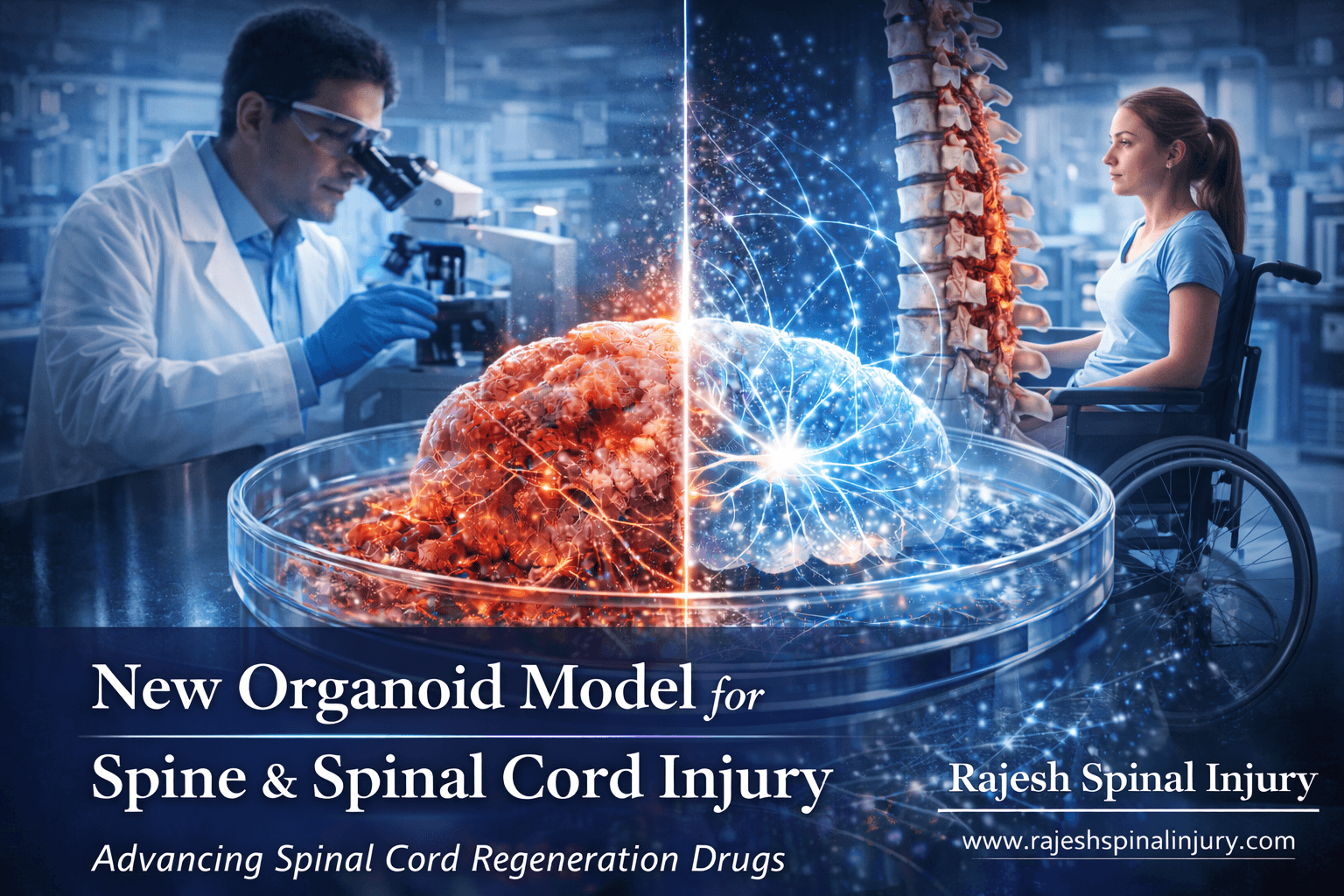
Northwestern University researchers have introduced a groundbreaking new organoid model that represents a major step forward in spinal cord injury research. This advanced human-based system is designed to accelerate the discovery of effective treatments for paralysis and improve outcomes for patients around the world.
In the study, scientists engineered lab-grown human spinal cord organoids that are capable of mimicking real injury conditions. These models allowed researchers to safely test potential spinal cord regenerative drugs in a controlled environment that closely mimics human biology—something that traditional animal models cannot fully achieve.
What makes this new organoid model truly unique is its ability to mimic key features of spinal cord injury, including neuronal cell death, inflammation, and glial scar formation. This level of precision provides researchers with a powerful platform to study the progression of injuries and how regenerative therapies can intervene.
When treated with innovative “dancing molecules,” the organoids showed remarkable recovery responses. These molecules—previously shown to reverse paralysis in animal studies—stimulated robust neurite outgrowth, which is essential for nerve cells to reconnect. At the same time, scar-like tissue was significantly reduced, highlighting the promise of the therapy in emerging spinal cord regenerative medicine.
Why this breakthrough matters
Organoids closely mimic the structure and function of real human tissue, making them faster, more cost-effective, and more reliable than traditional testing methods. In this research, scientists successfully developed organoids containing neurons, astrocytes and microglia – key immune cells involved in the injury response. This makes the new organoid model one of the most realistic platforms ever created for spinal cord injury research.
How ‘dancing molecules’ work
Dancing molecules represent a new class of regenerative therapies. Once injected, they form a nanofiber network that mimics the natural environment of the spinal cord. Their dynamic motion allows them to interact more efficiently with cell receptors, enhancing tissue repair and nerve regeneration – an exciting development in the field of spinal cord regenerative medicine.
Towards a future treatment
By simulating both laceration and contusion injuries, the researchers confirmed that this therapy reduces inflammation, limits scarring, and restores healthy nerve growth patterns. The results strongly suggest that these findings could translate into real clinical benefits.
Looking ahead, the scientists aim to further refine this technology by developing models for chronic injuries and exploring personalized treatments using patient-derived stem cells. This approach could revolutionize the way spinal cord regenerative drugs are developed and tested, bringing safer and more effective therapies closer to reality.
Rajesh Spinal Injury is a platform created to spread awareness, education, and support for people living with spinal cord injury. It was founded by Rajesh Kumar, who sustained a C6–C7 cervical spinal cord injury in a scooter accident on 25 March 2007. Built on personal experience, the platform is committed to raising awareness and promoting effective rehabilitation practices.
Learn more about New Organoid Model Helps Test Spinal Cord Regeneration Drugs