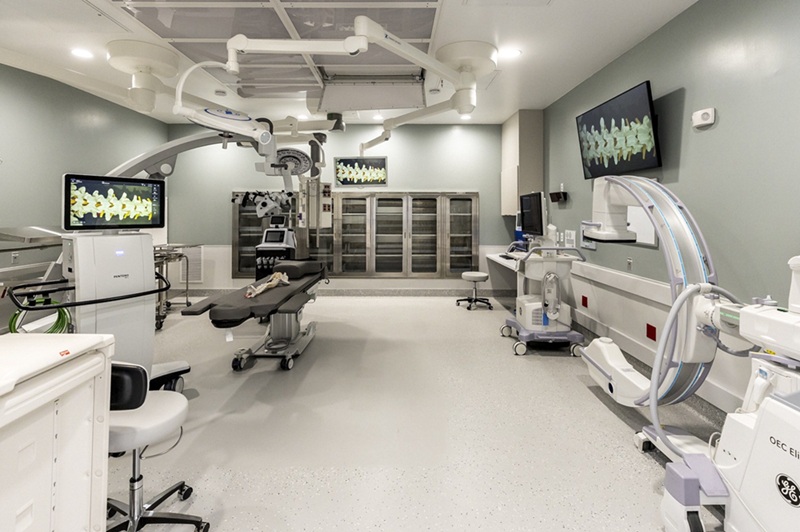




















The spine biologics market is set to grow due to an aging population with increasing spine conditions and a shift toward minimally invasive surgeries. Opportunities arise from advanced synthetic bone grafts and osteoinductive innovations. However, the adoption of premium products faces obstacles due to high costs and reimbursement issues.
Dublin, Jan. 26, 2026 (GLOBE NEWSWIRE) — The “Spine Biologics Market: Global Industry Size, Share, Trends, Opportunities and Forecast, 2021-2031” report has been added to ResearchAndMarkets.com’s offering.
The global spinal biologics market is projected to expand from $3.88 billion in 2025 to $5.21 billion in 2031, reflecting a compound annual growth rate of 5.04%.
This sector comprises a specialized range of biomaterials, such as bone grafts, bone morphogenetic proteins and cell-based matrices, which are essential to promote bone growth and healing during spinal fusion surgeries. The main forces driving this growth are the aging of the world’s population, which is increasingly prone to degenerative spinal conditions, and the increasing preference for minimally invasive surgical techniques that require potent osteoinductive agents. Evidence of this growing demand is highlighted in data from the American Spine Registry, which reported a 17.86% increase in spine procedure volumes in 2024 compared to the previous year, directly driving consumption of these biologics.
Despite this positive momentum, the market faces significant headwinds related to the high price of premium biologic solutions and rigorous reimbursement protocols imposed by healthcare payers. Surgeons and hospitals often face inconsistent insurance coverage for advanced treatments such as stem cell therapies and growth factors, creating financial pressure to select more affordable alternatives. Consequently, these economic constraints limit widespread commercial adoption of newer, higher-end spinal biologics, effectively slowing the penetration of premium products within the broader medical landscape.
Market drivers
The increasing prevalence of degenerative spinal disorders among an aging global population serves as a major driver for market growth. As demographic changes lead to a higher incidence of conditions requiring spinal fusion, there is an increasing and sustained need for effective osteoinductive agents to ensure successful bone healing in compromised patients. This trend is evident in the solid financial performance of the sector; For example, Orthofix Medical Inc. reported a 9% increase in net sales for its Bone Growth Therapies segment in its November 2024 earnings release. Similarly, Stryker’s October 2024 operating results showed a 10.7% increase in orthopedics and spine net sales, underscoring a healthy recovery in procedure volumes that supports widespread industry demand.
At the same time, technological innovation in synthetic scaffolds is redefining clinical practices by reducing the need for autografts. Surgeons are increasingly turning to next-generation bone grafts that provide superior handling characteristics and predictable fusion results without the morbidity risks associated with traditional bone harvesting. This transition toward advanced matrices is driving the rapid adoption of products designed to replicate natural bone structure. A good example is Kuros Biosciences, which reported in August 2024 that direct sales of its MagnetOs bone graft increased 159% in the first half of the year, demonstrating a significant market shift toward scientifically advanced synthetic solutions that improve surgical efficiency.
Market challenges
The sector faces substantial obstacles due to high procurement costs for premium biologics, along with strict reimbursement policies. Healthcare institutions, often operating under strict financial constraints, frequently find it difficult to justify the expenditure required for expensive bone morphogenetic proteins or cell-based matrices when more affordable alternatives, such as synthetic ones, are available. As a result, hospital procurement teams often limit surgeons’ access to these high-end items to ensure financial sustainability, which in turn restricts revenue growth potential for advanced product categories.
These financial challenges are intensified by reductions in payment rates and policy changes by major payers. According to the North American Spine Society, the Centers for Medicare and Medicaid Services enacted a nearly 3.4 percent reduction in the physician fee schedule conversion factor in 2024, creating a more difficult economic outlook for complex spine surgeries. These reimbursement cuts discourage the use of expensive biologics as providers attempt to reduce overall costs per procedure, ultimately dampening the adoption of premium solutions and steering the market toward lower-margin, commoditized options.
Market trends
The market is being transformed by the emergence of peptide-enhanced osteoinductive materials, which introduce synthetic bioactive agents designed to mimic the cell-binding domains of collagen to accelerate bone repair. Unlike traditional growth factors that can present safety concerns or high costs, these peptide-based innovations directly stimulate osteoblasts, providing a targeted approach for spinal fusion. This clinical efficacy is driving regulatory success and commercial validation; For example, Cerapedics Inc. announced in June 2025 that the pivotal study of its PearlMatrix graft demonstrated that it achieved fusion in more than twice as many patients at six months compared to local autograft, highlighting the potent potential of this new class of biologics.
At the same time, the evolution of next-generation demineralized bone matrix carriers is meeting the urgent need for better graft containment and manipulation during complex surgeries. Manufacturers are moving away from standard putty or particulate formulations toward advanced fiber-based carriers that offer superior absorption properties and interconnected porosity, ensuring graft stability during minimally invasive procedures. This innovation is generating significant revenue growth for key players; Bioventus Inc. reported in November 2025 that its Surgical Solutions segment achieved $50.2 million in net sales, an increase of 9.3% largely attributed to strong adoption of these advanced bone graft substitutes.
Key Players Profiled in Spine Biologics Market
Medtronic Stryker NuVasive Zimmer Biomet SeaSpine DePuy Synthes Orthofix Globus Medical RTI Surgical Baxter
Scope of the report
In this report, the Global Spinal Biologics Market has been segmented into the following categories:
Spine Biologics Market, By Product:
Spinal allografts Bone graft substitutes Cell-based matrix
Spine Biological Products Market, By Surgery:
Anterior Cervical Discectomy and Fusion (ACDF) Transforaminal Lumbar Interbody Fusion (TLIF) Posterior Lumbar Interbody Fusion (PLIF) Anterior Lumbar Interbody Fusion (ALIF) Lateral Lumbar Interbody Fusion (LLIF)
Spine Biological Products Market, by End User:
Hospitals Outpatient facilities
Spine Biological Products Market, By Region:
North America Europe Asia-Pacific South America Middle East and Africa
Key attributes:
For more information about this report, please visit https://www.researchandmarkets.com/r/vfb2zz
About ResearchAndMarkets.com
ResearchAndMarkets.com is the world’s leading source of market research reports and international market data. We provide you with the latest data on international and regional markets, key industries, top companies, new products and the latest trends.
Attach