







• About Us
  • Contact Us
  • Spinal Cord Injury Videos
  • Disclaimer
  • Privacy Policy
Friday, January 23, 2026
Rajesh Spinal Injury
  • Home
  • Spinal Cord Injury
    • Quadriplegia
    • Paraplegia
    •  SCI Levels & Functions
    • Latest Breakthrough in SCI
    • Spinal Cord Injury Research
    • Spinal Cord Injury Videos
  • Rehabilitation
    • Physiotherapy and Occupational Therapy
    • Brain & Spine Chip Implants
    •  Epidural Stimulation
    • Stem Cell Therapy
    •  Spinal Cord Injury Drugs
  • Latest SCI News
    Spinal cord injuries in Gaza risk permanent disability for children

    Spinal cord injuries in Gaza risk permanent disability for children

    EEG technology could be a useful tool for linking brain signals with limb movements

    EEG technology could be a useful tool for linking brain signals with limb movements

    The first stage of testing of a drug aimed at complete spinal cord injury is approved in Brazil – 05/01/2026 – Science and Health

    The first stage of testing of a drug aimed at complete spinal cord injury is approved in Brazil – 05/01/2026 – Science and Health

    Injectable nanomaterials reduce secondary brain damage after ischemic stroke

    Injectable nanomaterials reduce secondary brain damage after ischemic stroke

    3 reflections from Dennis Prager after spinal cord injury

    3 reflections from Dennis Prager after spinal cord injury

    recovery is more difficult for older people with spinal cord injury | Housing

    recovery is more difficult for older people with spinal cord injury | Housing

    Study reveals how the nervous system activates repair after spinal cord injury

    Study reveals how the nervous system activates repair after spinal cord injury

    How does age affect recovery from spinal cord injury?

    How does age affect recovery from spinal cord injury?

    Older age influences functional recovery after spinal cord injury

    Older age influences functional recovery after spinal cord injury

  • Spine
    • Spinal Cord Injury Ai
  • Health News
    The growth of Inside Life Medical from a single service to a broader medical ecosystem

    The growth of Inside Life Medical from a single service to a broader medical ecosystem

    The United States officially leaves the World Health Organization

    The United States officially leaves the World Health Organization

    How an Underactive Thyroid Destroys Your Energy and Metabolism

    How an Underactive Thyroid Destroys Your Energy and Metabolism

    New owners of Crozer-Chester Medical Center plan to restore essential healthcare services to Delaware County

    New owners of Crozer-Chester Medical Center plan to restore essential healthcare services to Delaware County

    ‘The public sector must play a dominant role in healthcare’ | India News

    ‘The public sector must play a dominant role in healthcare’ | India News

    Common Triggers, Symptom Patterns, and Relief Strategies

    Common Triggers, Symptom Patterns, and Relief Strategies

    American Indians hold free MLK Day health camp in Boston

    American Indians hold free MLK Day health camp in Boston

    7 Subtle Signs Caregivers Miss (And How to Prevent Them)

    7 Subtle Signs Caregivers Miss (And How to Prevent Them)

    Beyond prevention: Routine vaccines offer surprising health benefits for older adults

    Beyond prevention: Routine vaccines offer surprising health benefits for older adults

  • Weight Loss Ai
  • More
    • NeuroScience
    • Brain Computer Interface
    • Diet-Nutrition
    • Spinal Cord Injury Videos
No Result
View All Result
  • Home
  • Spinal Cord Injury
    • Quadriplegia
    • Paraplegia
    •  SCI Levels & Functions
    • Latest Breakthrough in SCI
    • Spinal Cord Injury Research
    • Spinal Cord Injury Videos
  • Rehabilitation
    • Physiotherapy and Occupational Therapy
    • Brain & Spine Chip Implants
    •  Epidural Stimulation
    • Stem Cell Therapy
    •  Spinal Cord Injury Drugs
  • Latest SCI News
    Spinal cord injuries in Gaza risk permanent disability for children

    Spinal cord injuries in Gaza risk permanent disability for children

    EEG technology could be a useful tool for linking brain signals with limb movements

    EEG technology could be a useful tool for linking brain signals with limb movements

    The first stage of testing of a drug aimed at complete spinal cord injury is approved in Brazil – 05/01/2026 – Science and Health

    The first stage of testing of a drug aimed at complete spinal cord injury is approved in Brazil – 05/01/2026 – Science and Health

    Injectable nanomaterials reduce secondary brain damage after ischemic stroke

    Injectable nanomaterials reduce secondary brain damage after ischemic stroke

    3 reflections from Dennis Prager after spinal cord injury

    3 reflections from Dennis Prager after spinal cord injury

    recovery is more difficult for older people with spinal cord injury | Housing

    recovery is more difficult for older people with spinal cord injury | Housing

    Study reveals how the nervous system activates repair after spinal cord injury

    Study reveals how the nervous system activates repair after spinal cord injury

    How does age affect recovery from spinal cord injury?

    How does age affect recovery from spinal cord injury?

    Older age influences functional recovery after spinal cord injury

    Older age influences functional recovery after spinal cord injury

  • Spine
    • Spinal Cord Injury Ai
  • Health News
    The growth of Inside Life Medical from a single service to a broader medical ecosystem

    The growth of Inside Life Medical from a single service to a broader medical ecosystem

    The United States officially leaves the World Health Organization

    The United States officially leaves the World Health Organization

    How an Underactive Thyroid Destroys Your Energy and Metabolism

    How an Underactive Thyroid Destroys Your Energy and Metabolism

    New owners of Crozer-Chester Medical Center plan to restore essential healthcare services to Delaware County

    New owners of Crozer-Chester Medical Center plan to restore essential healthcare services to Delaware County

    ‘The public sector must play a dominant role in healthcare’ | India News

    ‘The public sector must play a dominant role in healthcare’ | India News

    Common Triggers, Symptom Patterns, and Relief Strategies

    Common Triggers, Symptom Patterns, and Relief Strategies

    American Indians hold free MLK Day health camp in Boston

    American Indians hold free MLK Day health camp in Boston

    7 Subtle Signs Caregivers Miss (And How to Prevent Them)

    7 Subtle Signs Caregivers Miss (And How to Prevent Them)

    Beyond prevention: Routine vaccines offer surprising health benefits for older adults

    Beyond prevention: Routine vaccines offer surprising health benefits for older adults

  • Weight Loss Ai
  • More
    • NeuroScience
    • Brain Computer Interface
    • Diet-Nutrition
    • Spinal Cord Injury Videos
No Result
View All Result
Spinal Cord Injury
No Result
View All Result
Home NeuroScience

Smiling faces trigger mimicry and make us trust them more

Editor's by Editor's
December 24, 2025
in NeuroScience
0
0
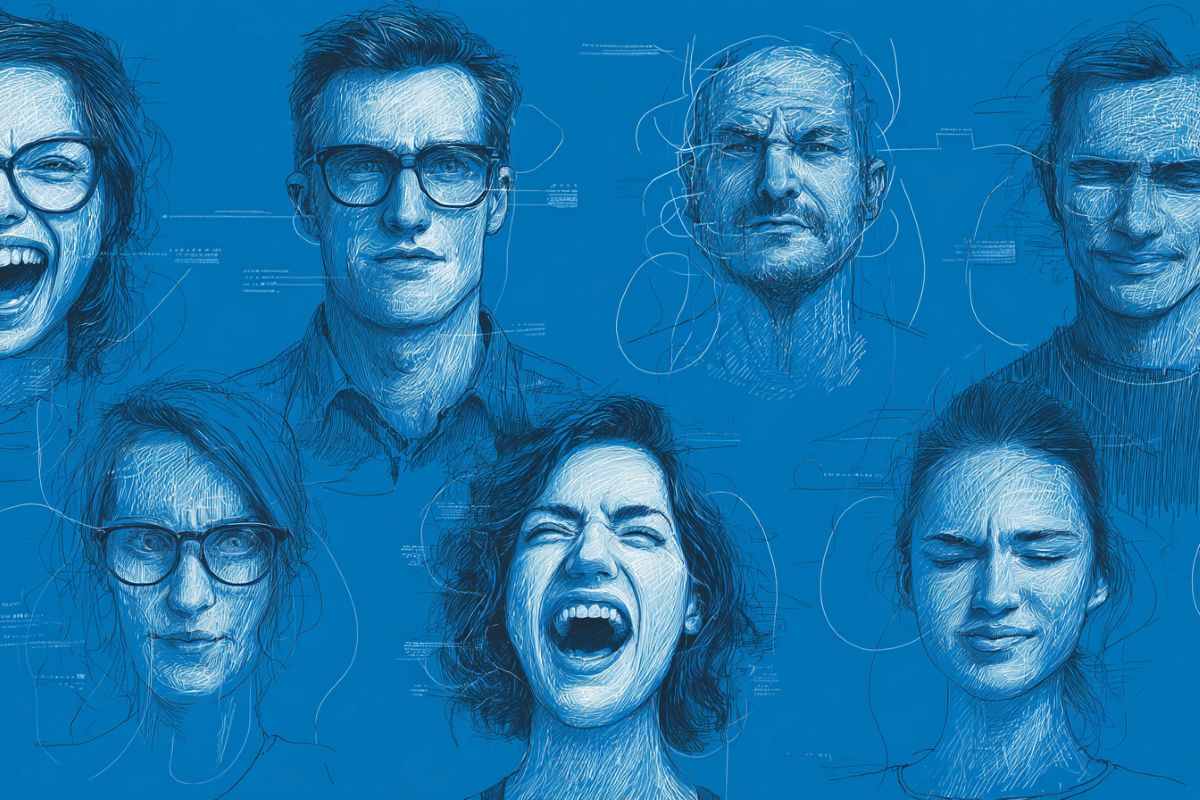
Smiling faces trigger mimicry and make us trust them more

Summary: People instinctively imitate the facial expressions of others, but new research shows that we do this much more with happy faces than with sad or angry ones, and that the intensity of the imitation predicts how much we trust someone. In three experiments using EMG and behavioral tasks, participants copied smiles more easily and rated smiling people as more attractive, confident, and trustworthy.

Mimicking positive expressions strengthened social judgments, while anger was rarely copied and led to lower confidence ratings. These findings highlight emotional mimicry as a key mechanism that shapes first impressions and social decision making.

Key facts

Joy is more contagious: Participants imitated expressions of happiness more than sadness or anger. Mimicry builds trust: Stronger mimicry predicted greater trust and more positive trait judgments. Perception of smiling shapes: Smiling faces were consistently rated as more trustworthy and attractive.

Source: SWPS University

How does mimicry affect the way we judge other people? What behavior do we imitate and in what situations?

It turns out that we are more likely to imitate people who express joy and perceive them as more attractive and trustworthy.

Scientists, including researchers from SWPS University, published a paper on this topic in the journal Emotion.

People tend to make judgments about others’ personalities based on their appearance. For example, a square jaw, a high forehead, or thick eyebrows cross-culturally connote social dominance. Another important cue from which we attribute specific character traits to others is facial expression.

Facial expressions play an important role in non-verbal communication and are a source of much information about another person. Just by briefly observing another person’s face, we draw conclusions about their feelings and intentions.

In addition, we tend to imitate the person with whom we interact, a phenomenon called emotional mimicry. This mimicry plays an important role in building social relationships because it helps to better understand others.

The role of emotional mimicry when making judgments about others

The researchers decided to investigate the role of emotional mimicry in attributing specific character traits to others. They took into account several factors: the emotional meaning of the facial expression, the context in which the evaluation takes place, and the character traits being evaluated.

The new study was conducted by Michał Olszanowski, PhD, professor at SWPS University, Aleksandra Tołopiło, PhD, from the Center for Research on the Biological Basis of Social Behavior at the Faculty of Psychology at SWPS University in Warsaw, and Professor Ursula Hess from Humboldt University in Berlin.

“We hypothesized that participants would evaluate and trust people who smiled better than people who expressed anger or sadness. Additionally, we predicted that participants would be more willing to imitate expressions of happiness than sadness, while anger would be the least likely emotion to be imitated.

“Importantly, it is the intensity of mimicry that will predict the extent to which participants will trust the people they imitate. In other words, the more someone imitates another person’s smile, the more they will trust that person,” says psychologist Michał Olszanowski, PhD, professor at SWPS University.

Features shown on the face.

To explore the interaction between social context and emotional imitation in trait judgments, the researchers asked participants to rate different social characteristics of faces expressing happiness, sadness, and anger. Three experiments were carried out. In two experiments, the researchers measured facial muscle activity using electromyography (EMG).

In Experiment 1, 62 participants (including 43 women) rated the trustworthiness, confidence, and attractiveness of people whose faces (with various expressions) were shown to them in video clips of a few seconds duration. EMG confirmed that participants were more willing to imitate joy than sadness and anger, and this often referred to people who were socially similar to them.

Before the experiment, participants completed a questionnaire with statements designed to give them the impression of social connections with some of the people they would be observing.

The second experiment examined the cause-effect relationship between the facial expressions of 46 participants (32 women) and the evaluation of the character traits of the people they were presented with. Participants were asked to watch recordings of several people’s faces and rate their credibility. They were also asked to imitate the reactions presented, but some of the images did not match the emotions they were supposed to reflect.

Participants were informed that their own facial expressions would be recorded and analyzed using special software. This experiment confirmed that facial muscle activity associated with imitating emotions can influence the evaluation of another person’s character traits.

In Experiment 3, the researchers assessed trust behavior by asking participants (64 people, including 43 women) to share virtual points in a “trust/investment game.” Participants share points with other players about whom they had previously obtained information.

The third experiment confirmed that people who smiled were imitated more often than those who were sad. Furthermore, emotional mimicry played an important role in terms of expressed trust. Unlike the first experiment, social similarity was not significant.

A smile means you can trust

The researchers confirmed previous observations that people judge smiling people better and trust them more, especially when they are socially similar to them. The observation that we are more likely to imitate joy than signs of sadness or anger was also verified.

“Our study shows that people draw conclusions about others based on their facial expressions. Most importantly, this study reinforces the view that facial expressions predict judgments about character traits, and that happiness is particularly important here.

“To some extent, this confirms the common observation that expressing positive emotions can lead to better attitudes toward a given person. From a scientific point of view, these results expand our knowledge about the role of emotional mimicry in social interactions,” says Olszanowski.

Key questions answered:

Q: How does emotional mimicry influence the way we judge other people?

A: The study found that people instinctively imitate expressions of joy more than sadness or anger, and this imitation directly shapes social judgments. When participants copied someone’s smile, they consistently rated that person as more trustworthy, more attractive, and more confident. In contrast, imitating negative expressions occurred much less frequently and produced weaker positive impressions.

Q: What emotions are most likely to be imitated and why is it important?

A: Happiness triggered the strongest and most frequent mimicry, while sadness and anger produced minimal imitation. Imitating joy was closely related to greater trust and more cooperative attitudes, suggesting that positive emotional cues play a unique role in strengthening social bonds and guiding first impression decisions.

Q: Does mimicry really change behavior, not just perception?

A: Yes. In a behavioral trust game, participants who imitated smiles were more willing to share resources with the smiling people they observed. This confirms that emotional mimicry not only influences how people feel about others, but also changes real decisions, highlighting mimicry as a mechanism that drives cooperative behavior.

Editorial notes:

This article was edited by a Neuroscience News editor. Magazine article reviewed in its entirety. Additional context added by our staff.

About this social neuroscience research news

Author: Marta Danowska-Kisiel
Source: SWPS University
Contact: Marta Danowska-Kisiel – SWPS University
Image: Image is credited to Neuroscience News.

Original Research: Closed access.
“Smile and the world smiles (and trusts) you: Happiness mimicry shapes first impressions” by Michal Olszanowski et al. Emotion

Abstract

Smile and the world smiles (and trusts) with you: the mimicry of happiness shapes first impressions

Numerous studies have shown that the processes underlying trait judgments can be influenced by concurrent affective processing. The present project explores the role of emotional mimicry in trait attribution.

Across three experiments, we asked participants to rate the social characteristics of faces expressing happiness, sadness, and anger.

In Experiments 1 and 3, we used facial electromyography to predict participants’ inferences about trustworthiness, security, and attractiveness (Experiment 1) or their behaviorally assessed trust by asking participants to share virtual points in a “trust/investment game” (Experiment 3).

In Experiment 2, we tested the causal relationship between facial activity and trait judgments. Participants were asked to rate reliability while performing facial movements that enhanced or inhibited muscle activity during imitation of certain emotional expressions.

The results indicate that imitation of happiness not only predicts, but is causally related to, perceptions of trustworthiness: the stronger the imitation, the more positive the evaluations.

The results of Experiments 1 and 3 show that greater imitation of sadness is associated with lower confidence ratings, although the results of Experiment 2 do not support a causal relationship.

Furthermore, we confirmed previous observations that people are more likely to imitate affiliative (i.e., happiness and sadness) than antagonistic (i.e., anger) displays, with happiness being the most likely to be imitated.

In summary, these studies provide evidence that facial mimicry modulates social trait inferences and underscore the functional role of mimicry in social interactions.
ShareTweetSendShare
Editor's

Editor's

Related Posts

Early intervention helps most autistic children acquire spoken language
NeuroScience

Early intervention helps most autistic children acquire spoken language

January 23, 2026
0
Brain conductors find precise connection to target cells through protein handshake
NeuroScience

Brain conductors find precise connection to target cells through protein handshake

January 14, 2026
3
Multilingualism Calculator Reveals True Language Strengths
NeuroScience

Multilingualism Calculator Reveals True Language Strengths

January 5, 2026
0
The brain combines fast and slow signals to shape human thinking
NeuroScience

The brain combines fast and slow signals to shape human thinking

January 3, 2026
0
Immune Signal Index May Predict Progressive Multiple Sclerosis
NeuroScience

Immune Signal Index May Predict Progressive Multiple Sclerosis

January 2, 2026
1
AI brain model shows how neurons learn and where they fail
NeuroScience

AI brain model shows how neurons learn and where they fail

January 1, 2026
1
Load More
No Result
View All Result

Rajesh Logo14 White

Rajeshspinalinjury.com is the ‘Latest Spinal Cord Injury NEWS & Information’ website. 
Address:  Dhariwal, Gurdaspur, Punjab. India
Email: rajeshspinal@gmail.com

Categories

  • Brain Computer Interface
  • Diet & Nutrition
  • Epidural Stimulation
  • Health News
  • Latest SCI News
  • NeuroScience
  • SCI Research
  • Spinal Cord Injury Ai
  • Spine
  • Weight Loss Ai
No Result
View All Result

Recent News

The growth of Inside Life Medical from a single service to a broader medical ecosystem

The growth of Inside Life Medical from a single service to a broader medical ecosystem

January 23, 2026
Early intervention helps most autistic children acquire spoken language

Early intervention helps most autistic children acquire spoken language

January 23, 2026
  • Home
  • Spinal Cord Injury Videos
  • About Us
  • Contact Us
  • Disclaimer
  • Privacy Policy
  • Terms of Condition

RajeshSpinalInjury ©2025 || All Right Reserved. Design & Development by Rajesh

Welcome Back!

Login to your account below

Forgotten Password?

Retrieve your password

Please enter your username or email address to reset your password.

Log In

Add New Playlist

No Result
View All Result
  • Home
  • Spinal Cord Injury
    •  SCI Levels & Functions
    • Latest Breakthrough in SCI
    •  Spinal Cord Injury Drugs
    • Spinal Cord Injury Research
  • Paraplegia
  • Quadriplegia
  • Rehabilitation
    • Brain & Spine Chip Implants
    • Physiotherapy and Occupational Therapy
    • Stem Cell Therapy
    •  Epidural Stimulation
  • Latest SCI News
  • Spine
    • Spinal Cord Injury Ai
  • NeuroScience
  • Brain Computer Interface
  • Health News
    • Diet & Nutrition
    • Weight Loss Ai
  • Spinal Cord Injury Videos
  • About Us
  • Contact Us

RajeshSpinalInjury ©2025 || All Right Reserved. Design & Development by Rajesh