












Nine drug companies agreed to lower prices on their flagship drugs for Medicaid beneficiaries and people who buy the drugs with cash, rather than through insurance, as part of a new agreement with the Trump administration.
The deal includes prescription drugs for asthma, certain cancers, chronic obstructive pulmonary disease, hepatitis B and C, HIV, multiple sclerosis, rheumatoid arthritis and type 2 diabetes, the White House said.
It comes as millions of people are expected to face double-digit increases in their health insurance premiums next year, and as more people drop Affordable Care Act coverage or switch to cheaper plans by 2026.
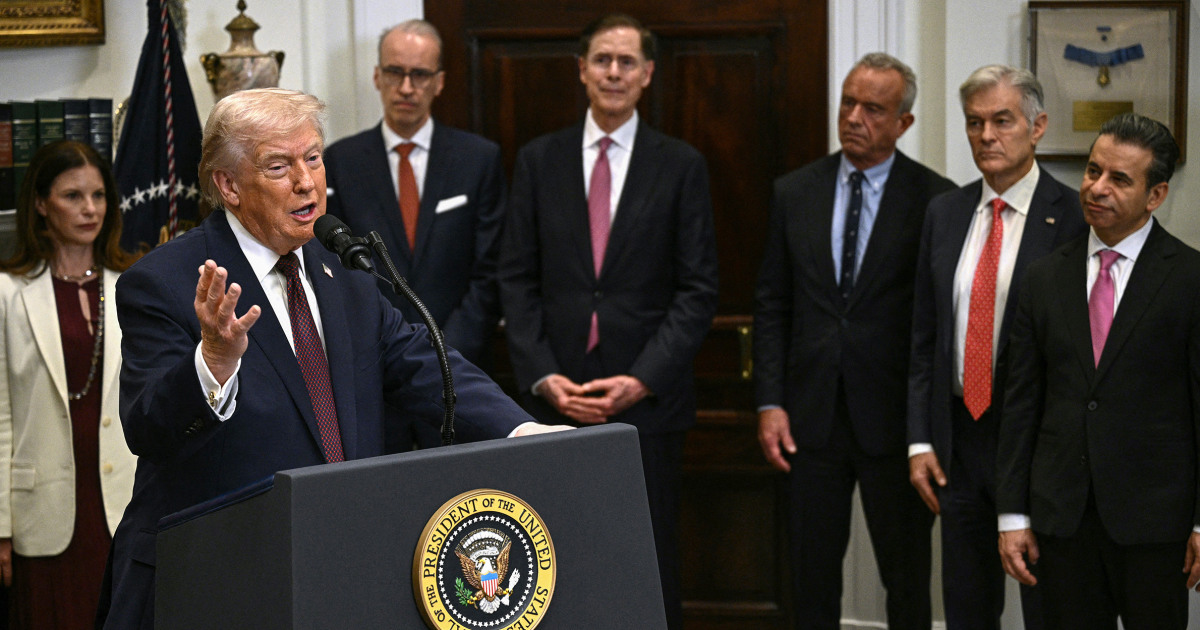
President Donald Trump announced the deal at a news conference Friday, flanked by executives from each of the nine companies: Amgen, Boehringer Ingelheim, Bristol Myers Squibb, Genentech, Gilead Sciences, GSK, Merck, Novartis and Sanofi.
“This represents by far the largest victory for patient affordability in the history of American healthcare,” Trump said.
The companies will receive a three-year tariff exemption in exchange for their commitments, Reuters reported, citing senior administration officials.
“If we didn’t have the use of tariffs, we would never be able to do this,” Trump said.
In a news release, the White House said the list price of Epclusa, Gilead’s hepatitis C drug, will drop from $24,920 to $2,425. Reyataz, an HIV drug from Bristol Myers Squibb, will go from $1,449 to $217, he said. And Plavix, a prescription blood thinner from Sanofi, will drop from $756 to $16, according to the White House.
Consumers can purchase the drugs at those prices through TrumpRX, a direct-to-consumer website operated by the federal government that is expected to launch early next year. However, the agreement does not affect the prices people would pay if they bought private insurance plans.
The deal is part of Trump’s broader effort to align the cost of prescription drugs in the United States with lower prices in other wealthy countries, known as “most favored nation” pricing. Trump signed an executive order in May directing federal officials to implement the pricing model.
A 2024 report from the RAND Corporation, a nonprofit think tank, found that average prescription drug prices in the U.S. are nearly three times higher than in peer countries.
In July, Trump sent letters to 17 big pharmaceutical companies warning of consequences if they refused to reduce drug costs. According to the White House, the letters said the federal government would “deploy every tool in our arsenal to protect American families from continued abusive drug pricing practices.”
Before Friday, five other drugmakers — AstraZeneca, Eli Lilly, EMD Serono, Novo Nordisk and Pfizer — had already reached deals with the Trump administration to lower drug prices.
Trump said Friday that he expects the three remaining drugmakers on the original list — AbbVie, Johnson & Johnson and Regeneron — to also reach deals. However, no such announcements have been made yet.