










• About Us
  • Contact Us
  • Spinal Cord Injury Videos
  • Disclaimer
  • Privacy Policy
Friday, January 23, 2026
Rajesh Spinal Injury
  • Home
  • Spinal Cord Injury
    • Quadriplegia
    • Paraplegia
    •  SCI Levels & Functions
    • Latest Breakthrough in SCI
    • Spinal Cord Injury Research
    • Spinal Cord Injury Videos
  • Rehabilitation
    • Physiotherapy and Occupational Therapy
    • Brain & Spine Chip Implants
    •  Epidural Stimulation
    • Stem Cell Therapy
    •  Spinal Cord Injury Drugs
  • Latest SCI News
    Spinal cord injuries in Gaza risk permanent disability for children

    Spinal cord injuries in Gaza risk permanent disability for children

    EEG technology could be a useful tool for linking brain signals with limb movements

    EEG technology could be a useful tool for linking brain signals with limb movements

    The first stage of testing of a drug aimed at complete spinal cord injury is approved in Brazil – 05/01/2026 – Science and Health

    The first stage of testing of a drug aimed at complete spinal cord injury is approved in Brazil – 05/01/2026 – Science and Health

    Injectable nanomaterials reduce secondary brain damage after ischemic stroke

    Injectable nanomaterials reduce secondary brain damage after ischemic stroke

    3 reflections from Dennis Prager after spinal cord injury

    3 reflections from Dennis Prager after spinal cord injury

    recovery is more difficult for older people with spinal cord injury | Housing

    recovery is more difficult for older people with spinal cord injury | Housing

    Study reveals how the nervous system activates repair after spinal cord injury

    Study reveals how the nervous system activates repair after spinal cord injury

    How does age affect recovery from spinal cord injury?

    How does age affect recovery from spinal cord injury?

    Older age influences functional recovery after spinal cord injury

    Older age influences functional recovery after spinal cord injury

  • Spine
    • Spinal Cord Injury Ai
  • Health News
    The United States officially leaves the World Health Organization

    The United States officially leaves the World Health Organization

    How an Underactive Thyroid Destroys Your Energy and Metabolism

    How an Underactive Thyroid Destroys Your Energy and Metabolism

    New owners of Crozer-Chester Medical Center plan to restore essential healthcare services to Delaware County

    New owners of Crozer-Chester Medical Center plan to restore essential healthcare services to Delaware County

    ‘The public sector must play a dominant role in healthcare’ | India News

    ‘The public sector must play a dominant role in healthcare’ | India News

    Common Triggers, Symptom Patterns, and Relief Strategies

    Common Triggers, Symptom Patterns, and Relief Strategies

    American Indians hold free MLK Day health camp in Boston

    American Indians hold free MLK Day health camp in Boston

    7 Subtle Signs Caregivers Miss (And How to Prevent Them)

    7 Subtle Signs Caregivers Miss (And How to Prevent Them)

    Beyond prevention: Routine vaccines offer surprising health benefits for older adults

    Beyond prevention: Routine vaccines offer surprising health benefits for older adults

    Are You Overpaying for a Lab-Grown Diamond?: CBC Marketplace Cheat Sheet

    Are You Overpaying for a Lab-Grown Diamond?: CBC Marketplace Cheat Sheet

  • Weight Loss Ai
  • More
    • NeuroScience
    • Brain Computer Interface
    • Diet-Nutrition
    • Spinal Cord Injury Videos
No Result
View All Result
  • Home
  • Spinal Cord Injury
    • Quadriplegia
    • Paraplegia
    •  SCI Levels & Functions
    • Latest Breakthrough in SCI
    • Spinal Cord Injury Research
    • Spinal Cord Injury Videos
  • Rehabilitation
    • Physiotherapy and Occupational Therapy
    • Brain & Spine Chip Implants
    •  Epidural Stimulation
    • Stem Cell Therapy
    •  Spinal Cord Injury Drugs
  • Latest SCI News
    Spinal cord injuries in Gaza risk permanent disability for children

    Spinal cord injuries in Gaza risk permanent disability for children

    EEG technology could be a useful tool for linking brain signals with limb movements

    EEG technology could be a useful tool for linking brain signals with limb movements

    The first stage of testing of a drug aimed at complete spinal cord injury is approved in Brazil – 05/01/2026 – Science and Health

    The first stage of testing of a drug aimed at complete spinal cord injury is approved in Brazil – 05/01/2026 – Science and Health

    Injectable nanomaterials reduce secondary brain damage after ischemic stroke

    Injectable nanomaterials reduce secondary brain damage after ischemic stroke

    3 reflections from Dennis Prager after spinal cord injury

    3 reflections from Dennis Prager after spinal cord injury

    recovery is more difficult for older people with spinal cord injury | Housing

    recovery is more difficult for older people with spinal cord injury | Housing

    Study reveals how the nervous system activates repair after spinal cord injury

    Study reveals how the nervous system activates repair after spinal cord injury

    How does age affect recovery from spinal cord injury?

    How does age affect recovery from spinal cord injury?

    Older age influences functional recovery after spinal cord injury

    Older age influences functional recovery after spinal cord injury

  • Spine
    • Spinal Cord Injury Ai
  • Health News
    The United States officially leaves the World Health Organization

    The United States officially leaves the World Health Organization

    How an Underactive Thyroid Destroys Your Energy and Metabolism

    How an Underactive Thyroid Destroys Your Energy and Metabolism

    New owners of Crozer-Chester Medical Center plan to restore essential healthcare services to Delaware County

    New owners of Crozer-Chester Medical Center plan to restore essential healthcare services to Delaware County

    ‘The public sector must play a dominant role in healthcare’ | India News

    ‘The public sector must play a dominant role in healthcare’ | India News

    Common Triggers, Symptom Patterns, and Relief Strategies

    Common Triggers, Symptom Patterns, and Relief Strategies

    American Indians hold free MLK Day health camp in Boston

    American Indians hold free MLK Day health camp in Boston

    7 Subtle Signs Caregivers Miss (And How to Prevent Them)

    7 Subtle Signs Caregivers Miss (And How to Prevent Them)

    Beyond prevention: Routine vaccines offer surprising health benefits for older adults

    Beyond prevention: Routine vaccines offer surprising health benefits for older adults

    Are You Overpaying for a Lab-Grown Diamond?: CBC Marketplace Cheat Sheet

    Are You Overpaying for a Lab-Grown Diamond?: CBC Marketplace Cheat Sheet

  • Weight Loss Ai
  • More
    • NeuroScience
    • Brain Computer Interface
    • Diet-Nutrition
    • Spinal Cord Injury Videos
No Result
View All Result
Spinal Cord Injury
No Result
View All Result
Home NeuroScience

Lack of a brain receptor may be the key to autism

Editor's by Editor's
December 29, 2025
in NeuroScience
0
0
Lack of a brain receptor may be the key to autism

Summary: Autistic adults show reduced availability of a key glutamate receptor, mGlu5, in widespread brain regions. This difference supports the theory that an imbalance between excitatory and inhibitory signals may contribute to autism-related traits.

The EEG data also showed that electrical activity related to reduced receptor availability can be detected non-invasively, suggesting a more accessible way to study excitatory function in autism. These findings offer a rare molecular view of autism and open potential avenues to improve diagnosis and targeted therapy.

Key facts

Reduced receptors: Autistic adults showed reduced availability of the glutamate receptor mGlu5 throughout the brain. Excitation-inhibition link: Findings support the idea that altered excitatory-inhibitory signaling contributes to autistic traits. EEG Potential: EEG markers correlate with receptor differences, pointing toward a more accessible diagnostic tool.

Source: Yale

Scientists at Yale School of Medicine (YSM) have discovered a molecular difference in the brains of autistic people compared to their neurotypical counterparts.

Autism is a neurodevelopmental condition associated with behavioral differences that include difficulties with social interaction, restrictive or intense interests, and repetitive movements or speech. But it’s unclear what makes autistic brains different.

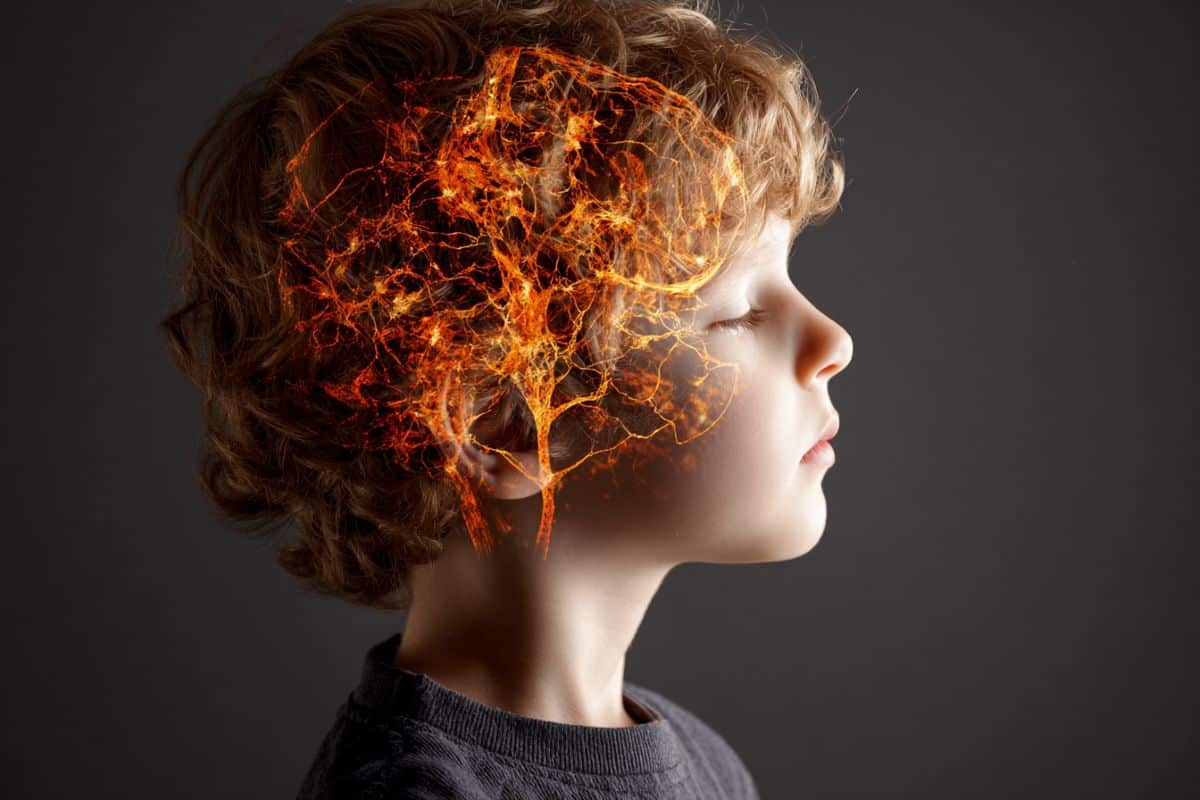
The researchers propose that the involvement of this central mechanism could explain the wide range of differences observed among autistic individuals. Credit: Neuroscience News

Now, a new study published in The American Journal of Psychiatry has found that the brains of autistic people have fewer receptors of a specific type for glutamate, the most common excitatory neurotransmitter in the brain. The reduced availability of these receptors may be associated with various characteristics linked to autism.

“We’ve discovered this really important, never-before-understood difference in autism that is significant, has implications for intervention, and may help us understand autism in a more concrete way than ever before,” says James McPartland, PhD, Harris Professor of Child Psychiatry and Psychology at the YSM Child Study Center and co-principal investigator of the study.

Signaling imbalance in autism

Neurons in the brain communicate with each other using electrical signals and chemical messengers called neurotransmitters. When an electrical current propagates through a neuron, it causes the release of neurotransmitters that transmit a signal to other neurons. This signaling in the brain can be excitatory or inhibitory.

Excitatory signaling primarily triggers the release of the neurotransmitter glutamate and acts as a green light signaling other neurons to activate. Inhibitory signaling, on the other hand, acts as a brake that suppresses activity.

The brain needs a precise balance of these two types of signaling to function properly. One of the main hypotheses about the underlying causes of autism is an imbalance of excitatory and inhibitory signals in the brain.

The researchers propose that the involvement of this central mechanism could explain the wide range of differences observed among autistic individuals.

Based on this hypothesis, the researchers used magnetic resonance imaging (MRI) and positron emission tomography (PET) to look for differences in the brains of 16 autistic adults and 16 people considered neurotypical. MRI scans allowed researchers to examine the anatomy of each of the participants’ brains, while PET scans revealed how the brains worked at a molecular level.

“PET scans can help us identify a molecular map of what’s happening in this glutamate system,” says David Matuskey, MD, associate professor of radiology and biomedical imaging at YSM and co-principal investigator of the study.

Autistic brains have reduced availability of a crucial receptor

These analyzes revealed reduced brain-wide availability of a specific type of glutamate receptor, known as metabotropic glutamate receptor 5 (mGlu5), in autistic participants.

The findings support the idea that an imbalance of excitatory and inhibitory signals in the brain could be contributing to traits associated with autism, the researchers say.

Fifteen of the autistic participants also underwent an electroencephalogram (EEG), a measure of the brain’s electrical activity. Based on the EEG, the researchers identified that these electrical measurements were associated with lower mGlu5 receptors.

This finding could have important clinical implications, the researchers say. While PET scans are a powerful tool for studying the brain, they are also expensive and involve radiation exposure. EEG could be a cheaper and more accessible way to further investigate excitatory function in the brain.

“EEG won’t completely replace PET scans, but it could help us understand how these glutamate receptors might contribute to ongoing brain activity in a person,” says Adam Naples, PhD, assistant professor at the YSM Child Study Center and first author of the study.

The study gives researchers novel mechanistic insight into how the brains of autistic individuals differ from those of neurotypical people. Because the molecular underpinnings of autism are still less well understood, today’s doctors rely on behavioral observation to diagnose it.

Elucidating the “molecular backbone” of autism could lead to better diagnostic tools and ways to support autistic people, researchers say.

“Today I walk into a room and play with a child to diagnose him with autism,” McPartland says. “Now we have found something that is significant, measurable and different in the autistic brain.”

There are currently no medications that treat the difficulties experienced by many people with autism. The findings could also help researchers find autism therapies that target the mGlu5 receptor.

While many neurodivergent people are not hindered by autism and may not need or want medications, novel treatments could help those on the spectrum who experience symptoms that affect their quality of life.

Future research directions

The current study only included autistic adults. It is still unclear whether the lower availability of receptors is a determining factor in autism or the result of living with it for decades. Previously, research with PET scans was limited to adults because of the risks associated with radiation exposure.

But Matuskey, co-investigator Richard Carson, PhD, and their colleagues have developed more sophisticated techniques that open a path to much lower radiation exposure.

In future studies, the team plans to conduct research with these new technologies in children and adolescents.

“We want to start creating a developmental story and start to understand whether the things we’re seeing are the root of autism or a neurological consequence of having had autism all your life,” McPartland says.

All autistic participants in the study had average or above average cognitive abilities. McPartland and his collaborators are also working together to develop other approaches to PET scans that will allow them to include people with intellectual disabilities in future studies.

Key questions answered:

Q: What molecular difference did researchers find in autistic brains?

A: They discovered reduced availability of the glutamate receptor mGlu5, which plays a central role in excitatory signaling.

Q: Why is this difference in receivers important?

A: It supports the long-standing hypothesis that autism involves an imbalance between excitatory and inhibitory brain signals, which can explain a variety of traits.

Q: Could this lead to new diagnostic or treatment approaches?

A: Yes. EEG patterns associated with receptor differences suggest a more accessible diagnostic avenue, and mGlu5-related therapies may become future treatment targets.

Editorial notes:

This article was edited by a Neuroscience News editor. Magazine article reviewed in its entirety. Additional context added by our staff.

About this research news on autism and neuroscience

Author: Isabella Backman
Source: Yale
Contact: Isabella Backman – Yale
Image: Image is credited to Neuroscience News.

Original Research: Closed access.
“Imaging metabotropic glutamate receptor 5 and excitatory neuronal activity in autism” by James McPartland et al. American Journal of Psychiatry

Abstract

Imaging metabotropic glutamate receptor 5 and excitatory neuronal activity in autism

Aim:

Autism spectrum disorder is a prevalent and heterogeneous condition with characteristics ranging from social and communication differences to sensory sensitivities. Differences in excitatory neurotransmission have been identified in autism, but the molecular underpinnings are not well understood.

To investigate the mechanism underlying these observed differences, the authors assessed glutamatergic receptor density in autistic adults using positron emission tomography (PET) and related it to a functional EEG measure of excitatory activity.

Methods:

Metabotropic glutamate receptor 5 (mGlu5) availability was compared in autistic (N=16) and neurotypical (N=16) adults aged 18 to 36 years, using the PET tracer 3-(18F)fluoro-5-(2-pyridinylethynyl)benzonitrile ((18F)FPEB). The PET outcome measure was volume of distribution (VT) calculated with equilibrium analysis using a venous inflow function and partial volume correction.

Group differences were quantified using mixed model analyses. Heterogeneity was further analyzed within the autism group by quantifying the relationship between receptor availability and the slope of the EEG power spectrum, an index of excitatory-inhibitory balance. Correlations between EEG and VT were calculated using Spearman’s rho.

Results:

Across all brain regions, mGlu5 availability was significantly lower (by ~15%) in autistic participants compared to neurotypical control participants. Group differences were generally greatest in the cerebral cortex. Within the autism group, mGlu5 availability in all regions was significantly correlated with EEG slope (e.g., cerebral cortex, r = 0.67), such that a shallower slope was associated with lower mGlu5 availability.

Conclusions:

This whole-brain investigation of mGlu5 availability with PET revealed widespread lower mGlu5 availability in multiple brain areas in autism. Furthermore, multimethod analyzes revealed associations with a noninvasive electrophysiological index of excitatory neurotransmission.

These results indicate that reduced mGlu5 availability throughout the brain may represent a molecular mechanism underlying altered excitatory neurotransmission that has the potential to stratify the heterogeneous phenotype of autism.
ShareTweetSendShare
Editor's

Editor's

Related Posts

Early intervention helps most autistic children acquire spoken language
NeuroScience

Early intervention helps most autistic children acquire spoken language

January 23, 2026
0
Brain conductors find precise connection to target cells through protein handshake
NeuroScience

Brain conductors find precise connection to target cells through protein handshake

January 14, 2026
3
Multilingualism Calculator Reveals True Language Strengths
NeuroScience

Multilingualism Calculator Reveals True Language Strengths

January 5, 2026
0
The brain combines fast and slow signals to shape human thinking
NeuroScience

The brain combines fast and slow signals to shape human thinking

January 3, 2026
0
Immune Signal Index May Predict Progressive Multiple Sclerosis
NeuroScience

Immune Signal Index May Predict Progressive Multiple Sclerosis

January 2, 2026
1
AI brain model shows how neurons learn and where they fail
NeuroScience

AI brain model shows how neurons learn and where they fail

January 1, 2026
1
Load More
No Result
View All Result

Rajesh Logo14 White

Rajeshspinalinjury.com is the ‘Latest Spinal Cord Injury NEWS & Information’ website. 
Address:  Dhariwal, Gurdaspur, Punjab. India
Email: rajeshspinal@gmail.com

Categories

  • Brain Computer Interface
  • Diet & Nutrition
  • Epidural Stimulation
  • Health News
  • Latest SCI News
  • NeuroScience
  • SCI Research
  • Spinal Cord Injury Ai
  • Spine
  • Weight Loss Ai
No Result
View All Result

Recent News

Early intervention helps most autistic children acquire spoken language

Early intervention helps most autistic children acquire spoken language

January 23, 2026
The United States officially leaves the World Health Organization

The United States officially leaves the World Health Organization

January 23, 2026
  • Home
  • Spinal Cord Injury Videos
  • About Us
  • Contact Us
  • Disclaimer
  • Privacy Policy
  • Terms of Condition

RajeshSpinalInjury ©2025 || All Right Reserved. Design & Development by Rajesh

Welcome Back!

Login to your account below

Forgotten Password?

Retrieve your password

Please enter your username or email address to reset your password.

Log In

Add New Playlist

No Result
View All Result
  • Home
  • Spinal Cord Injury
    •  SCI Levels & Functions
    • Latest Breakthrough in SCI
    •  Spinal Cord Injury Drugs
    • Spinal Cord Injury Research
  • Paraplegia
  • Quadriplegia
  • Rehabilitation
    • Brain & Spine Chip Implants
    • Physiotherapy and Occupational Therapy
    • Stem Cell Therapy
    •  Epidural Stimulation
  • Latest SCI News
  • Spine
    • Spinal Cord Injury Ai
  • NeuroScience
  • Brain Computer Interface
  • Health News
    • Diet & Nutrition
    • Weight Loss Ai
  • Spinal Cord Injury Videos
  • About Us
  • Contact Us

RajeshSpinalInjury ©2025 || All Right Reserved. Design & Development by Rajesh