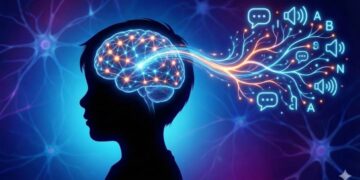


















Summary: Physical exercise activates extracellular vesicles (EVs), small particles in the blood, to act as temporary transport shuttles for key hormonal precursors. During vigorous exercise, levels of the hormone precursor POMC attached to EVs quadruple, suggesting a recently discovered mechanism for how stress, energy balance, and mood can change after movement.
EV-bound POMC also crosses blood vessel barriers, including the blood-brain barrier, more efficiently than POMC alone, offering insight into how exercise may influence brain function. The findings open new possibilities for understanding metabolism, pain, mental health, immune responses and drug delivery.
Key facts:
Exercise increases POMC transport: Vigorous exercise causes a four-fold increase in POMC molecules that stick to EVs. Efficient barrier crossing: POMC bound to EVs crosses blood vessel barriers, including the blood-brain barrier, better than POMC alone. Broad health implications: This mechanism may influence pain relief, stress, metabolism, inflammation, mental health, and future therapeutic delivery.
Source: Touro University
Researchers at Touro University of Nevada have discovered that small particles in the blood, called extracellular vesicles (EVs), play an important role in how a group of hormones are transported through the body.
Physical exercise can stimulate this process. The findings, published in the journal Proceedings of the National Academy of Sciences (PNAS), open the door to a deeper understanding of hormonal circulation and access to the brain, how exercise can trigger changes in energy balance, mental health and immune function, and the circulation of certain medications.
Blood and other body fluids are full of EVs, small particles that exist outside of cells. EVs transmit cell-to-cell signals within tissues and over long distances across organ systems by delivering biological cargo such as proteins, lipids, and nucleic acids to cells. They also remove cellular debris.
Scientists knew that EVs play key roles, from immune response to cancer progression, but much less is known about how they might interact with hormones.
The researchers focused on a hormonal precursor called proopiomelanocortin (POMC), which is transformed into a variety of hormones including endorphins (responsible for runner’s high) and adrenocorticotropic hormone (ACTH), which controls the body’s response to stress.
Because exercise has previously been associated with these hormones, the researchers used exercise to elicit changes that shed light on the interactions between POMC and EV.
The study found that vigorous exercise causes four times as many POMC to get into electric vehicles.
“This study not only shows an ‘exercise effect,’ but reveals a new biological mechanism in which stress caused by exercise causes EVs to temporarily act as transport shuttles for hormones in the bloodstream,” explains the study’s first author, Mark Santos, Ph.D., assistant professor at Touro.
The study also found that in the laboratory, EV-bound POMC can cross human blood vessel barriers, including the blood-brain barrier, more efficiently than POMC alone.
Since POMC must be processed into so-called “mature” hormones to initiate a response in a hard-to-access brain, more work is required to understand how the exercise-induced increase in POMC affects the brain.
“The observation that EVs can transport POMC has many potential directions, says Aurelio Lorico, MD, PhD, professor of pathology at Touro and co-senior author of the study with Cheryl Hightower. It may have wide-ranging implications, for pain management, metabolism and obesity, inflammation, and stress response,” he says.
Key questions answered:
A: They found that exercise causes EVs to act as transportation shuttles, greatly increasing the amount of POMC they carry through the bloodstream.
A: When attached to EVs, POMC crosses biological barriers more efficiently, suggesting a potential pathway to influence brain function and stress responses.
A: EV-based hormone transport could inform new strategies to treat pain, metabolic disorders, stress-related conditions, and to design drugs that better reach the brain.
Editorial notes:
This article was edited by a Neuroscience News editor. Magazine article reviewed in its entirety. Additional context added by our staff.
About this exercise and research news in neuroscience
Author: Ellie Schlam
Source: Touro University
Contact: Ellie Schlam – Touro University
Image: Image is credited to Neuroscience News.
Original research: findings will appear in PNAS