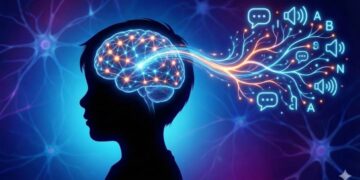



















Summary: Regular creative activity is linked to a younger-looking brain and slower brain aging, according to a large international analysis of brain imaging. People who danced, made music, created visual art, or played strategy video games regularly showed brain patterns associated with delayed aging.
The effect grew stronger with years of experience, suggesting that long-term creative engagement reshapes the way the brain ages. Even short-term creative training produced measurable improvements in markers of brain aging.
Key facts:
Younger brain age: Creative engagement was associated with a smaller gap in brain age, a marker of delayed neural aging. Experience matters: Dancers, musicians, artists, and long-time strategy players showed the greatest brain health benefits. Boosting plasticity: Creative activity increased efficiency in brain networks critical for attention, coordination, and problem solving.
Source: SWPS University
How to keep your brain in good shape? It’s a good idea to regularly engage in creative activities, such as dancing, painting, or even playing certain computer games.
These types of activities are associated with a delay in brain aging, and the greater the experience, the stronger this association, scientists, including researchers from SWPS University, observed in an international study.
“The conclusions of the study, published in the journal Nature Communications, could be translated into specific actions in the field of public health. They suggest the need to incorporate creative activities (e.g., artistic, musical) in educational programs and health systems as a promising tool to support brain health and social well-being,” says Aneta Brzezicka, PhD, professor at SWPS University, psychologist and co-author of the study.
Creativity is manifested not only in art.
Creativity, or the ability to produce novel ideas or solutions using your imagination, most often refers to music and art, but it turns out that playing certain video games can also stimulate it. For example, strategy games like StarCraft II require users to be resourceful in developing unique tactics, adaptive problem solving, and customized play styles.
It has been known for some time that creativity and creative activities have a positive impact on brain health. However, the scientific research available on this topic focuses on the effects of creative experiences on cognitive processes and well-being, so, as part of an international study, scientists decided to provide evidence of the impact of creative activities on brain health.
Brain clocks and age difference
As part of the study, researchers analyzed neuroimaging and survey data from more than 1,400 participants from 13 countries (including Turkey, Italy, Cuba, Argentina, Canada, Germany and Poland), including people who could be described as experts in a given creative field.
Dancers (tango), musicians, visual artists, and action game players, including inexperienced players, were included. In one of the studies, participants’ brain activity was measured before and after several weeks of training in StarCraft II.
The researchers used advanced computational models, so-called brain clocks, that attempt to estimate a person’s “brain age” based on neuroimaging data. They are used in scientific research on a variety of brain diseases.
These models compare predicted brain age with chronological age, estimating the so-called brain age gap (BAG), which reflects accelerated or delayed brain aging.
Accelerated aging (and therefore higher positive BAGs) is observed in psychiatric and neurological conditions, but also in people exposed to certain physical and social factors and who lead unhealthy lifestyles.
Creativity supports brain health
The study authors found that people who participated more in creative activities, from dance and music to visual arts and computer games, tended to have a younger “brain age,” suggesting that such activities may help slow brain aging and support healthy brain function. The link between creativity and brain health was independent of the type of creative activity.
All the activities analyzed are associated with stimulating the imagination and generating new solutions. Although they differ in shape, they function similarly and can help maintain neural connections that are more vulnerable to weakening with age. The study shows that these activities support key functions, including motor control, coordination and attention.
Creative experiences increased the plasticity of brain regions susceptible to aging, as well as areas associated with creative processes.
“The study shows that creative experiences are associated with greater efficiency of the local and global brain network (especially in the frontoparietal centers), which translates into more efficient information processing in those key regions,” explains psychologist Natalia Kowalczyk-Grębska, PhD, whose doctoral thesis defended at SWPS University contributed to the new research.
Greater experience, younger brain
People who have spent years developing their skills in creative fields such as dance, music, art or playing real-time strategy games had, on average, a “younger” brain age profile compared to those with less experience in these activities.
This means that long-term practice related to creativity may be more effective in promoting neural plasticity and brain health than short-term experiences.
Although regular creative activity has been shown to help maintain a “younger” brain, in this study, even several weeks of targeted training (about 30 hours in total) were linked to measurable changes in indicators of brain age.
Effects of delayed brain aging were observed in all creative domains studied, especially among more experienced people, with similar but smaller effects in participants who received short-term training.
These results indicate that it is a good idea to regularly tap into our creative potential, whether it’s dancing, painting, or immersing ourselves in the world of computer games. These activities are associated with slower brain aging, making them one of the simplest and most everyday ways to support brain health and, indirectly, our well-being, Brzezicka concludes.
The article describing the study, “Creative experiences and brain clocks,” was published in the prestigious journal Nature Communications.
The following researchers participated in the study: Aneta Brzezicka, PhD, professor at SWPS University and psychologist at the Institute of Psychology at SWPS University; Natalia Kowalczyk-Grębska, PhD, psychologist who defended her doctorate at SWPS University; and Natalia Jakubowska, PhD, psychologist at the Faculty of Psychology, SWPS University of Warsaw.
Key questions answered:
A: Yes, greater creative engagement was associated with measurably younger-looking brain networks.
A: Yes, strategy-based games showed brain-protective effects similar to those of music, dance, and visual arts.
A: Changes in brain age were detected after just several weeks of specific creative training.
Editorial notes:
This article was edited by a Neuroscience News editor. Magazine article reviewed in its entirety. Additional context added by our staff.
About this research news on creativity and brain aging
Author: Marta Danowska-Kisiel
Source: SWPS
Contact: Marta Danowska-Kisiel – SWPS
Image: Image is credited to Neuroscience News.
Original research: Open access.
“Creative experiences and brain clocks” by Aneta Brzezicka et al. Nature Communications
Abstract
Creative experiences and brain clocks.
Creative experiences can improve brain health, but the metrics and mechanisms remain elusive. We characterize brain health using brain clocks, which capture deviations from chronological age (i.e., accelerated or delayed brain aging).
We combined M/EEG functional connectivity (N = 1240) with machine learning support vector machines, whole-brain modeling, and Neurosynth meta-analysis.
Building on this framework, we reanalyzed previously published data sets of matched expert and non-expert participants in dance, music, visual arts, and video games, along with a pre- and post-learning study (N = 232).
We found a delay in brain age in all domains and scalable effects (experience>learning). The higher the level of experience and performance, the greater the delay in brain age.
Age-vulnerable brain centers showed increased creativity-related connectivity, particularly in areas related to experience and creative experiences.
Neurosynthetic analysis and computational modeling revealed plasticity-driven increases in brain efficiency and biophysical coupling, in creativity-specific delayed brain aging.
The findings indicate a domain-independent link between creativity and brain health.