











• About Us
  • Contact Us
  • Videos
  • Disclaimer
  • Privacy Policy
Friday, December 12, 2025
Rajesh Spinal Injury
  • Home
  • Spinal Cord Injury
    • Quadriplegia
    • Paraplegia
    •  SCI Levels & Functions
    • Latest Breakthrough in SCI
    • Research
    • Videos
  • Rehabilitation
    • Physiotherapy & Occupational Therapy
    • Brain & Spine Chip Implants
    •  Epidural Stimulation
    • Stem Cell Therapy
    •  Spinal Cord Injury Drugs
  • Latest SCI News
    How the nervous system triggers repair after spinal cord injury

    How the nervous system triggers repair after spinal cord injury

    Specific DNA sequences control spinal cord injury response

    Specific DNA sequences control spinal cord injury response

    NBA News: Rodney Rogers, former Sixth Man of the Year, dies at 54

    NBA News: Rodney Rogers, former Sixth Man of the Year, dies at 54

    Ventoux Biosciences launches research program targeting spinal cord injuries with VEN-201

    Ventoux Biosciences launches research program targeting spinal cord injuries with VEN-201

    FDA approves Onward Medical spinal cord stimulator for home use

    FDA approves Onward Medical spinal cord stimulator for home use

    New imaging approach may improve spinal cord injury treatment

    New imaging approach may improve spinal cord injury treatment

    Harvesting induced pluripotent stem cells in a disposable 3D printed bioreactor developed by SwRI

    Harvesting induced pluripotent stem cells in a disposable 3D printed bioreactor developed by SwRI

    Pennsylvania man says experimental drug helped him recover from bicycle accident

    Pennsylvania man says experimental drug helped him recover from bicycle accident

    Spinal cord injuries linked to chronic health problems later in life

    Spinal cord injuries linked to chronic health problems later in life

  • Spine
    • Spinal Cord Injury Ai
  • Health News
    Inside Vinmec’s approach to developing Vietnam’s next generation of doctors

    Inside Vinmec’s approach to developing Vietnam’s next generation of doctors

    How much water per day? Myths about hydration and warning signs of dehydration

    How much water per day? Myths about hydration and warning signs of dehydration

    Brazil uses mosquitoes to combat dengue, Zika and chikungunya |

    Brazil uses mosquitoes to combat dengue, Zika and chikungunya |

    The shocking science of bacterial growth in heat

    The shocking science of bacterial growth in heat

    Confusion over CDC panel’s hepatitis B guidance could disrupt care for babies

    Confusion over CDC panel’s hepatitis B guidance could disrupt care for babies

    Key Warning Signs of Autoimmune Arthritis

    Key Warning Signs of Autoimmune Arthritis

    Gundersen’s Emplify Health addresses rising violence against healthcare workers | News

    Gundersen’s Emplify Health addresses rising violence against healthcare workers | News

    Islam Wardak explains why diet and exercise are not enough without spine health

    Islam Wardak explains why diet and exercise are not enough without spine health

    Breaking News: Iran and Oman’s Bold Tourism Expansion in Marine, Healthcare and Cultural Sectors Set to Transform Persian Gulf

    Breaking News: Iran and Oman’s Bold Tourism Expansion in Marine, Healthcare and Cultural Sectors Set to Transform Persian Gulf

  • Weight Loss Ai
  • More
    • NeuroScience
    • Brain Computer Interface
    • Diet-Nutrition
    • Videos
No Result
View All Result
  • Home
  • Spinal Cord Injury
    • Quadriplegia
    • Paraplegia
    •  SCI Levels & Functions
    • Latest Breakthrough in SCI
    • Research
    • Videos
  • Rehabilitation
    • Physiotherapy & Occupational Therapy
    • Brain & Spine Chip Implants
    •  Epidural Stimulation
    • Stem Cell Therapy
    •  Spinal Cord Injury Drugs
  • Latest SCI News
    How the nervous system triggers repair after spinal cord injury

    How the nervous system triggers repair after spinal cord injury

    Specific DNA sequences control spinal cord injury response

    Specific DNA sequences control spinal cord injury response

    NBA News: Rodney Rogers, former Sixth Man of the Year, dies at 54

    NBA News: Rodney Rogers, former Sixth Man of the Year, dies at 54

    Ventoux Biosciences launches research program targeting spinal cord injuries with VEN-201

    Ventoux Biosciences launches research program targeting spinal cord injuries with VEN-201

    FDA approves Onward Medical spinal cord stimulator for home use

    FDA approves Onward Medical spinal cord stimulator for home use

    New imaging approach may improve spinal cord injury treatment

    New imaging approach may improve spinal cord injury treatment

    Harvesting induced pluripotent stem cells in a disposable 3D printed bioreactor developed by SwRI

    Harvesting induced pluripotent stem cells in a disposable 3D printed bioreactor developed by SwRI

    Pennsylvania man says experimental drug helped him recover from bicycle accident

    Pennsylvania man says experimental drug helped him recover from bicycle accident

    Spinal cord injuries linked to chronic health problems later in life

    Spinal cord injuries linked to chronic health problems later in life

  • Spine
    • Spinal Cord Injury Ai
  • Health News
    Inside Vinmec’s approach to developing Vietnam’s next generation of doctors

    Inside Vinmec’s approach to developing Vietnam’s next generation of doctors

    How much water per day? Myths about hydration and warning signs of dehydration

    How much water per day? Myths about hydration and warning signs of dehydration

    Brazil uses mosquitoes to combat dengue, Zika and chikungunya |

    Brazil uses mosquitoes to combat dengue, Zika and chikungunya |

    The shocking science of bacterial growth in heat

    The shocking science of bacterial growth in heat

    Confusion over CDC panel’s hepatitis B guidance could disrupt care for babies

    Confusion over CDC panel’s hepatitis B guidance could disrupt care for babies

    Key Warning Signs of Autoimmune Arthritis

    Key Warning Signs of Autoimmune Arthritis

    Gundersen’s Emplify Health addresses rising violence against healthcare workers | News

    Gundersen’s Emplify Health addresses rising violence against healthcare workers | News

    Islam Wardak explains why diet and exercise are not enough without spine health

    Islam Wardak explains why diet and exercise are not enough without spine health

    Breaking News: Iran and Oman’s Bold Tourism Expansion in Marine, Healthcare and Cultural Sectors Set to Transform Persian Gulf

    Breaking News: Iran and Oman’s Bold Tourism Expansion in Marine, Healthcare and Cultural Sectors Set to Transform Persian Gulf

  • Weight Loss Ai
  • More
    • NeuroScience
    • Brain Computer Interface
    • Diet-Nutrition
    • Videos
No Result
View All Result
Spinal Cord Injury
No Result
View All Result
Home NeuroScience

Blinking decreases when we strain to hear speech

Editor's by Editor's
December 12, 2025
in NeuroScience
0
0
Blinking decreases when we strain to hear speech

Summary: People blink less when they try harder to understand speech in noisy environments, suggesting that blinking is closely related to cognitive effort. In two experiments, blink rate consistently decreased during key moments of listening, especially when background noise made speech processing difficult.

The effect remained stable regardless of lighting conditions, indicating that the change reflects mental load rather than sensory information to the eye. The findings highlight blinking as a simple, real-time marker of how hard the brain is working to filter out noise and focus on important information.

Key facts

Effort-based blinking: Blink rates decrease when listening to important speech, especially in noisy environments. Lighting doesn’t matter: bright, dim, or dark rooms showed the same cognitive flicker suppression effect. Useful Metric: Blink time can serve as a practical measure of cognitive load in real-world settings.

Source: Concordia University

Blinking is a human reflex that is most often done without thinking, like breathing.

Although research on blinking is often related to vision, a new study from Concordia examines how blinking is related to cognitive function, such as filtering out background noise to focus on what someone is trying to tell us in a crowded room.

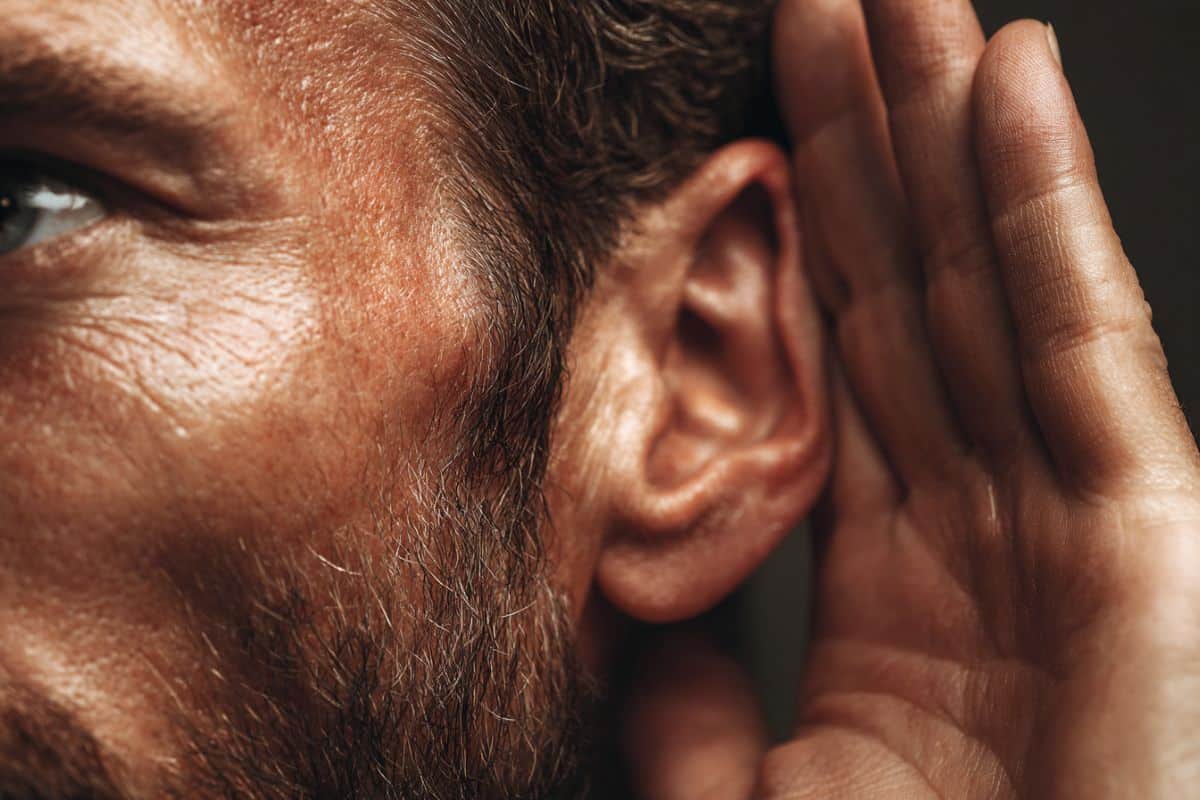
The research further showed that blinking patterns remained stable across different lighting conditions, meaning that people blinked with the same frequency whether the lighting was bright, dim or dark. Credit: Neuroscience News

In an article in the journal Trends in Hearing, the researchers describe two experiments designed to measure how blinking changes in response to stimuli under different conditions.

They found that people naturally blink less when they try harder to understand speech in noisy environments, suggesting that the act of blinking reflects the mental effort behind everyday listening. The research further showed that blinking patterns remained stable across different lighting conditions, meaning that people blinked with the same frequency whether the lighting was bright, dim or dark.

“We wanted to know if blinking was affected by environmental factors and how it related to executive function,” says lead author Pénélope Coupal, an honors student in the Hearing and Cognition Laboratory. “For example, is there a strategic time for a person to blink so they don’t miss what is being said?”

They discovered that this was indeed the case.

“We don’t blink randomly,” says Coupal. “In fact, we systematically blink less when salient information is presented.”

Link eye and auditory activity

In the study, which involved nearly 50 adults, participants sat in a soundproof room, fixated on a cross on a screen. They listened to short sentences played through headphones while background noise levels (the signal-to-noise ratio (SNR)) varied from low to high.

Using eye-tracking glasses, the researchers recorded each blink and its exact timing while the participants listened to the sentences. Each trial was then divided into three time periods: before, during, and after each sentence.

They found that blink rate consistently decreased while participants listened to a sentence compared to the periods immediately before and after. This blink suppression was especially pronounced in the noisier conditions, when speech was more difficult to understand.

In a follow-up experiment, the researchers tested flicker rates at different SNRs in dark, medium, and bright lighting rooms. The same pattern emerged. This indicated that cognitive demands drive the effect, rather than the amount of light reaching the eye.

While the researchers noted that blink rates varied between individuals (some participants blinked as few as 10 times per minute, while others may have blinked 70 times per minute), the overall trend was visible and significant.

Most previous studies linking eye function to cognitive effort focused on measuring pupil dilation (pupilometry) and treated blinks as annoyances that needed to be removed from the data. This study reanalyzed existing pupillometry data to specifically focus on blink time and frequency. The researchers say their findings confirm that blink rates can be used as a practical, low-burden metric to measure cognitive function both in the laboratory and in the real world.

“Our study suggests that blinking is associated with the loss of information, both visual and auditory,” says co-author Mickael Deroche, associate professor in the Department of Psychology.

“Presumably that’s why we suppress blinking when important information arrives. But to be completely convincing, we need to map the precise timing and pattern of how visual/auditory information is lost during a blink. This is the logical next step, and postdoctoral fellow Charlotte Bigras is leading a study. But these findings are far from trivial.”

Yue Zhang contributed to this research.

Key questions answered:

Q: Why do we blink less when listening in noisy environments?

A: Because the brain suppresses blinking to avoid missing critical auditory information when cognitive demand is high.

Q: Does lighting affect this flicker suppression effect?

A: No. The flicker patterns remained the same in dark, dim, and bright lighting conditions, confirming that the effect is cognitive, not visual.

Q: Can blinking be used to measure mental effort?

A: Yes. Blink time and rate offer a simple, hassle-free way to track cognitive load in both laboratory and real-world listening tasks.

Editorial notes:

This article was edited by a Neuroscience News editor. Magazine article reviewed in its entirety. Additional context added by our staff.

About this research news in visual and auditory neuroscience

Author: Patrick Lejtenyi
Source: Concordia University
Contact: Patrick Lejtenyi – Concordia University
Image: Image is credited to Neuroscience News.

Original research: Open access.
“Reduced flicker during sentence listening reflects increased cognitive load in challenging listening conditions” by Pénélope Coupal et al. Trends in hearing

Abstract

Reduced flicker during sentence listening reflects increased cognitive load under challenging listening conditions

While blink analysis was traditionally performed in vision research, recent studies suggest that blinks could reflect a more general cognitive strategy for resource allocation, including auditory tasks, but their use in the fields of audiology or psychoacoustics remains scarce and their interpretation is largely speculative.

It is hypothesized that as listening conditions become more difficult, the number of blinks would decrease, especially during stimulus presentation, because it reflects an alert window.

In experiment 1, 21 participants were presented with 80 sentences with different signal-to-noise ratios (SNR): 0, + 7, + 14 dB and in silence, in a soundproof room with controlled gaze and luminance (75 lux). In experiment 2, 28 participants were presented with 120 sentences at only 0 and +14 dB SNR, but in three luminance conditions (dark at 0 lux, medium at 75 lux, bright at 220 lux).

Each pupil trace was manually reviewed to determine the number of blinks, along with their respective onset and offset. The results showed that blink frequency decreased during sentence presentation, and the reduction became more pronounced at more adverse SNRs.

Experiment 2 replicated this finding, regardless of luminance level. It is concluded that blinking could serve as an additional physiological correlate of listening effort in simple speech recognition tasks, and that it may be a useful indicator of cognitive load regardless of the modality of the information processed.
ShareTweetSendShare
Editor's

Editor's

Related Posts

Anti-inflammatory treatments show promise for depression
NeuroScience

Anti-inflammatory treatments show promise for depression

December 11, 2025
0
How the brain interprets sarcasm, tone and hidden meaning
NeuroScience

How the brain interprets sarcasm, tone and hidden meaning

December 10, 2025
0
Mushroom molecule shows promise against brain cancer
NeuroScience

Mushroom molecule shows promise against brain cancer

December 10, 2025
0
Brain uses AI-like calculations for language
NeuroScience

Brain uses AI-like calculations for language

December 9, 2025
0
Post-traumatic stress disorder linked to accelerated brain aging
NeuroScience

Post-traumatic stress disorder linked to accelerated brain aging

December 9, 2025
0
Nicotine withdrawal makes smokers more sensitive to pain
NeuroScience

Nicotine withdrawal makes smokers more sensitive to pain

December 8, 2025
0
Load More
No Result
View All Result

Rajesh Logo14 White

Rajeshspinalinjury.com is the ‘Spinal Cord Injury Information’ & the latest NEWS’ website. We’ll provide you with merely interesting content.

Categories

  • Brain Computer Interface
  • Diet & Nutrition
  • Epidural Stimulation
  • Health News
  • Latest SCI News
  • NeuroScience
  • SCI Research
  • Spinal Cord Injury Ai
  • Spine
  • Weight Loss Ai
No Result
View All Result

Recent News

Blinking decreases when we strain to hear speech

Blinking decreases when we strain to hear speech

December 12, 2025
Inside Vinmec’s approach to developing Vietnam’s next generation of doctors

Inside Vinmec’s approach to developing Vietnam’s next generation of doctors

December 11, 2025
  • Home
  • Videos
  • About Us
  • Contact Us
  • Disclaimer
  • Privacy Policy
  • Terms of Condition

RajeshSpinalInjury ©2025 || All Right Reserved. Design & Development by Rajesh

Welcome Back!

Login to your account below

Forgotten Password?

Retrieve your password

Please enter your username or email address to reset your password.

Log In

Add New Playlist

error: Do Not Copy Content !! Locked by RajeshSpinalInjury
No Result
View All Result
  • Home
  • Spinal Cord Injury
    •  SCI Levels & Functions
    • Latest Breakthrough in SCI
    •  Spinal Cord Injury Drugs
    • Research
  • Paraplegia
  • Quadriplegia
  • Rehabilitation
    • Brain & Spine Chip Implants
    • Physiotherapy & Occupational Therapy
    • Stem Cell Therapy
    •  Epidural Stimulation
  • Latest SCI News
  • Spine
    • Spinal Cord Injury Ai
  • NeuroScience
  • Brain Computer Interface
  • Health News
    • Diet & Nutrition
    • Weight Loss Ai
  • Videos
  • About Us
  • Contact Us

RajeshSpinalInjury ©2025 || All Right Reserved. Design & Development by Rajesh