














Summary: A new study shows that balanced neural inhibition in the hippocampus is crucial for recognition memory, the ability to remember objects we have recently encountered. Using a rat model, the researchers altered GABA-mediated inhibition in the hippocampus or prefrontal cortex to see how each region contributed to memory.
They found that both too little and too much inhibition in the hippocampus impaired object recognition, while manipulating inhibition in the prefrontal cortex had no effect. The findings suggest that stable and well-regulated neuronal activity (not simply more or less) is essential for memory function. This work may help guide new treatments for cognitive disorders marked by impaired inhibition, including dementia and schizophrenia.
Key facts
Hippocampal balance required: Recognition memory failed when hippocampal inhibition was too weak or too strong. Region-specific effect: Disrupting inhibition in the prefrontal cortex did not affect object recognition performance. Clinical implications: Results highlight neuronal imbalance, not hypoactivity, as a key factor contributing to memory impairment in multiple brain disorders.
Source: University of Nottingham
A new study has revealed that neural inhibition and balanced neural activity in a specific area of the brain are necessary for recognition memory.
The findings could help better understand cognitive disorders, including schizophrenia, dementia and age-related memory disorders.
Scientists at the University of Nottingham’s School of Psychology, working with colleagues at the University of Manchester, found that neural inhibition within the hippocampus, but not the prefrontal cortex, is important for object recognition memory.
More specifically, both too little and too much neuronal inhibition in the hippocampus impaired such memory, suggesting that balanced levels of neuronal activity in the hippocampus are important for object recognition to function optimally.
The findings were published today in The Journal of Neuroscience.
Neurons in the brain interact with each other by releasing chemicals, so-called neurotransmitters. Gamma-aminobutyric acid (GABA) is the most common inhibitory neurotransmitter, which is important in restricting neuronal activity, preventing neurons from firing too much or responding to irrelevant stimuli.
In extreme cases, impaired GABA inhibitory transmission can lead to epileptic seizures. Furthermore, more subtle impairments in GABA-mediated neuronal inhibition, especially in the hippocampus and prefrontal cortex, two brain regions involved in memory and other cognitive functions, have been linked to a variety of brain disorders characterized by cognitive impairments, including schizophrenia, age-related cognitive decline, and the early stages of Alzheimer’s.
Charlie Taylor, now a researcher at the Faculty of Medicine, led the research as part of her PhD project at the Faculty of Psychology. She said: “Impaired GABAergic neuronal inhibition in the prefrontal cortex and hippocampus has emerged as a key neuropathological feature of cognitive disorders, but we did not know whether these brain abnormalities contribute to memory impairment relevant to these conditions.
“Many cognitive disorders show deficits in recognition memory, which is a type of memory that allows people to remember newly encountered objects (e.g., their new bike, a new device, a new face, etc.).
“We can test a type of memory related to this in rats using an object recognition test, which is widely used in preclinical models of brain disorders. Using a rat model, we were able to change GABA-mediated neuronal inhibition specifically in the hippocampus or prefrontal cortex and identify exactly how this affected their object recognition.”
The researchers found that both too little and too much neural inhibition in the hippocampus disrupts recognition memory, suggesting that balanced levels of neural inhibition are needed to maintain this type of memory function.
The findings also show that the object recognition test, which is widely used by researchers in academia and the drug discovery industry, can be used to study dysfunction of GABA-mediated neuronal inhibition in the hippocampus (but not the prefrontal cortex) in rat models of brain disorders and also to test new treatments targeting such dysfunction.
Dr Tobias Bast, from the Faculty of Psychology, who supervised the research, said: “These findings provide greater insight into the brain mechanisms underlying cognitive impairments, including memory problems.
“People often assume that cognitive impairments are caused by decreased activity in certain regions of the brain, and that ‘boosting’ brain activity can improve brain functions. However, these new findings show that the opposite may be true. Faulty neural inhibition, leading to increased but poorly controlled brain activity, can cause problems.
“This has important implications for new treatments, suggesting that it is important to rebalance neural activity, for example through drugs or neuromodulation technology, in specific regions of the brain to restore cognitive functions, such as memory.”
Key questions answered:
A: Recognition memory relies on carefully balanced inhibitory signaling in the hippocampus. When inhibition is reduced or excessive, neural activity becomes unstable, disrupting the brain’s ability to encode and remember newly encountered objects.
A: No. Manipulating GABA-mediated inhibition in the prefrontal cortex had no measurable effect on object recognition, demonstrating that this form of memory is specifically dependent on hippocampal function.
A: Many disorders involving memory loss also show impaired GABAergic inhibition. This study suggests that restoring balanced inhibition, rather than simply increasing neural activity, may be key to improving memory in diseases such as schizophrenia, dementia, and age-related cognitive decline.
Editorial notes:
This article was edited by a Neuroscience News editor. Magazine article reviewed in its entirety. Additional context added by our staff.
About this research news in neuroscience and memory
Author: Emma Thorne
Source: University of Nottingham
Contact: Emma Thorne – University of Nottingham
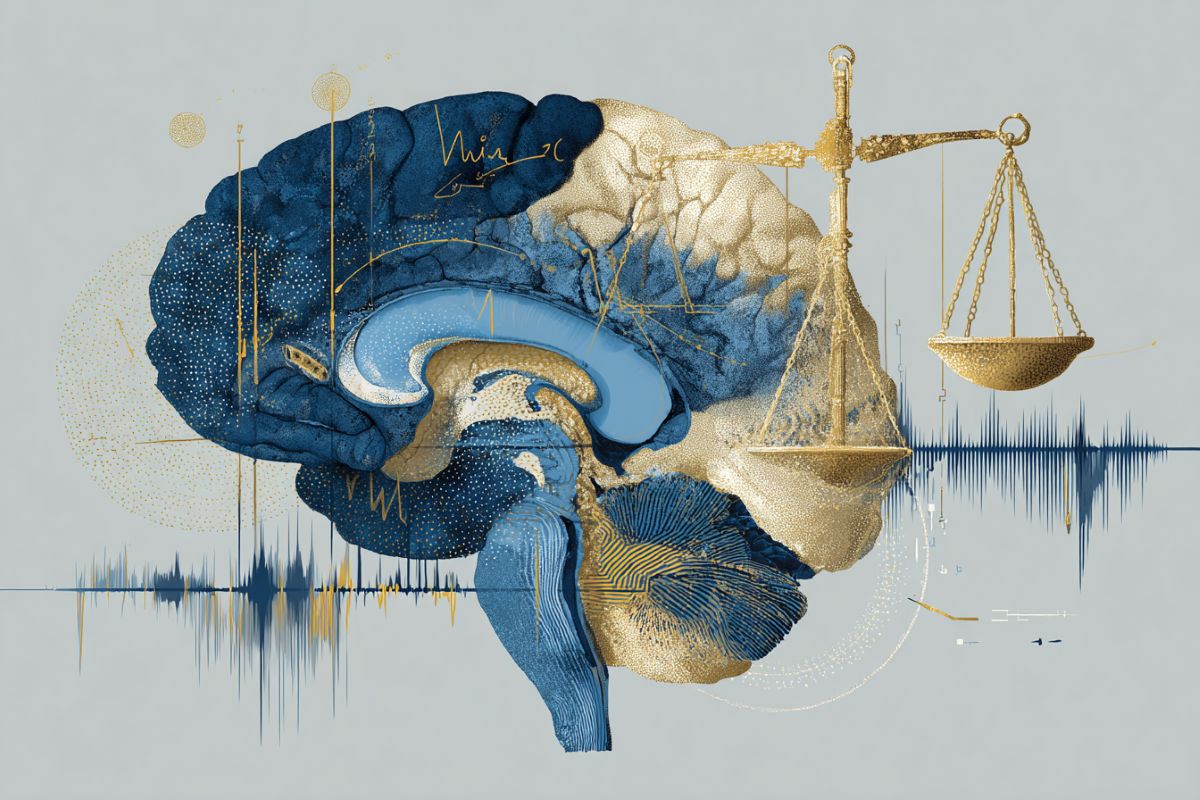
Image: Image is credited to Neuroscience News.
Original research: Open access.
“Too little and too much: balanced neural activity in the hippocampus, but not the medial prefrontal, is required for intact novel object recognition in rats” by Charlie Taylor et al. Neuroscience Magazine
Abstract
Too little and too much: Balanced neural activity in the hippocampus, but not the medial prefrontal, is required for intact novel object recognition in rats.
Impaired GABAergic inhibition, so-called neuronal disinhibition, in the prefrontal cortex and hippocampus has been linked to cognitive deficits. The novel object recognition task (NOR) has been widely used to study cognitive deficits in rodents.
However, the contribution of prefrontal cortical and hippocampal GABAergic inhibition to NOR task performance has not been established.
Here, we investigated NOR task performance in male Lister hooded rats following regional neuronal disinhibition or functional inhibition, using an intracerebral microinfusion of the GABAA receptor antagonist picrotoxin or the agonist muscimol, respectively.
Our infusion targets were the medial prefrontal cortex (mPFC), dorsal hippocampus (DH), and ventral hippocampus (VH). Using a within-subjects design, we compared performance on the NOR (1-min retention delay) task after bilateral regional infusions of saline, picrotoxin, or muscimol performed before the acquisition phase.
In mPFC, neither functional inhibition nor neuronal disinhibition affected object recognition memory. However, in both DH and VH, neuronal disinhibition affected NOR relative to saline control, primarily by reducing novel object exploration time.
Furthermore, functional inhibition of DH affected NOR, whereas functional inhibition of VH tended to reduce exploration of novel objects at the highest dose used (along with significant nonspecific behavioral effects). Overall, our data suggest that hippocampal, but not prefrontal, GABAergic inhibition contributes to NOR with a retention delay of 1 min.
Furthermore, such NOR performance likely requires balanced neural activity in the DH, and both too little and too much DH activity impairs NOR memory.
Our findings support that the NOR task can be used to investigate hippocampal GABAergic dysfunction in rodent models.