










• About Us
  • Contact Us
  • Spinal Cord Injury Videos
  • Disclaimer
  • Privacy Policy
Friday, January 23, 2026
Rajesh Spinal Injury
  • Home
  • Spinal Cord Injury
    • Quadriplegia
    • Paraplegia
    •  SCI Levels & Functions
    • Latest Breakthrough in SCI
    • Spinal Cord Injury Research
    • Spinal Cord Injury Videos
  • Rehabilitation
    • Physiotherapy and Occupational Therapy
    • Brain & Spine Chip Implants
    •  Epidural Stimulation
    • Stem Cell Therapy
    •  Spinal Cord Injury Drugs
  • Latest SCI News
    Spinal cord injuries in Gaza risk permanent disability for children

    Spinal cord injuries in Gaza risk permanent disability for children

    EEG technology could be a useful tool for linking brain signals with limb movements

    EEG technology could be a useful tool for linking brain signals with limb movements

    The first stage of testing of a drug aimed at complete spinal cord injury is approved in Brazil – 05/01/2026 – Science and Health

    The first stage of testing of a drug aimed at complete spinal cord injury is approved in Brazil – 05/01/2026 – Science and Health

    Injectable nanomaterials reduce secondary brain damage after ischemic stroke

    Injectable nanomaterials reduce secondary brain damage after ischemic stroke

    3 reflections from Dennis Prager after spinal cord injury

    3 reflections from Dennis Prager after spinal cord injury

    recovery is more difficult for older people with spinal cord injury | Housing

    recovery is more difficult for older people with spinal cord injury | Housing

    Study reveals how the nervous system activates repair after spinal cord injury

    Study reveals how the nervous system activates repair after spinal cord injury

    How does age affect recovery from spinal cord injury?

    How does age affect recovery from spinal cord injury?

    Older age influences functional recovery after spinal cord injury

    Older age influences functional recovery after spinal cord injury

  • Spine
    • Spinal Cord Injury Ai
  • Health News
    The growth of Inside Life Medical from a single service to a broader medical ecosystem

    The growth of Inside Life Medical from a single service to a broader medical ecosystem

    The United States officially leaves the World Health Organization

    The United States officially leaves the World Health Organization

    How an Underactive Thyroid Destroys Your Energy and Metabolism

    How an Underactive Thyroid Destroys Your Energy and Metabolism

    New owners of Crozer-Chester Medical Center plan to restore essential healthcare services to Delaware County

    New owners of Crozer-Chester Medical Center plan to restore essential healthcare services to Delaware County

    ‘The public sector must play a dominant role in healthcare’ | India News

    ‘The public sector must play a dominant role in healthcare’ | India News

    Common Triggers, Symptom Patterns, and Relief Strategies

    Common Triggers, Symptom Patterns, and Relief Strategies

    American Indians hold free MLK Day health camp in Boston

    American Indians hold free MLK Day health camp in Boston

    7 Subtle Signs Caregivers Miss (And How to Prevent Them)

    7 Subtle Signs Caregivers Miss (And How to Prevent Them)

    Beyond prevention: Routine vaccines offer surprising health benefits for older adults

    Beyond prevention: Routine vaccines offer surprising health benefits for older adults

  • Weight Loss Ai
  • More
    • NeuroScience
    • Brain Computer Interface
    • Diet-Nutrition
    • Spinal Cord Injury Videos
No Result
View All Result
  • Home
  • Spinal Cord Injury
    • Quadriplegia
    • Paraplegia
    •  SCI Levels & Functions
    • Latest Breakthrough in SCI
    • Spinal Cord Injury Research
    • Spinal Cord Injury Videos
  • Rehabilitation
    • Physiotherapy and Occupational Therapy
    • Brain & Spine Chip Implants
    •  Epidural Stimulation
    • Stem Cell Therapy
    •  Spinal Cord Injury Drugs
  • Latest SCI News
    Spinal cord injuries in Gaza risk permanent disability for children

    Spinal cord injuries in Gaza risk permanent disability for children

    EEG technology could be a useful tool for linking brain signals with limb movements

    EEG technology could be a useful tool for linking brain signals with limb movements

    The first stage of testing of a drug aimed at complete spinal cord injury is approved in Brazil – 05/01/2026 – Science and Health

    The first stage of testing of a drug aimed at complete spinal cord injury is approved in Brazil – 05/01/2026 – Science and Health

    Injectable nanomaterials reduce secondary brain damage after ischemic stroke

    Injectable nanomaterials reduce secondary brain damage after ischemic stroke

    3 reflections from Dennis Prager after spinal cord injury

    3 reflections from Dennis Prager after spinal cord injury

    recovery is more difficult for older people with spinal cord injury | Housing

    recovery is more difficult for older people with spinal cord injury | Housing

    Study reveals how the nervous system activates repair after spinal cord injury

    Study reveals how the nervous system activates repair after spinal cord injury

    How does age affect recovery from spinal cord injury?

    How does age affect recovery from spinal cord injury?

    Older age influences functional recovery after spinal cord injury

    Older age influences functional recovery after spinal cord injury

  • Spine
    • Spinal Cord Injury Ai
  • Health News
    The growth of Inside Life Medical from a single service to a broader medical ecosystem

    The growth of Inside Life Medical from a single service to a broader medical ecosystem

    The United States officially leaves the World Health Organization

    The United States officially leaves the World Health Organization

    How an Underactive Thyroid Destroys Your Energy and Metabolism

    How an Underactive Thyroid Destroys Your Energy and Metabolism

    New owners of Crozer-Chester Medical Center plan to restore essential healthcare services to Delaware County

    New owners of Crozer-Chester Medical Center plan to restore essential healthcare services to Delaware County

    ‘The public sector must play a dominant role in healthcare’ | India News

    ‘The public sector must play a dominant role in healthcare’ | India News

    Common Triggers, Symptom Patterns, and Relief Strategies

    Common Triggers, Symptom Patterns, and Relief Strategies

    American Indians hold free MLK Day health camp in Boston

    American Indians hold free MLK Day health camp in Boston

    7 Subtle Signs Caregivers Miss (And How to Prevent Them)

    7 Subtle Signs Caregivers Miss (And How to Prevent Them)

    Beyond prevention: Routine vaccines offer surprising health benefits for older adults

    Beyond prevention: Routine vaccines offer surprising health benefits for older adults

  • Weight Loss Ai
  • More
    • NeuroScience
    • Brain Computer Interface
    • Diet-Nutrition
    • Spinal Cord Injury Videos
No Result
View All Result
Spinal Cord Injury
No Result
View All Result
Home NeuroScience

Astrocytes found to drive key brain changes in nicotine addiction

Editor's by Editor's
December 6, 2025
in NeuroScience
0
0
Astrocytes found to drive key brain changes in nicotine addiction

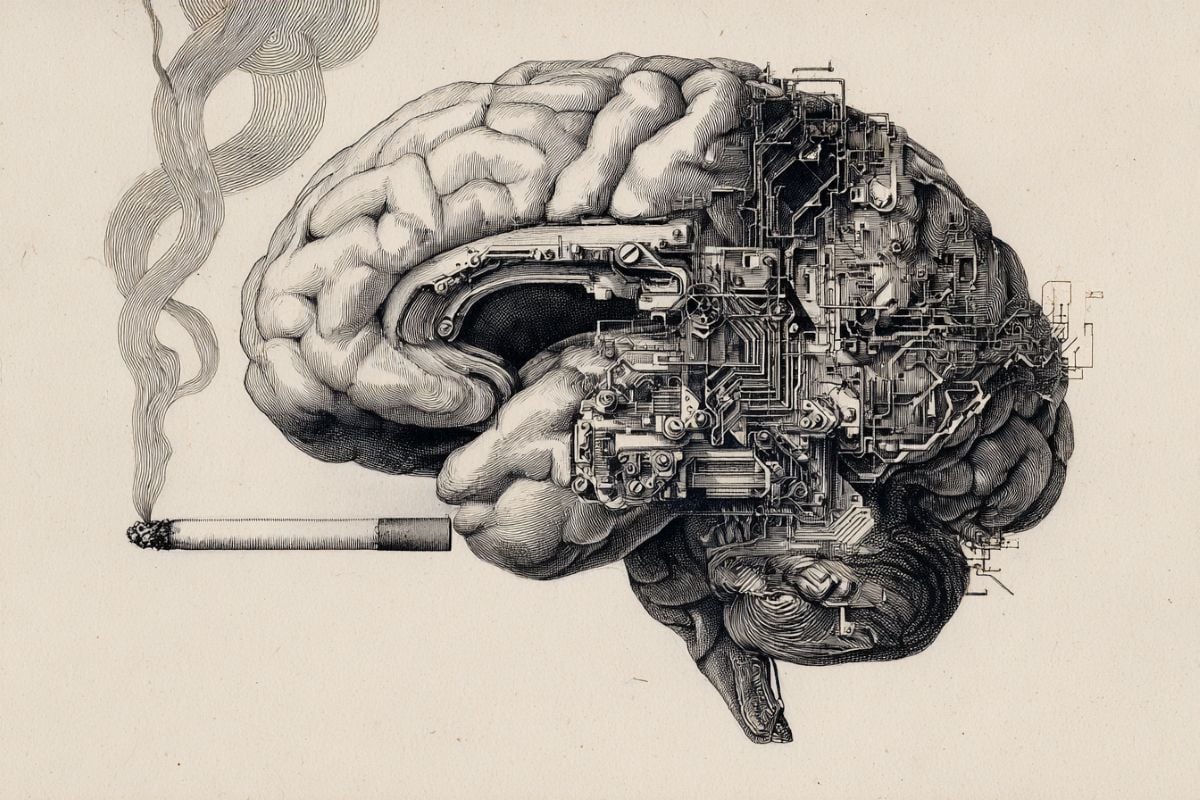
Summary: New research shows that astrocytes play an active role in nicotine-induced brain changes, challenging the old neuron-centered view of addiction. Nicotine stimulates astrocyte receptors, triggering signaling cascades that increase glutamine synthetase activity and amplify glutamate-related pathways.

These molecular changes strengthen locomotor sensitization, a hallmark of addiction-like neural adaptation. By blocking a critical astrocytic signaling interaction, the researchers were able to reduce these behavioral effects, pointing toward new long-term directions for addiction treatment.

Key facts

Astrocyte activation: Nicotine triggers calcium signaling in astrocytes, leading to activation of pJNK and increased glutamine synthetase activity. Glutamate pathway: These changes amplify the glutamate-glutamine cycle, reinforcing neuronal adaptations related to addiction. Therapeutic potential: Blockade of astrocytic signaling reduced nicotine-induced sensitization in rats, suggesting new targets for intervention.

Source: Pusan ​​National University

Nicotine addiction remains one of the most persistent public health challenges worldwide, driven by changes in the brain that reinforce repeated use and make quitting extremely difficult.

For decades, scientists have focused primarily on neurons to explain how these changes occur. But growing evidence suggests that other brain cells may play a much more active role in shaping addictive behavior than previously thought.

Taking advantage of this shift in understanding, a team of researchers led by Professor Eun Sang Choe from the Department of Biological Sciences at Pusan ​​National University, Republic of Korea, has discovered how astrocytes actively contribute to nicotine-induced brain changes, revealing a previously overlooked mechanism involving astrocytic glutamine synthetase (GS). GS is an essential enzyme for regulating glutamate, the brain’s main excitatory neurotransmitter.

The study was published online in the journal Acta Pharmaceutica Sinica B on September 25, 2025.

“Most studies on nicotine addiction traditionally focus on neurons, neglecting the role of glial cells. Our groundbreaking study demonstrates that astrocytes interact with neurons within the brain’s reward system to regulate nicotine-dependent behavior, advancing current understanding of nicotine addiction,” says Professor Choe.

In this study, the researchers repeatedly injected rat models with nicotine and found that nicotine exposure stimulated α7 nicotinic acetylcholine receptors in astrocytes in the caudate and putamen region of the brain, initiating an increase in intracellular calcium.

This increase in calcium led to the activation of phosphorylated c-Jun N-terminal kinase (pJNK), a signaling molecule known to respond to cellular stress and drug exposure. Once activated, JNK further interacted with metabotropic glutamate receptor 1a (mGluR1a), increasing GS activity and activating the glutamate-glutamine pathway, leading to increased locomotor sensitization.

A custom-designed inhibitory peptide was used to block the interaction between pJNK and mGluR1a. When this peptide was administered directly into the caudate and putamen of rats repeatedly exposed to nicotine, the usual increase in GS activity was significantly reduced. Behaviorally, this intervention decreased locomotor sensitization, demonstrating that astrocytic signaling is a key driver of nicotine-induced changes in the brain.

These findings open new directions for addiction research by highlighting the importance of communication between neurons and glia. Although nicotine dependence is widely recognized as a disorder of altered glutamate signaling, this study shows that astrocytes participate in the molecular processes that reinforce repeated nicotine use. While the work is preclinical, the implications for long-term research are significant.

“While clinical translation of this research will take time and direct human application is uncertain, this work deepens our understanding of nicotine addiction, paving the way for the development of therapeutic strategies that ultimately support smoking cessation efforts,” concludes Professor Choe.

Key questions answered:

Q: How do astrocytes contribute to nicotine addiction?

A: Nicotine activates astrocyte receptors, triggering signaling pathways that increase glutamine synthetase activity and strengthen glutamate-driven reinforcing processes.

Q: Why is this study important for addiction research?

A: It shifts the focus from neurons solely to neuron-glia communication, revealing that astrocytes are active participants in the brain adaptations that maintain nicotine dependence.

Q: Could targeting astrocytes help develop new treatments for smoking cessation?

A: While still preclinical, blocking astrocytic signaling reduced nicotine-induced sensitization in rats, suggesting that astrocytic pathways may be viable long-term therapeutic targets.

Editorial notes:

This article was edited by a Neuroscience News editor. Magazine article reviewed in its entirety. Additional context added by our staff.

About this news about nicotine addiction and neuroscience research

Author: Goon-Soo Kim
Source: Pusan ​​National University
Contact: Goon-Soo Kim – Pusan ​​National University
Image: Image is credited to Neuroscience News.

Original research: Open access.
“Glutamine synthetase in caudate and putamen astrocytes is responsible for locomotor sensitization after nicotine exposure” by Eun Sang Choe et al. Acta Pharmaceutica Sinica B

Abstract

Glutamine synthetase in caudate and putamen astrocytes is responsible for locomotor sensitization after nicotine exposure.

Glutamine synthetase (GS) in astrocytes regulates glutamatergic neurotransmission by maintaining glutamate clearance in the brain.

This study determined that GS in astrocytes of the caudate and putamen (CPu) regulates locomotor sensitization after repeated exposure to nicotine.

Nicotine increased phosphorylated c-Jun N-terminal kinase (pJNK) by stimulating α7 nicotinic acetylcholine receptors in cultured C6 glioma cells and primary astrocytes in a Ca2+-dependent manner.

Active JNK phosphorylated metabotropic glutamate receptor 1a (mGluR1a) at the carboxyl terminus of mGluR1a labeled with glutathione S-transferase in vitro. Interference with the pJNK-mGluR1a interaction using the inhibitory peptide, Tat-mGluR1a-i (10 μmol/L), diminished the nicotine-induced increase in GS activity in C6 glioma cells and primary astrocytes.

Similar results were obtained by bilateral intra-CPu infusion of the inhibitory peptide (2 nmol/side). Inhibition of GS activity by bilateral intra-CPu infusion of methionine sulfoximine (50 nmol/side) diminished the repeated nicotine-induced increase in locomotor activity.

These findings suggest that astrocytes in the CPu positively regulate locomotor sensitization by activating GS through the pJNK-mGluR1a interaction, which is linked to α7 nicotinic acetylcholine receptors in response to nicotine.
ShareTweetSendShare
Editor's

Editor's

Related Posts

Early intervention helps most autistic children acquire spoken language
NeuroScience

Early intervention helps most autistic children acquire spoken language

January 23, 2026
0
Brain conductors find precise connection to target cells through protein handshake
NeuroScience

Brain conductors find precise connection to target cells through protein handshake

January 14, 2026
3
Multilingualism Calculator Reveals True Language Strengths
NeuroScience

Multilingualism Calculator Reveals True Language Strengths

January 5, 2026
0
The brain combines fast and slow signals to shape human thinking
NeuroScience

The brain combines fast and slow signals to shape human thinking

January 3, 2026
0
Immune Signal Index May Predict Progressive Multiple Sclerosis
NeuroScience

Immune Signal Index May Predict Progressive Multiple Sclerosis

January 2, 2026
1
AI brain model shows how neurons learn and where they fail
NeuroScience

AI brain model shows how neurons learn and where they fail

January 1, 2026
1
Load More
No Result
View All Result

Rajesh Logo14 White

Rajeshspinalinjury.com is the ‘Latest Spinal Cord Injury NEWS & Information’ website. 
Address:  Dhariwal, Gurdaspur, Punjab. India
Email: rajeshspinal@gmail.com

Categories

  • Brain Computer Interface
  • Diet & Nutrition
  • Epidural Stimulation
  • Health News
  • Latest SCI News
  • NeuroScience
  • SCI Research
  • Spinal Cord Injury Ai
  • Spine
  • Weight Loss Ai
No Result
View All Result

Recent News

The growth of Inside Life Medical from a single service to a broader medical ecosystem

The growth of Inside Life Medical from a single service to a broader medical ecosystem

January 23, 2026
Early intervention helps most autistic children acquire spoken language

Early intervention helps most autistic children acquire spoken language

January 23, 2026
  • Home
  • Spinal Cord Injury Videos
  • About Us
  • Contact Us
  • Disclaimer
  • Privacy Policy
  • Terms of Condition

RajeshSpinalInjury ©2025 || All Right Reserved. Design & Development by Rajesh

Welcome Back!

Login to your account below

Forgotten Password?

Retrieve your password

Please enter your username or email address to reset your password.

Log In

Add New Playlist

No Result
View All Result
  • Home
  • Spinal Cord Injury
    •  SCI Levels & Functions
    • Latest Breakthrough in SCI
    •  Spinal Cord Injury Drugs
    • Spinal Cord Injury Research
  • Paraplegia
  • Quadriplegia
  • Rehabilitation
    • Brain & Spine Chip Implants
    • Physiotherapy and Occupational Therapy
    • Stem Cell Therapy
    •  Epidural Stimulation
  • Latest SCI News
  • Spine
    • Spinal Cord Injury Ai
  • NeuroScience
  • Brain Computer Interface
  • Health News
    • Diet & Nutrition
    • Weight Loss Ai
  • Spinal Cord Injury Videos
  • About Us
  • Contact Us

RajeshSpinalInjury ©2025 || All Right Reserved. Design & Development by Rajesh