











• About Us
  • Contact Us
  • Spinal Cord Injury Videos
  • Disclaimer
  • Privacy Policy
Friday, January 23, 2026
Rajesh Spinal Injury
  • Home
  • Spinal Cord Injury
    • Quadriplegia
    • Paraplegia
    •  SCI Levels & Functions
    • Latest Breakthrough in SCI
    • Spinal Cord Injury Research
    • Spinal Cord Injury Videos
  • Rehabilitation
    • Physiotherapy and Occupational Therapy
    • Brain & Spine Chip Implants
    •  Epidural Stimulation
    • Stem Cell Therapy
    •  Spinal Cord Injury Drugs
  • Latest SCI News
    Spinal cord injuries in Gaza risk permanent disability for children

    Spinal cord injuries in Gaza risk permanent disability for children

    EEG technology could be a useful tool for linking brain signals with limb movements

    EEG technology could be a useful tool for linking brain signals with limb movements

    The first stage of testing of a drug aimed at complete spinal cord injury is approved in Brazil – 05/01/2026 – Science and Health

    The first stage of testing of a drug aimed at complete spinal cord injury is approved in Brazil – 05/01/2026 – Science and Health

    Injectable nanomaterials reduce secondary brain damage after ischemic stroke

    Injectable nanomaterials reduce secondary brain damage after ischemic stroke

    3 reflections from Dennis Prager after spinal cord injury

    3 reflections from Dennis Prager after spinal cord injury

    recovery is more difficult for older people with spinal cord injury | Housing

    recovery is more difficult for older people with spinal cord injury | Housing

    Study reveals how the nervous system activates repair after spinal cord injury

    Study reveals how the nervous system activates repair after spinal cord injury

    How does age affect recovery from spinal cord injury?

    How does age affect recovery from spinal cord injury?

    Older age influences functional recovery after spinal cord injury

    Older age influences functional recovery after spinal cord injury

  • Spine
    • Spinal Cord Injury Ai
  • Health News
    The growth of Inside Life Medical from a single service to a broader medical ecosystem

    The growth of Inside Life Medical from a single service to a broader medical ecosystem

    The United States officially leaves the World Health Organization

    The United States officially leaves the World Health Organization

    How an Underactive Thyroid Destroys Your Energy and Metabolism

    How an Underactive Thyroid Destroys Your Energy and Metabolism

    New owners of Crozer-Chester Medical Center plan to restore essential healthcare services to Delaware County

    New owners of Crozer-Chester Medical Center plan to restore essential healthcare services to Delaware County

    ‘The public sector must play a dominant role in healthcare’ | India News

    ‘The public sector must play a dominant role in healthcare’ | India News

    Common Triggers, Symptom Patterns, and Relief Strategies

    Common Triggers, Symptom Patterns, and Relief Strategies

    American Indians hold free MLK Day health camp in Boston

    American Indians hold free MLK Day health camp in Boston

    7 Subtle Signs Caregivers Miss (And How to Prevent Them)

    7 Subtle Signs Caregivers Miss (And How to Prevent Them)

    Beyond prevention: Routine vaccines offer surprising health benefits for older adults

    Beyond prevention: Routine vaccines offer surprising health benefits for older adults

  • Weight Loss Ai
  • More
    • NeuroScience
    • Brain Computer Interface
    • Diet-Nutrition
    • Spinal Cord Injury Videos
No Result
View All Result
  • Home
  • Spinal Cord Injury
    • Quadriplegia
    • Paraplegia
    •  SCI Levels & Functions
    • Latest Breakthrough in SCI
    • Spinal Cord Injury Research
    • Spinal Cord Injury Videos
  • Rehabilitation
    • Physiotherapy and Occupational Therapy
    • Brain & Spine Chip Implants
    •  Epidural Stimulation
    • Stem Cell Therapy
    •  Spinal Cord Injury Drugs
  • Latest SCI News
    Spinal cord injuries in Gaza risk permanent disability for children

    Spinal cord injuries in Gaza risk permanent disability for children

    EEG technology could be a useful tool for linking brain signals with limb movements

    EEG technology could be a useful tool for linking brain signals with limb movements

    The first stage of testing of a drug aimed at complete spinal cord injury is approved in Brazil – 05/01/2026 – Science and Health

    The first stage of testing of a drug aimed at complete spinal cord injury is approved in Brazil – 05/01/2026 – Science and Health

    Injectable nanomaterials reduce secondary brain damage after ischemic stroke

    Injectable nanomaterials reduce secondary brain damage after ischemic stroke

    3 reflections from Dennis Prager after spinal cord injury

    3 reflections from Dennis Prager after spinal cord injury

    recovery is more difficult for older people with spinal cord injury | Housing

    recovery is more difficult for older people with spinal cord injury | Housing

    Study reveals how the nervous system activates repair after spinal cord injury

    Study reveals how the nervous system activates repair after spinal cord injury

    How does age affect recovery from spinal cord injury?

    How does age affect recovery from spinal cord injury?

    Older age influences functional recovery after spinal cord injury

    Older age influences functional recovery after spinal cord injury

  • Spine
    • Spinal Cord Injury Ai
  • Health News
    The growth of Inside Life Medical from a single service to a broader medical ecosystem

    The growth of Inside Life Medical from a single service to a broader medical ecosystem

    The United States officially leaves the World Health Organization

    The United States officially leaves the World Health Organization

    How an Underactive Thyroid Destroys Your Energy and Metabolism

    How an Underactive Thyroid Destroys Your Energy and Metabolism

    New owners of Crozer-Chester Medical Center plan to restore essential healthcare services to Delaware County

    New owners of Crozer-Chester Medical Center plan to restore essential healthcare services to Delaware County

    ‘The public sector must play a dominant role in healthcare’ | India News

    ‘The public sector must play a dominant role in healthcare’ | India News

    Common Triggers, Symptom Patterns, and Relief Strategies

    Common Triggers, Symptom Patterns, and Relief Strategies

    American Indians hold free MLK Day health camp in Boston

    American Indians hold free MLK Day health camp in Boston

    7 Subtle Signs Caregivers Miss (And How to Prevent Them)

    7 Subtle Signs Caregivers Miss (And How to Prevent Them)

    Beyond prevention: Routine vaccines offer surprising health benefits for older adults

    Beyond prevention: Routine vaccines offer surprising health benefits for older adults

  • Weight Loss Ai
  • More
    • NeuroScience
    • Brain Computer Interface
    • Diet-Nutrition
    • Spinal Cord Injury Videos
No Result
View All Result
Spinal Cord Injury
No Result
View All Result
Home NeuroScience

Numbers in vision can change the way we perceive space

Editor's by Editor's
December 27, 2025
in NeuroScience
0
0
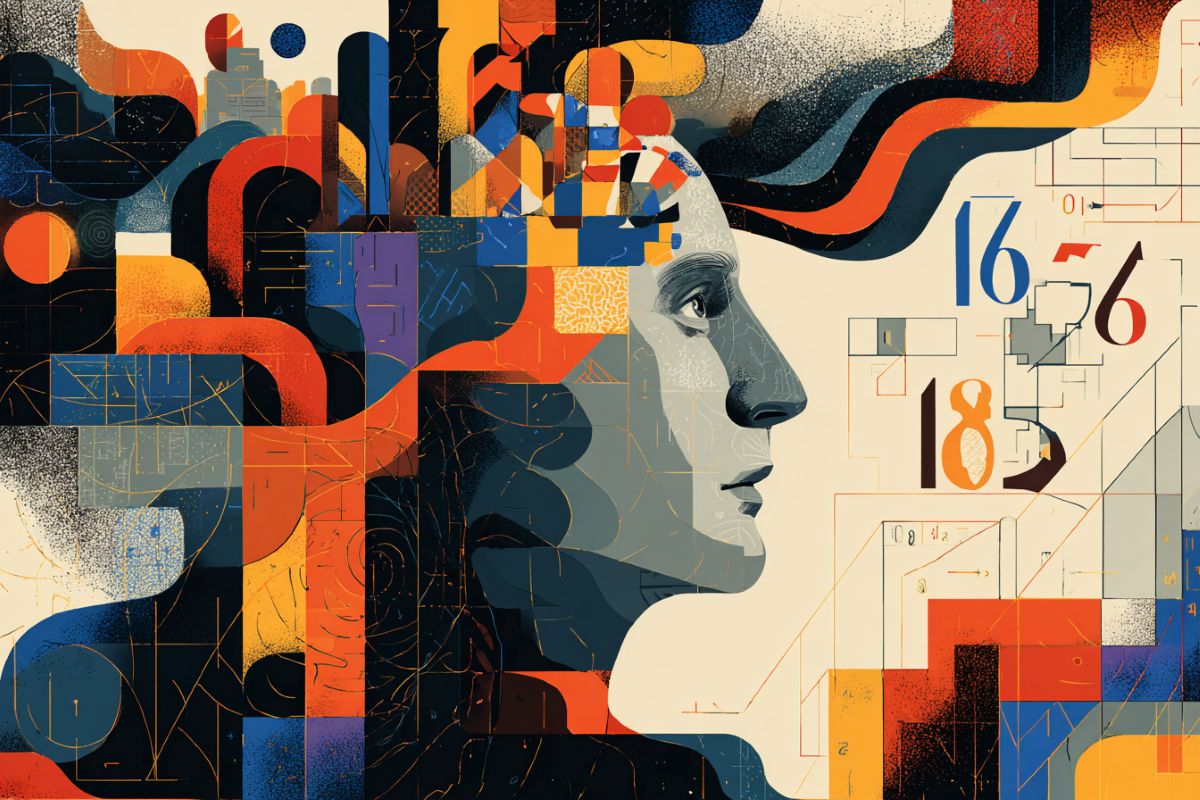
Numbers in vision can change the way we perceive space

Summary: New research reveals that numbers in our visual field can subtly distort the way we judge spatial positions, demonstrating that perception is determined by both numerical magnitude and object-based processing. In traditional line bisection tasks, smaller numbers shifted the perceived centers to the left, supporting the idea of ​​a mental number line.

But when shapes became more complex, such as squares, the number effect disappeared, replaced by strong bottom-up biases linked to object recognition systems in the brain. These findings show that spatial-numerical association interacts with deeper visual pathways rather than acting alone. The work offers new insight into how the brain integrates symbolic and spatial information.

Key facts

The size of the numbers altered perception: smaller numbers shifted the centers of the perceived lines to the left, while larger numbers shifted them to the right or down depending on orientation. The 2D shapes break the pattern: in squares, the magnitude effects disappeared and an object-driven upward bias emerged in their place. Master object-based processing: Visual recognition pathways can override numerical magnitude cues, reshaping spatial attention.

Source: Tokyo Metropolitan University

Researchers at Tokyo Metropolitan University have studied the relationship between numerical information in our vision and how it affects our perception of space.

Volunteers were asked to identify the center of lines and squares filled with numbers; how far they were from the true center revealed unexpected biases.

Crucially, his work with squares showed how our perception of space is a complex interplay between “object-based” processing and our processing of numerical information.

The numbers in our vision can affect the way we see the world in unexpected ways. Known as spatial-numerical association, the way our brain processes numbers can introduce “attentional biases.”

For example, for people from a left-to-right writing culture, a simple game in which players press one of two lower-numbered buttons reveals a faster response when the lower number is to the left; The opposite occurs when larger numbers are used.

Sometimes the information doesn’t need to be numbers, but rather something that indicates magnitude, such as a brighter light or a louder noise. In fact, similar trends have been observed in animals and insects.

This suggests that a “mental number line,” some left-to-right mapping of magnitude-related information in space, might be a deeply rooted feature in nature. Understanding how these biases work is crucial not only to get a better idea of ​​how our brain works, but also to optimize how information is presented in the real world.

A team of researchers at Tokyo Metropolitan University led by Professor Masami Ishihara and PhD student Ryo Hishiya have been using “bisection tasks” to investigate spatial-numerical association. Standard bisection tasks ask volunteers to estimate the center of a line or bar.

When painting the bar with smaller numbers, they found that volunteers consistently put the center further to the left than with larger numbers. This confirms the left-to-right “mental number line” found in previous work.

However, when they tried the same exercise with vertical bars, the volunteers lowered the score for larger numbers, contrary to the “bottom-up” association expected from previous work. There’s clearly more at play than just the mental number line.

In a new approach, the team proceeded to repeat the experiment with squares, that is, two-dimensional shapes. Interestingly, they found that the effect of number magnitude disappeared.

Instead, the presence of figures was enough to induce a strong upward bias and a weak leftward bias; the absence of numbers led to a stronger bias in the horizontal direction, probably due to pseudoneglect, a known natural bias in attention to the left.

The team proposes that this vertical bias reflects the impact of the ventral visual stream, the part of our brain that tries to recognize objects (in this case, numerical strings) that also tends to drive attention upward. In this case, “object-based” processing seems to show a dominant effect on our processing of the value of numbers.

While future work remains, the team’s experiments offer new insight into the subtle asymmetries that color our view of the world.

Key questions answered:

Q: How do numbers change spatial perception?

A: The perceived centers of the lines change depending on the numerical magnitude, reflecting an internal mental number line.

Q: Why didn’t the size of the number matter for squares?

A: Object-based processing took over, producing strong vertical biases that dominated the numerical effects.

Q: What does this reveal about the visual system?

A: The brain integrates symbolic numbers with structural streams of object processing, meaning that spatial perception is determined by multiple interacting systems.

Editorial notes:

This article was edited by a Neuroscience News editor. Magazine article reviewed in its entirety. Additional context added by our staff.

About this vision and perception research news.

Author: GO TOTSUKAWA
Source: Tokyo Metropolitan University
Contact: GO TOTSUKAWA – Tokyo Metropolitan University
Image: Image is credited to Neuroscience News.

Original research: Open access.
“Numerically induced attention biases in horizontal, vertical, and two-dimensional ways” by Masami Ishihara et al. Scientific Reports

Abstract

Numerically induced attentional biases in horizontal, vertical, and two-dimensional ways.

Previous studies have shown that numerical magnitudes can induce attentional biases primarily in horizontal space.

The present study aimed to clarify the spatial-numerical association in horizontal, vertical, and two-dimensional square stimuli composed of visually aligned strings of relatively smaller Arabic numerals (i.e., 1 or 2) or larger numbers (i.e., 8 or 9).

Neurologically and psychiatrically healthy participants, all Japanese speakers, were asked to identify the veridical center of the stimuli.

Results indicated that, with horizontal stimuli, participants placed their subjective midpoint further to the left when smaller numbers were presented compared to larger numbers, in accordance with the predicted left-to-right mental number line.

However, with vertical stimuli, smaller numbers induced upward biases, which is inconsistent with the intended bottom-up representation.

For the square, stimuli with number strings elicited biases with a stronger vertical component, whereas stimuli without number strings elicited biases with a stronger horizontal component.

The upward biases of square stimuli with number strings may reflect the activation of object-based processing rather than the cognitive function of number processing.

These findings suggest that different mechanisms may predominate over spatial-numerical associations with respect to biases in the two-dimensional plane.
ShareTweetSendShare
Editor's

Editor's

Related Posts

Early intervention helps most autistic children acquire spoken language
NeuroScience

Early intervention helps most autistic children acquire spoken language

January 23, 2026
0
Brain conductors find precise connection to target cells through protein handshake
NeuroScience

Brain conductors find precise connection to target cells through protein handshake

January 14, 2026
3
Multilingualism Calculator Reveals True Language Strengths
NeuroScience

Multilingualism Calculator Reveals True Language Strengths

January 5, 2026
0
The brain combines fast and slow signals to shape human thinking
NeuroScience

The brain combines fast and slow signals to shape human thinking

January 3, 2026
0
Immune Signal Index May Predict Progressive Multiple Sclerosis
NeuroScience

Immune Signal Index May Predict Progressive Multiple Sclerosis

January 2, 2026
1
AI brain model shows how neurons learn and where they fail
NeuroScience

AI brain model shows how neurons learn and where they fail

January 1, 2026
1
Load More
No Result
View All Result

Rajesh Logo14 White

Rajeshspinalinjury.com is the ‘Latest Spinal Cord Injury NEWS & Information’ website. 
Address:  Dhariwal, Gurdaspur, Punjab. India
Email: rajeshspinal@gmail.com

Categories

  • Brain Computer Interface
  • Diet & Nutrition
  • Epidural Stimulation
  • Health News
  • Latest SCI News
  • NeuroScience
  • SCI Research
  • Spinal Cord Injury Ai
  • Spine
  • Weight Loss Ai
No Result
View All Result

Recent News

The growth of Inside Life Medical from a single service to a broader medical ecosystem

The growth of Inside Life Medical from a single service to a broader medical ecosystem

January 23, 2026
Early intervention helps most autistic children acquire spoken language

Early intervention helps most autistic children acquire spoken language

January 23, 2026
  • Home
  • Spinal Cord Injury Videos
  • About Us
  • Contact Us
  • Disclaimer
  • Privacy Policy
  • Terms of Condition

RajeshSpinalInjury ©2025 || All Right Reserved. Design & Development by Rajesh

Welcome Back!

Login to your account below

Forgotten Password?

Retrieve your password

Please enter your username or email address to reset your password.

Log In

Add New Playlist

No Result
View All Result
  • Home
  • Spinal Cord Injury
    •  SCI Levels & Functions
    • Latest Breakthrough in SCI
    •  Spinal Cord Injury Drugs
    • Spinal Cord Injury Research
  • Paraplegia
  • Quadriplegia
  • Rehabilitation
    • Brain & Spine Chip Implants
    • Physiotherapy and Occupational Therapy
    • Stem Cell Therapy
    •  Epidural Stimulation
  • Latest SCI News
  • Spine
    • Spinal Cord Injury Ai
  • NeuroScience
  • Brain Computer Interface
  • Health News
    • Diet & Nutrition
    • Weight Loss Ai
  • Spinal Cord Injury Videos
  • About Us
  • Contact Us

RajeshSpinalInjury ©2025 || All Right Reserved. Design & Development by Rajesh