


















Summary: Some people rely heavily on visual and sound cues when making decisions, and this sensitivity can lead to persistent maladaptive choices. When cue-outcome associations change, these individuals struggle to update their beliefs and continue following outdated cues even when doing so becomes risky.
The study reveals that increased cue-based learning may make people more vulnerable to harmful decision patterns commonly seen in addiction, compulsive disorders, and anxiety. The findings highlight how subtle environmental cues can have a huge influence on behavior and why some people find it harder to break harmful habits.
Key facts:
Sensitivity to cues: Some people rely more on the visual or auditory cues around them when making decisions. Poor belief updating: These people struggle to adapt when cues begin to predict worse or riskier outcomes. Maladaptive patterns: This difficulty unlearning associations may help explain compulsive behaviors and addictive decision cycles.
Source: SfN
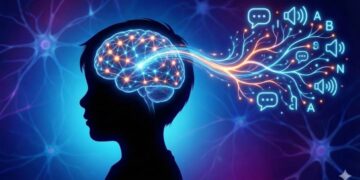
When people learn that surrounding sights and sounds can signify outcomes of specific choices, these cues can become guides for decision making.
For people with compulsive disorders, addictions, or anxiety, associations between cues and choice outcomes may eventually promote poor decisions by favoring or avoiding cues in a more biased way.
Giuseppe di Pellegrino of the University of Bologna led a study to explore associative learning and maladaptive decision making in people.
As reported in their Journal of Neuroscience article, the researchers found that some people rely more than others on environmental cues to make decisions.
Additionally, these individuals may find it more difficult to update their beliefs and unlearn these associations when cues change to indicate riskier outcomes. This leads to more disadvantageous decision making that persists over time.
According to the researchers, this work suggests that some people have greater sensitivity to cues and less ability to update their beliefs about cues than others.
The researchers aim to continue exploring associative learning in patient populations and explore whether harmful decision patterns (which characterize addictions, compulsive disorders, and anxiety) are more likely in those with greater sensitivity to the sights and sounds that guide their choices.
Key questions answered:
A: They have stronger associative learning responses, causing them to let surrounding cues guide their decisions more than internal reasoning.
A: These people struggle to update their beliefs and continue to follow signs even when they no longer lead to good results.
A: Increased cue reactivity and poor belief updating can create rigid decision cycles similar to those seen in compulsive or addictive behavior.
Editorial notes:
This article was edited by a Neuroscience News editor. Magazine article reviewed in its entirety. Additional context added by our staff.
About this neuroscience research news
Author: SfN Media
Source: SfN
Contact: SfN Media – SfN
Image: Image is credited to Neuroscience News.
Original Research: Closed access.
“Updating the reduced Pavlovian value alters decision making in signal trackers” by Giuseppe di Pellegrino et al. Neuroscience Magazine
Abstract
Reduced Pavlovian value update alters decision making in signal trackers
Successful reward-guided behavior is based not only on learning actions to obtain rewards, but also on learning signals that predict the reward, which motivate and prepare the animal to pursue and consume it.
Although these two types of learning (instrumental learning and Pavlovian conditioning) have been widely studied, it is still unclear how the brain updates and arbitrates between these systems, especially when Pavlovian signals are irrelevant to decision making.
To address this, we used eye tracking, pupillometry, and computational modeling in a Pavlovian Transfer to Instrumental task with 60 humans (30 females), consisting of three phases: the Pavlovian phase (learning conditioned stimulus-outcome associations), the instrumental phase (learning response-outcome associations), and the transfer phase (testing for Pavlovian bias in instrumental responses).
Using this approach, we aimed to identify different types of learners and their strategies, especially how individual differences between sign trackers and goal trackers influence Pavlovian bias.
To that end, we used gaze data to classify participants as sign trackers or targets, and found that although both groups learned the task, the sign trackers’ performance was poorer when exposed to Pavlovian cues, as they favored options based on their cue-outcome associations.
Fitting data with multiple computational models revealed that participants dynamically arbitrated between values estimated through Pavlovian and instrumental systems. Importantly, the lower performance in the sign trackers was due to slower updating of Pavlovian cue values during the transfer phase, not to an overweighting of Pavlovian cue values relative to instrumental action values.
Overall, our study offers a computational framework for understanding inflexible decision making and potential interventions for disorders marked by maladaptive cue reactivity.