















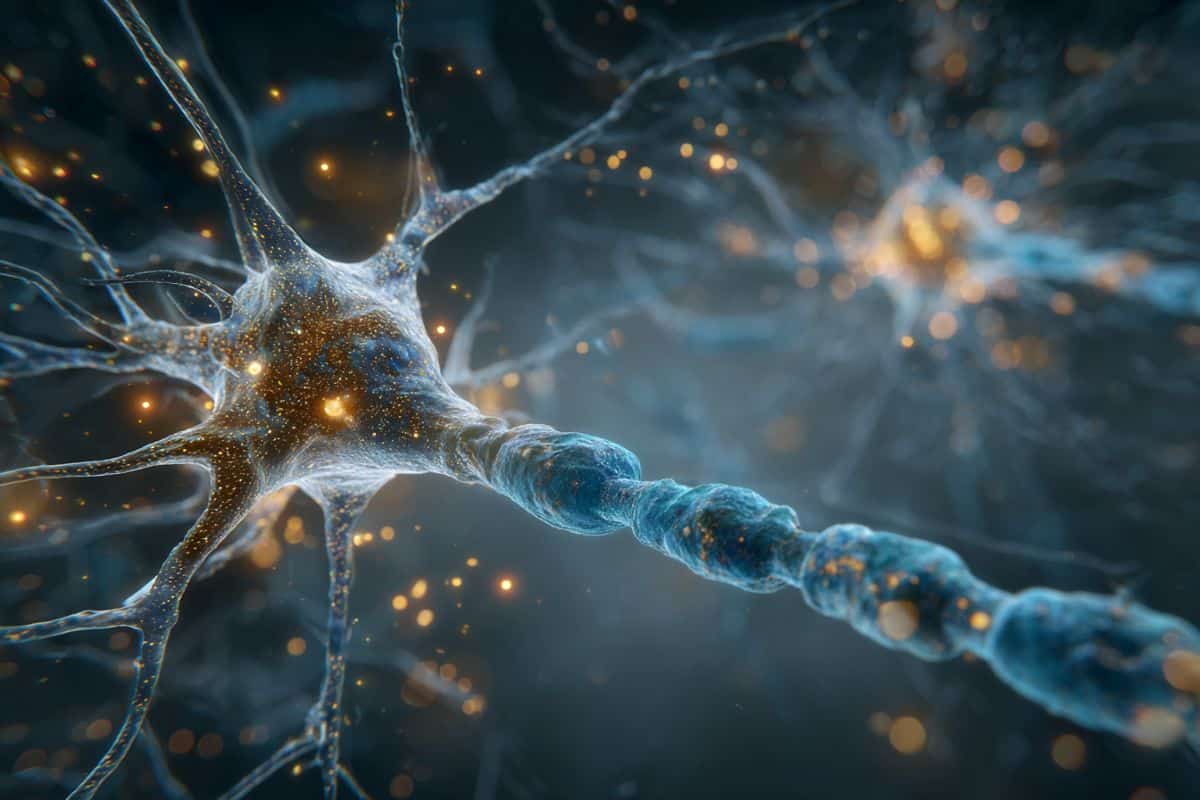
Summary: Neurons can quickly rebalance their communication using a structural signal rather than electrical activity, reversing long-held assumptions about how synapses maintain stability. When receptors on the receiving side of a synapse were blocked, they physically reorganized, causing the sending neuron to increase neurotransmitter release and preserve constant signaling.
This rapid correction occurred even when electrical activity was silenced, demonstrating that structural signals alone can drive homeostatic adjustments. The findings provide new insights into how the brain protects movement, learning and memory when circuits are disrupted.
Key facts:
Fast structural trigger: Neurons stabilize communication through physical reorganization of receptors, not electrical activity. DLG is required: The scaffold protein DLG is essential for this rapid homeostatic response. Disease awareness: Failures in this mechanism can contribute to conditions such as epilepsy and autism.
Source: USC
Every movement you make and every memory you form depends on precise communication between neurons. When that communication is disrupted, the brain must quickly rebalance its internal signals to keep the circuits functioning properly.
New research from the USC Dornsife College of Letters, Arts and Sciences shows that neurons can stabilize their signaling using a fast physical mechanism, not the electrical activity that scientists long assumed was necessary.
The discovery, supported by grants from the National Institutes of Health and recently published in the Proceedings of the National Academy of Sciences, reveals a system that does not depend on the flow of charged particles to maintain signaling when part of a synapse (the junction between neurons) suddenly stops working.
Maintaining this balance between neurons is essential for muscle control, learning, and overall brain health. Failure to maintain this “homeostasis” has been linked to neurological conditions such as epilepsy and autism.
USC Dornsife researchers led by Dion Dickman, professor of biological sciences, set out to understand how neurons compensate when communication between them fails. Specifically, they wanted to know how the receiving side of a synapse detects a sudden loss of function and signals the sending neuron to increase its output to restore homeostasis.
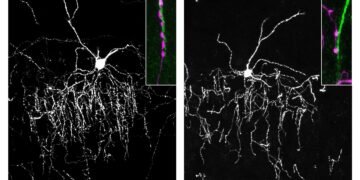
Working with fruit flies, a standard model for studying the nervous system, the team blocked glutamate receptors on the receiving side of the synapse with a chemical known to deactivate them, then used electrical recordings and high-resolution microscopy to observe how the synapse responded.
To identify the molecules responsible for triggering the response, the researchers used CRISPR gene editing tools to remove specific structural proteins one by one and see what changed in the cells.
This elimination process revealed that the key trigger for rapid adjustment is not the loss of electrical activity but the physical reorganization of a specific type of receptor. When these receptors were blocked, they reorganized within the synapse, triggering a signaling process that instructed the sending neuron to release more neurotransmitter, helping to maintain stable communication.
A scaffold protein called DLG was essential for this response. When DLG was removed using CRISPR, rapid compensation failed.
The researchers also showed that this rapid signaling process continues even when all electrical synapse activity is silenced, indicating that the system relies on structural signals rather than electrical signals.
Understanding how synapses rapidly adapt could help guide future research into treatments that strengthen neuronal resilience and protect against neurological diseases.
About the study
In addition to Dickman, the study’s researchers include first author Chengjie Qiu, Sarah Perry, Christine Chen, Jiawen Chen, Jin Zhuang, Yifu Han and Pragya Goel, all of USC Dornsife.
Funding: The study was supported by grants NS091546 and NS26654 from the National Institutes of Health.
Key questions answered:
A: A structural rearrangement of receptors in the synapse triggers increased release of neurotransmitters.
A: No: the response occurs even when electrical synapse activity is completely silenced.
A: It identifies a fast, non-electrical pathway that helps circuits remain stable, offering new clues for the treatment of disorders related to synaptic imbalance.
Editorial notes:
This article was edited by a Neuroscience News editor. Magazine article reviewed in its entirety. Additional context added by our staff.
About this neurotransmission research news
Author: Darrin Joy
Source: USC
Contact: Darrin Joy – USC
Image: Image is credited to Neuroscience News.
Original research: Open access.
“Non-ionic signaling rapidly remodels the postsynaptic DLG to induce retrograde homeostatic plasticity” by Dion Dickman et al. PNAS
Abstract
Nonionic signaling rapidly remodels postsynaptic DLG to induce retrograde homeostatic plasticity
Neural circuits must adapt to maintain stable communication. When a postsynaptic cell’s ability to receive signals is impaired, its presynaptic partner compensates by increasing the release of neurotransmitters.
This study uses the Drosophila neuromuscular junction (NMJ) to reveal how this retrograde signal is transmitted: it does not depend on altered ionic flow, but rather uses a non-ionic mechanism.
Pharmacological blockade of postsynaptic receptors triggers rapid structural reorganization of the synapse, a physical change that initiates retrograde signaling to signal the presynaptic neuron to increase its output. Unexpectedly, the entire process occurs independently of synaptic activity.
Uncovering this activity-independent basis for homeostatic plasticity provides a framework for understanding how neural circuits remain resilient in health and disease.