









• About Us
  • Contact Us
  • Spinal Cord Injury Videos
  • Disclaimer
  • Privacy Policy
Friday, January 23, 2026
Rajesh Spinal Injury
  • Home
  • Spinal Cord Injury
    • Quadriplegia
    • Paraplegia
    •  SCI Levels & Functions
    • Latest Breakthrough in SCI
    • Spinal Cord Injury Research
    • Spinal Cord Injury Videos
  • Rehabilitation
    • Physiotherapy and Occupational Therapy
    • Brain & Spine Chip Implants
    •  Epidural Stimulation
    • Stem Cell Therapy
    •  Spinal Cord Injury Drugs
  • Latest SCI News
    Spinal cord injuries in Gaza risk permanent disability for children

    Spinal cord injuries in Gaza risk permanent disability for children

    EEG technology could be a useful tool for linking brain signals with limb movements

    EEG technology could be a useful tool for linking brain signals with limb movements

    The first stage of testing of a drug aimed at complete spinal cord injury is approved in Brazil – 05/01/2026 – Science and Health

    The first stage of testing of a drug aimed at complete spinal cord injury is approved in Brazil – 05/01/2026 – Science and Health

    Injectable nanomaterials reduce secondary brain damage after ischemic stroke

    Injectable nanomaterials reduce secondary brain damage after ischemic stroke

    3 reflections from Dennis Prager after spinal cord injury

    3 reflections from Dennis Prager after spinal cord injury

    recovery is more difficult for older people with spinal cord injury | Housing

    recovery is more difficult for older people with spinal cord injury | Housing

    Study reveals how the nervous system activates repair after spinal cord injury

    Study reveals how the nervous system activates repair after spinal cord injury

    How does age affect recovery from spinal cord injury?

    How does age affect recovery from spinal cord injury?

    Older age influences functional recovery after spinal cord injury

    Older age influences functional recovery after spinal cord injury

  • Spine
    • Spinal Cord Injury Ai
  • Health News
    The growth of Inside Life Medical from a single service to a broader medical ecosystem

    The growth of Inside Life Medical from a single service to a broader medical ecosystem

    The United States officially leaves the World Health Organization

    The United States officially leaves the World Health Organization

    How an Underactive Thyroid Destroys Your Energy and Metabolism

    How an Underactive Thyroid Destroys Your Energy and Metabolism

    New owners of Crozer-Chester Medical Center plan to restore essential healthcare services to Delaware County

    New owners of Crozer-Chester Medical Center plan to restore essential healthcare services to Delaware County

    ‘The public sector must play a dominant role in healthcare’ | India News

    ‘The public sector must play a dominant role in healthcare’ | India News

    Common Triggers, Symptom Patterns, and Relief Strategies

    Common Triggers, Symptom Patterns, and Relief Strategies

    American Indians hold free MLK Day health camp in Boston

    American Indians hold free MLK Day health camp in Boston

    7 Subtle Signs Caregivers Miss (And How to Prevent Them)

    7 Subtle Signs Caregivers Miss (And How to Prevent Them)

    Beyond prevention: Routine vaccines offer surprising health benefits for older adults

    Beyond prevention: Routine vaccines offer surprising health benefits for older adults

  • Weight Loss Ai
  • More
    • NeuroScience
    • Brain Computer Interface
    • Diet-Nutrition
    • Spinal Cord Injury Videos
No Result
View All Result
  • Home
  • Spinal Cord Injury
    • Quadriplegia
    • Paraplegia
    •  SCI Levels & Functions
    • Latest Breakthrough in SCI
    • Spinal Cord Injury Research
    • Spinal Cord Injury Videos
  • Rehabilitation
    • Physiotherapy and Occupational Therapy
    • Brain & Spine Chip Implants
    •  Epidural Stimulation
    • Stem Cell Therapy
    •  Spinal Cord Injury Drugs
  • Latest SCI News
    Spinal cord injuries in Gaza risk permanent disability for children

    Spinal cord injuries in Gaza risk permanent disability for children

    EEG technology could be a useful tool for linking brain signals with limb movements

    EEG technology could be a useful tool for linking brain signals with limb movements

    The first stage of testing of a drug aimed at complete spinal cord injury is approved in Brazil – 05/01/2026 – Science and Health

    The first stage of testing of a drug aimed at complete spinal cord injury is approved in Brazil – 05/01/2026 – Science and Health

    Injectable nanomaterials reduce secondary brain damage after ischemic stroke

    Injectable nanomaterials reduce secondary brain damage after ischemic stroke

    3 reflections from Dennis Prager after spinal cord injury

    3 reflections from Dennis Prager after spinal cord injury

    recovery is more difficult for older people with spinal cord injury | Housing

    recovery is more difficult for older people with spinal cord injury | Housing

    Study reveals how the nervous system activates repair after spinal cord injury

    Study reveals how the nervous system activates repair after spinal cord injury

    How does age affect recovery from spinal cord injury?

    How does age affect recovery from spinal cord injury?

    Older age influences functional recovery after spinal cord injury

    Older age influences functional recovery after spinal cord injury

  • Spine
    • Spinal Cord Injury Ai
  • Health News
    The growth of Inside Life Medical from a single service to a broader medical ecosystem

    The growth of Inside Life Medical from a single service to a broader medical ecosystem

    The United States officially leaves the World Health Organization

    The United States officially leaves the World Health Organization

    How an Underactive Thyroid Destroys Your Energy and Metabolism

    How an Underactive Thyroid Destroys Your Energy and Metabolism

    New owners of Crozer-Chester Medical Center plan to restore essential healthcare services to Delaware County

    New owners of Crozer-Chester Medical Center plan to restore essential healthcare services to Delaware County

    ‘The public sector must play a dominant role in healthcare’ | India News

    ‘The public sector must play a dominant role in healthcare’ | India News

    Common Triggers, Symptom Patterns, and Relief Strategies

    Common Triggers, Symptom Patterns, and Relief Strategies

    American Indians hold free MLK Day health camp in Boston

    American Indians hold free MLK Day health camp in Boston

    7 Subtle Signs Caregivers Miss (And How to Prevent Them)

    7 Subtle Signs Caregivers Miss (And How to Prevent Them)

    Beyond prevention: Routine vaccines offer surprising health benefits for older adults

    Beyond prevention: Routine vaccines offer surprising health benefits for older adults

  • Weight Loss Ai
  • More
    • NeuroScience
    • Brain Computer Interface
    • Diet-Nutrition
    • Spinal Cord Injury Videos
No Result
View All Result
Spinal Cord Injury
No Result
View All Result
Home NeuroScience

Blood transfusions can accelerate the progression of Alzheimer’s

Editor's by Editor's
December 13, 2025
in NeuroScience
0
0
Blood transfusions can accelerate the progression of Alzheimer’s

Summary: New research shows that blood from older animals can speed up Alzheimer’s-related changes in the brain, while young blood can slow them down. In a long-term experiment, mice engineered to develop Alzheimer’s symptoms received weekly blood infusions from young or older donors.

Older blood increased amyloid accumulation and worsened cognitive performance, while young blood appeared to have protective effects. Proteomic analysis revealed more than 250 altered proteins related to synaptic signaling, calcium channels, and other pathways related to neurodegeneration. The findings highlight circulating blood factors as potential targets for future Alzheimer’s therapies.

Key facts

Blood-borne influence: Aged blood accelerated amyloid accumulation and cognitive decline in Alzheimer’s model mice. Protective effect: Young blood altered brain protein profiles consistent with better synaptic and neuronal function. Therapeutic potential: Results point to blood-derived factors as a new frontier for Alzheimer’s interventions.

Source: Melisa Institute

Alzheimer’s disease is the most common form of dementia worldwide and remains one of the biggest public health challenges.

New research, published in the journal Aging-US, reveals that blood from old mice can accelerate the progression of the disease, while young blood can have protective effects.

The study was led by researchers from the Latin American Institute of Brain Health (BrainLat) of the Adolfo Ibáñez University in conjunction with the MELISA Institute, the Health Sciences Center of the University of Texas in Houston and the Universidad Mayor.

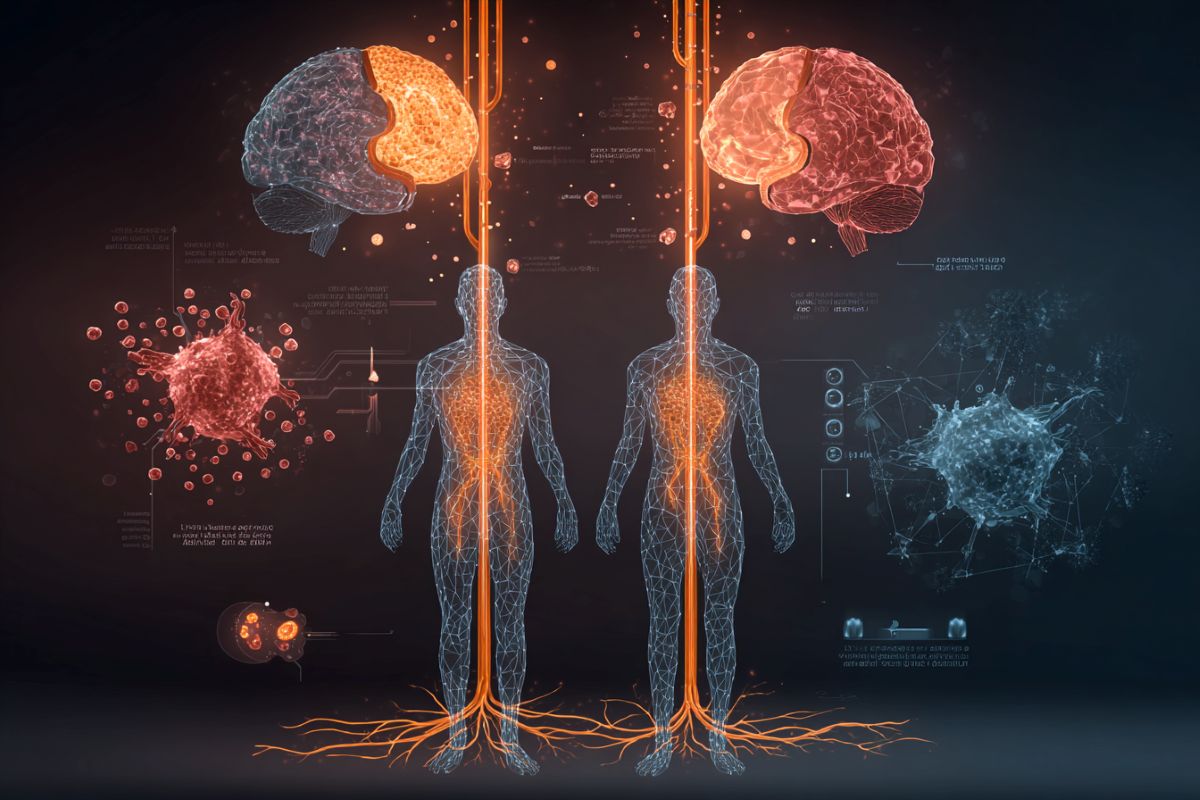
These results reinforce the idea that factors circulating in the blood can directly influence the progression of neurodegenerative diseases such as Alzheimer’s. Credit: Neuroscience News

Alzheimer’s is characterized by the abnormal accumulation of beta-amyloid protein (Aβ) in the brain, forming plaques that alter communication between neurons and generate neurodegenerative processes.

Although this protein originates in the central nervous system, recent studies have suggested that it may also be present in the blood, opening new possibilities for understanding how the disease progresses.

To explore this hypothesis, the team used Tg2576 transgenic mice (a model widely used in Alzheimer’s research), which received weekly blood infusions from young and old mice for 30 weeks to evaluate whether factors present in the blood could modulate amyloid accumulation and the animals’ behavior.

“This collaborative work between several institutions reinforces the importance of understanding how systemic factors condition the brain environment and directly impact the mechanisms that promote disease progression.

By demonstrating that peripheral signals derived from aged blood can modulate central processes in the pathophysiology of Alzheimer’s, these findings open new opportunities to study therapeutic targets directed at the blood-brain axis,” explained Dr. Claudia Durán-Aniotz, from the Latin American Institute of Brain Health (BrainLat) of the Adolfo Ibáñez University.

The team assessed cognitive performance using the Barnes test, amyloid plaque accumulation with histological and biochemical techniques, and performed a comprehensive proteomic analysis of the treated brains.

This analysis revealed more than 250 differentially expressed proteins, linked to synaptic functions, endocannabinoid signaling and calcium channels, which could explain the observed changes.

Regarding the participation of the MELISA Institute in this research, Mauricio Hernández, proteomics expert at the research and biotechnology center, commented that “within this study we carried out a large-scale proteomic analysis that allowed us to generate data of excellent quality in this complex matrix such as plasma, a technical challenge for any proteomics laboratory. Thanks to our state-of-the-art equipment (timsTOF Pro2), we are proud to have contributed to the production of a robust and high-quality scientific article.”

These results reinforce the idea that factors circulating in the blood can directly influence the progression of neurodegenerative diseases such as Alzheimer’s. Understanding these mechanisms will allow the identification of new therapeutic targets and preventive strategies. The next step will be to determine exactly what these factors are and if it is possible to intervene on them in humans.

“It is a pleasure to contribute our proteomic capabilities to support innovative research initiatives like this study, which allow us to advance the knowledge and development of new therapies for neurodegenerative diseases, which are currently a global health problem,” emphasized Dr. Elard Koch, president of the MELISA Institute.

Funds:

C.DA. was supported by ANID/FONDECYT Regular 1210622, ANID/PIA/ANILLOS ACT210096, the Alzheimer’s Association (AARGD-24-1310017), ANID/FOVI240065 and ANID/Proyecto Exploracion 13240170 and MULTISOCIO CONSORTIUM TO EXPAND RESEARCH IN DEMENTIA IN LATIN AMERICA (ReDLat), supported by NIH Research Grant R01AG057234 funded by the National Institute on Aging (NIA) and the Fogarty International Center (FIC), a grant from the Alzheimer’s Association (SG-20-725707-ReDLat), the Rainwater Charitable Foundation, and the Global Brain Health Institute with additional support from the Bluefield Project to Cure Frontotemporal Dementia, an NIH contract (75NS95022C00031) and NIA under awards R01AG075775, R01AG082056, and R01AG083799.

The content is solely the responsibility of the authors and does not represent the official views of the National Institutes of Health, the Alzheimer’s Association, the Rainwater Charitable Foundation, the Bluefield Project to Cure Frontotemporal Dementia, or the Global Brain Health Institute.

RM and team’s contribution to this work was supported by NIH grants RF1AG072491 and RF1AG059321. The UW was supported by ANID/FONDECYT Regular 1240176.

Key questions answered:

Q: How did aged blood affect Alzheimer’s pathology in this study?

A: Mice that received blood from older donors showed more rapid accumulation of amyloid plaque, altered brain protein profiles, and poorer performance on cognitive tests. These changes suggest that factors circulating in aged blood actively promote processes related to the progression of Alzheimer’s.

Q: What benefits did young blood provide in the Alzheimer’s mouse model?

A: Young blood shifted brain protein expression toward patterns associated with healthier synaptic signaling and reduced disease-related dysfunction. These protective effects point to specific molecular factors that may slow or counteract neurodegeneration.

Q: Why is this research important for the development of Alzheimer’s treatment?

A: The findings reveal that the blood-brain axis plays an important role in boosting or slowing the progression of Alzheimer’s. Identifying the exact blood-borne molecules involved could lead to new therapeutic targets or preventive strategies aimed at modifying systemic factors rather than the brain alone.

Editorial notes:

This article was edited by a Neuroscience News editor. Magazine article reviewed in its entirety. Additional context added by our staff.

About this news about Alzheimer’s research

Author: Damián Vallejos
Source: Melisa Institute
Contact: Damián Vallejos – Melisa Institute
Image: Image is credited to Neuroscience News.

Original research: Open access.
“Blood infusion from young and old mice modulates amyloid pathology” by Claudia Durán-Aniotz et al. Aging-USA

Abstract

Blood infusion from young and old mice modulates amyloid pathology

Alzheimer’s disease (AD) is a neurodegenerative disease characterized by the accumulation of misfolded proteins in the brain.

Recently, attention has been drawn to the impact of blood components on the progression of this disease.

This study investigates the effects of infusion of blood from young and old wild-type mice into transgenic mice modeling AD cerebral amyloidosis.

Memory problems and Aβ accumulation were observed in mice infused with blood from old donors.

A proteomic analysis in the brain of these mice identified alterations in components related to synaptogenesis and the endocannabinoid system. The α2δ2 protein, associated with neuronal calcium regulation, was validated as a possible mediator of the observed effects.

This study highlights the influence of blood on AD pathology and the identification of possible therapeutic targets.
ShareTweetSendShare
Editor's

Editor's

Related Posts

Early intervention helps most autistic children acquire spoken language
NeuroScience

Early intervention helps most autistic children acquire spoken language

January 23, 2026
0
Brain conductors find precise connection to target cells through protein handshake
NeuroScience

Brain conductors find precise connection to target cells through protein handshake

January 14, 2026
3
Multilingualism Calculator Reveals True Language Strengths
NeuroScience

Multilingualism Calculator Reveals True Language Strengths

January 5, 2026
0
The brain combines fast and slow signals to shape human thinking
NeuroScience

The brain combines fast and slow signals to shape human thinking

January 3, 2026
0
Immune Signal Index May Predict Progressive Multiple Sclerosis
NeuroScience

Immune Signal Index May Predict Progressive Multiple Sclerosis

January 2, 2026
1
AI brain model shows how neurons learn and where they fail
NeuroScience

AI brain model shows how neurons learn and where they fail

January 1, 2026
1
Load More
No Result
View All Result

Rajesh Logo14 White

Rajeshspinalinjury.com is the ‘Latest Spinal Cord Injury NEWS & Information’ website. 
Address:  Dhariwal, Gurdaspur, Punjab. India
Email: rajeshspinal@gmail.com

Categories

  • Brain Computer Interface
  • Diet & Nutrition
  • Epidural Stimulation
  • Health News
  • Latest SCI News
  • NeuroScience
  • SCI Research
  • Spinal Cord Injury Ai
  • Spine
  • Weight Loss Ai
No Result
View All Result

Recent News

The growth of Inside Life Medical from a single service to a broader medical ecosystem

The growth of Inside Life Medical from a single service to a broader medical ecosystem

January 23, 2026
Early intervention helps most autistic children acquire spoken language

Early intervention helps most autistic children acquire spoken language

January 23, 2026
  • Home
  • Spinal Cord Injury Videos
  • About Us
  • Contact Us
  • Disclaimer
  • Privacy Policy
  • Terms of Condition

RajeshSpinalInjury ©2025 || All Right Reserved. Design & Development by Rajesh

Welcome Back!

Login to your account below

Forgotten Password?

Retrieve your password

Please enter your username or email address to reset your password.

Log In

Add New Playlist

No Result
View All Result
  • Home
  • Spinal Cord Injury
    •  SCI Levels & Functions
    • Latest Breakthrough in SCI
    •  Spinal Cord Injury Drugs
    • Spinal Cord Injury Research
  • Paraplegia
  • Quadriplegia
  • Rehabilitation
    • Brain & Spine Chip Implants
    • Physiotherapy and Occupational Therapy
    • Stem Cell Therapy
    •  Epidural Stimulation
  • Latest SCI News
  • Spine
    • Spinal Cord Injury Ai
  • NeuroScience
  • Brain Computer Interface
  • Health News
    • Diet & Nutrition
    • Weight Loss Ai
  • Spinal Cord Injury Videos
  • About Us
  • Contact Us

RajeshSpinalInjury ©2025 || All Right Reserved. Design & Development by Rajesh