















Summary: Researchers have developed an AI-powered brain model that can track fear as it unfolds in real-world situations, offering a major change from traditional lab-based approaches. Classic studies of fear often rely on static images, but these do not reflect how the brain processes fear in dynamic contexts. The new model accurately captured fear responses during naturalistic experiences and revealed that oxytocin specifically reduces fear in social situations.
These findings point to a specific mechanism for treating social anxiety, social phobia, and related conditions. The work also provides a powerful tool for developing clinical interventions that better reflect real-life emotional processing.
Key facts
Mapping fear in the real world: An AI-inspired brain model captured fear responses during naturalistic experiences better than traditional laboratory paradigms. Reduced social fear: Oxytocin reduced both subjective fear and its neural signature specifically in social contexts. New treatment avenue: Findings support a targeted approach for conditions marked by excessive social fear, including anxiety and autism-related challenges.
Source: University of Hong Kong
Researchers at the University of Hong Kong (HKU) have revealed a transformative approach to understanding and treating social anxiety, challenging decades of laboratory-based assumptions and opening doors to targeted therapies.
By developing an AI-powered brain model that accurately captures fear in real-world scenarios, the discovery offers new hope to millions of those affected by disorders such as social phobia and autism, while paving the way for clinical interventions using innovative tools.
Fear is a natural survival instinct, but for many it can become a debilitating condition like social anxiety. A fundamental challenge in treating these disorders is that traditional laboratory studies of fear fail to capture how the emotion is experienced in dynamic, real-world situations.
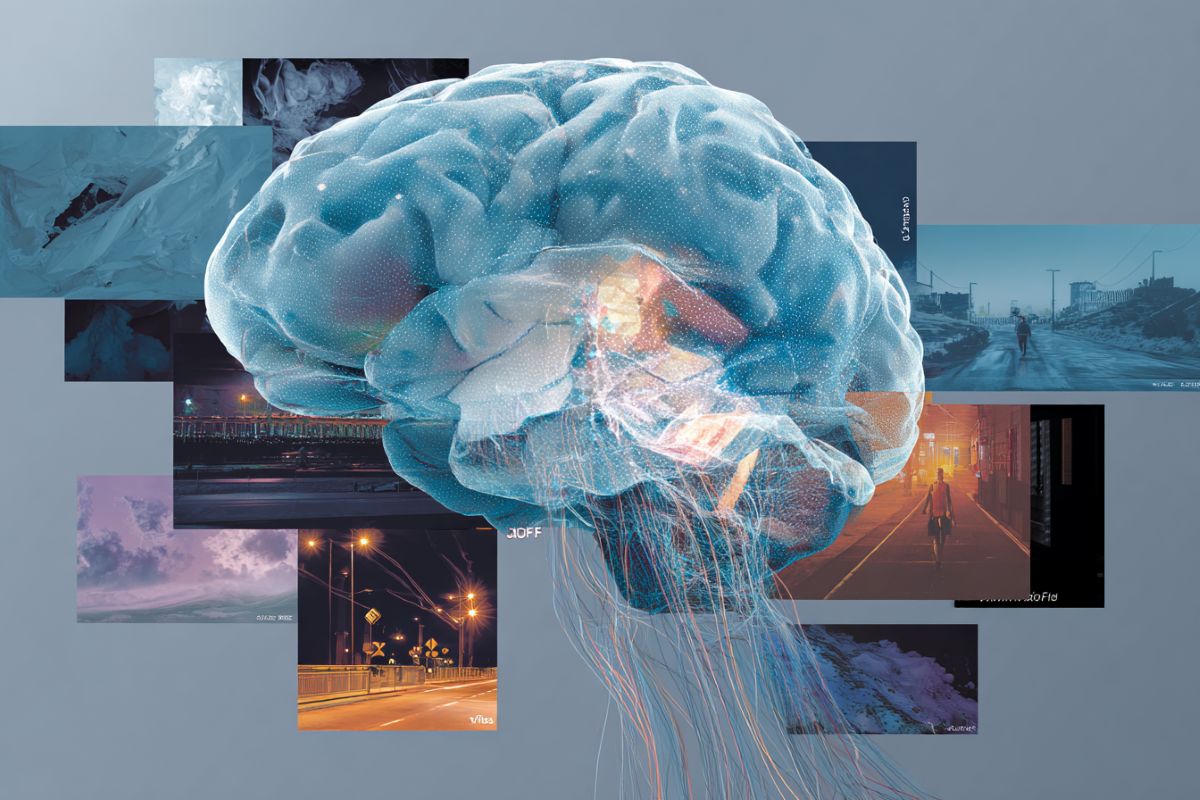
In two recent studies, a research team led by Professor Benjamin Becker from the Department of Psychology at HKU has made significant progress. The team revealed for the first time that existing brain models of fear, developed using static images in laboratories, do not reliably track fear responses during real-life experiences, such as watching a horror movie. To overcome this, they developed an advanced AI-inspired brain model that can accurately track the conscious experience of fear in these dynamic, naturalistic situations.
Taking advantage of this innovation, the researchers used the new model to test the effects of the hormone oxytocin. The findings showed that oxytocin specifically reduces both the subjective feeling of fear and its corresponding neural signature in social contexts, but not in non-social contexts. This suggests a very specific mechanism for alleviating social fear.
Key implications of the research:
It questions the validity of hundreds of previous laboratory studies, showing that they may not accurately describe how the brain processes fear in daily life. It provides compelling evidence for a new targeted treatment approach for disorders marked by excessive social fear, such as social anxiety, social phobia, and autism. Create a powerful new AI-powered tool to bridge the gap between laboratory research and real-life emotional experiences, paving the way for more effective clinical interventions.
Key questions answered:
A: Traditional studies use static images and simplified stimuli, which do not reflect the complexity of real-world fear. The new AI-based model shows that fear processing changes dramatically in dynamic environments, revealing gaps in decades of laboratory research.
A: Oxytocin reduced both subjective indices of fear and fear-related neural patterns, but only in social situations. This selective effect suggests a precise mechanism to treat disorders involving social fear.
A: By revealing fear signatures in real-world contexts, the model allows for more targeted interventions and supports therapies that specifically address social fear circuits. This offers new potential for personalized mechanism-based treatments.
Editorial notes:
This article was edited by a Neuroscience News editor. Magazine article reviewed in its entirety. Additional context added by our staff.
About this news about research on AI and fear
Author: Jaymee Ng
Source: University of Hong Kong
Contact: Jaymee Ng – University of Hong Kong
Image: Image is credited to Neuroscience News.
Original research: Open access.
“Oxytocin reduces subjective fear in naturalistic social contexts by enhancing top-down regulation of the middle cingulate amygdala and whole-brain fear representations” by Benjamin Becker et al. Advanced science
Abstract
Oxytocin reduces subjective fear in naturalistic social contexts by enhancing top-down regulation of the middle cingulate amygdala and whole-brain fear representations.
Accumulating evidence from animal and human studies suggests a fear-regulating potential of the neuropeptide oxytocin (OT), however, clinical translation into new interventions for pathological fear requires behavioral and neurofunctional characterization under near-real-life conditions.
Here, we combined a naturalistic fMRI design that elicited a strong, immersive fear experience in social and non-social contexts with a placebo-controlled, randomized, double-blind, preregistered between-subjects intranasal OT trial (24 IU, n = 67 healthy men).
OT selectively reduced subjective fear in social contexts, but not in non-social contexts. At the neuronal level, OT improved the activation of the left middle cingulate cortex (IMCC) and its functional connectivity with the contralateral amygdala, and both neuronal indices were significantly and inversely associated with subjective fear after OT.
At the network level, OT enhanced communication between the dorsal attention network (DAN) with the frontoparietal network (FPN) and the default mode network (DMN), and modulated brain-wide communication patterns.
Using an independent neuromarker of activity and connectivity for fear in naturalistic contexts (CAFE) confirmed that OT attenuated fear expressions throughout the brain.
Findings indicate an ecologically valid and socially specific fear-reducing effect of OT, highlighting its promise as a treatment option for disorders characterized by excessive fear in social situations.