








• About Us
  • Contact Us
  • Spinal Cord Injury Videos
  • Disclaimer
  • Privacy Policy
Friday, January 23, 2026
Rajesh Spinal Injury
  • Home
  • Spinal Cord Injury
    • Quadriplegia
    • Paraplegia
    •  SCI Levels & Functions
    • Latest Breakthrough in SCI
    • Spinal Cord Injury Research
    • Spinal Cord Injury Videos
  • Rehabilitation
    • Physiotherapy and Occupational Therapy
    • Brain & Spine Chip Implants
    •  Epidural Stimulation
    • Stem Cell Therapy
    •  Spinal Cord Injury Drugs
  • Latest SCI News
    Spinal cord injuries in Gaza risk permanent disability for children

    Spinal cord injuries in Gaza risk permanent disability for children

    EEG technology could be a useful tool for linking brain signals with limb movements

    EEG technology could be a useful tool for linking brain signals with limb movements

    The first stage of testing of a drug aimed at complete spinal cord injury is approved in Brazil – 05/01/2026 – Science and Health

    The first stage of testing of a drug aimed at complete spinal cord injury is approved in Brazil – 05/01/2026 – Science and Health

    Injectable nanomaterials reduce secondary brain damage after ischemic stroke

    Injectable nanomaterials reduce secondary brain damage after ischemic stroke

    3 reflections from Dennis Prager after spinal cord injury

    3 reflections from Dennis Prager after spinal cord injury

    recovery is more difficult for older people with spinal cord injury | Housing

    recovery is more difficult for older people with spinal cord injury | Housing

    Study reveals how the nervous system activates repair after spinal cord injury

    Study reveals how the nervous system activates repair after spinal cord injury

    How does age affect recovery from spinal cord injury?

    How does age affect recovery from spinal cord injury?

    Older age influences functional recovery after spinal cord injury

    Older age influences functional recovery after spinal cord injury

  • Spine
    • Spinal Cord Injury Ai
  • Health News
    The growth of Inside Life Medical from a single service to a broader medical ecosystem

    The growth of Inside Life Medical from a single service to a broader medical ecosystem

    The United States officially leaves the World Health Organization

    The United States officially leaves the World Health Organization

    How an Underactive Thyroid Destroys Your Energy and Metabolism

    How an Underactive Thyroid Destroys Your Energy and Metabolism

    New owners of Crozer-Chester Medical Center plan to restore essential healthcare services to Delaware County

    New owners of Crozer-Chester Medical Center plan to restore essential healthcare services to Delaware County

    ‘The public sector must play a dominant role in healthcare’ | India News

    ‘The public sector must play a dominant role in healthcare’ | India News

    Common Triggers, Symptom Patterns, and Relief Strategies

    Common Triggers, Symptom Patterns, and Relief Strategies

    American Indians hold free MLK Day health camp in Boston

    American Indians hold free MLK Day health camp in Boston

    7 Subtle Signs Caregivers Miss (And How to Prevent Them)

    7 Subtle Signs Caregivers Miss (And How to Prevent Them)

    Beyond prevention: Routine vaccines offer surprising health benefits for older adults

    Beyond prevention: Routine vaccines offer surprising health benefits for older adults

  • Weight Loss Ai
  • More
    • NeuroScience
    • Brain Computer Interface
    • Diet-Nutrition
    • Spinal Cord Injury Videos
No Result
View All Result
  • Home
  • Spinal Cord Injury
    • Quadriplegia
    • Paraplegia
    •  SCI Levels & Functions
    • Latest Breakthrough in SCI
    • Spinal Cord Injury Research
    • Spinal Cord Injury Videos
  • Rehabilitation
    • Physiotherapy and Occupational Therapy
    • Brain & Spine Chip Implants
    •  Epidural Stimulation
    • Stem Cell Therapy
    •  Spinal Cord Injury Drugs
  • Latest SCI News
    Spinal cord injuries in Gaza risk permanent disability for children

    Spinal cord injuries in Gaza risk permanent disability for children

    EEG technology could be a useful tool for linking brain signals with limb movements

    EEG technology could be a useful tool for linking brain signals with limb movements

    The first stage of testing of a drug aimed at complete spinal cord injury is approved in Brazil – 05/01/2026 – Science and Health

    The first stage of testing of a drug aimed at complete spinal cord injury is approved in Brazil – 05/01/2026 – Science and Health

    Injectable nanomaterials reduce secondary brain damage after ischemic stroke

    Injectable nanomaterials reduce secondary brain damage after ischemic stroke

    3 reflections from Dennis Prager after spinal cord injury

    3 reflections from Dennis Prager after spinal cord injury

    recovery is more difficult for older people with spinal cord injury | Housing

    recovery is more difficult for older people with spinal cord injury | Housing

    Study reveals how the nervous system activates repair after spinal cord injury

    Study reveals how the nervous system activates repair after spinal cord injury

    How does age affect recovery from spinal cord injury?

    How does age affect recovery from spinal cord injury?

    Older age influences functional recovery after spinal cord injury

    Older age influences functional recovery after spinal cord injury

  • Spine
    • Spinal Cord Injury Ai
  • Health News
    The growth of Inside Life Medical from a single service to a broader medical ecosystem

    The growth of Inside Life Medical from a single service to a broader medical ecosystem

    The United States officially leaves the World Health Organization

    The United States officially leaves the World Health Organization

    How an Underactive Thyroid Destroys Your Energy and Metabolism

    How an Underactive Thyroid Destroys Your Energy and Metabolism

    New owners of Crozer-Chester Medical Center plan to restore essential healthcare services to Delaware County

    New owners of Crozer-Chester Medical Center plan to restore essential healthcare services to Delaware County

    ‘The public sector must play a dominant role in healthcare’ | India News

    ‘The public sector must play a dominant role in healthcare’ | India News

    Common Triggers, Symptom Patterns, and Relief Strategies

    Common Triggers, Symptom Patterns, and Relief Strategies

    American Indians hold free MLK Day health camp in Boston

    American Indians hold free MLK Day health camp in Boston

    7 Subtle Signs Caregivers Miss (And How to Prevent Them)

    7 Subtle Signs Caregivers Miss (And How to Prevent Them)

    Beyond prevention: Routine vaccines offer surprising health benefits for older adults

    Beyond prevention: Routine vaccines offer surprising health benefits for older adults

  • Weight Loss Ai
  • More
    • NeuroScience
    • Brain Computer Interface
    • Diet-Nutrition
    • Spinal Cord Injury Videos
No Result
View All Result
Spinal Cord Injury
No Result
View All Result
Home NeuroScience

Why memories change: how the brain rewrites the past

Editor's by Editor's
December 6, 2025
in NeuroScience
0
0
Why memories change: how the brain rewrites the past

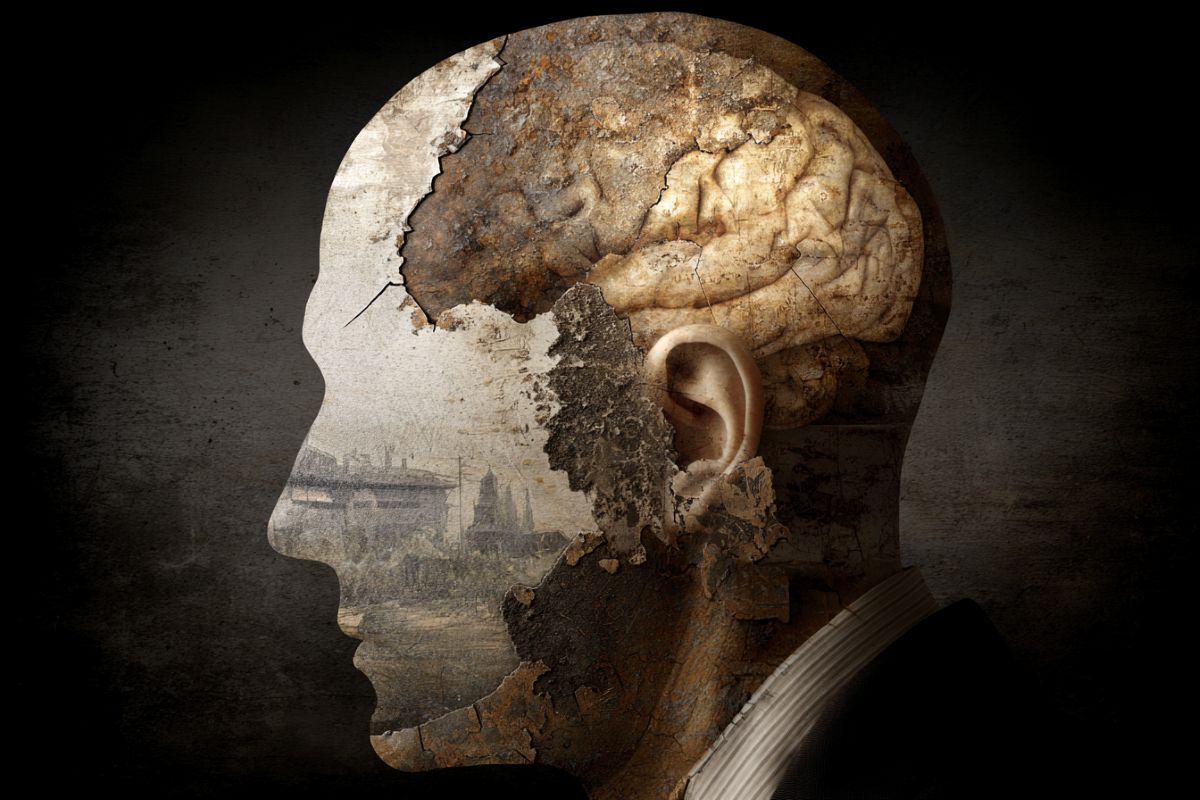
Summary: A new review explores how episodic memories are formed, stored and remodeled over time, revealing why our memories of past events often change. Rather than functioning as fixed files, memories consist of multiple components that can remain dormant until activated by environmental cues.

When retrieved, these components are combined with general knowledge, past experiences, and current context, creating updated versions of the original event. The findings help explain memory distortion and offer insights into mental health, learning, and legal settings where accuracy is important.

Key facts

Dynamic memories: Episodic memories are continually updated, not stored as perfect copies. Trigger-Based Recall: Hidden memory traces become conscious only when activated by cues. Real-world impact: Memory remodeling affects mental health, education, and legal decision-making.

Source: University of East Anglia

A study from the University of East Anglia is helping scientists better understand how our brains remember past events and how those memories can change over time.

A new paper published today explores episodic memory, the type of memory we use to remember personal experiences like a birthday party or a holiday.

The team says their work has important implications for mental health, education and legal settings where memory plays a key role.

Working in collaboration with the University of Texas at Dallas, the team demonstrates that memories are not simply stored as files on a computer.

Rather, they are made up of different parts. And while some are active and easy to remember, others remain hidden until something triggers them.

Importantly, the review shows that for something to count as a real memory, it must be linked to a real event from the past.

“But even then, the memory we remember might not be a perfect copy,” said lead researcher Professor Louis Renoult of the UEA Faculty of Psychology.

“It can include additional details from our general knowledge, past experiences, or even the situation we are in when we remember it.

“Memories of older events often go through a process called recoding, meaning the brain updates or reshapes the memory over time. This creates a chain of connections from the original experience to the version of the memory we can access now.

“This work helps us understand why our memories are not always reliable and how they can be influenced by time, context and even our own imagination.”

How the investigation occurred

The team examined nearly 200 psychology and neuroscience studies on memory representations, as well as philosophical articles and recent studies using animal models.

Professor Renoult said: “We wanted to suggest a new way of looking at things by combining ideas from different fields. The aim was to make sense of problems that have not yet been solved and generate new research.”

A key part of the study focused on how the brain physically stores memories, highlighting the role of the hippocampus, a part of the brain that helps form and organize memories.

The research explains how memory traces in the brain can remain latent and only become conscious representations when something (usually a signal from the environment) activates that memory trace.

“These conscious representations of our past are usually a combination of information recovered from the original experience, generic knowledge about the world and information relevant to the current situation,” Professor Renoult explained.

“While memories must have a causal link to past events to count as memories, they may differ each time they are retrieved.

“This means that memories can and do change. They could become less accurate or include new information, making them feel different from the original event.

A crucial part of our daily life.

“Understanding how memories are formed, stored and reshaped over time is crucial because memory underpins so much of our daily lives, from learning and mental health to decisions made in court.

“By revealing that memories are dynamic rather than fixed, this research helps us better understand why they can change and how that affects the way we think, feel and act,” he added.

Key questions answered:

Q: Why do memories change over time?

A: Each retrieval combines traces of the original memory with generic knowledge and present context, transforming the memory into a revised version of the past.

Q: What determines if something is a “real” memory?

A: It must be causally linked to an actual past event, although the remembered version may include altered or added details.

Q: Why is this research important for everyday life?

A: Understanding how memories evolve informs mental health treatment, supports better learning strategies, and highlights the limitations of eyewitness testimony.

Editorial notes:

This article was edited by a Neuroscience News editor. Magazine article reviewed in its entirety. Additional context added by our staff.

About this research news in memory and neuroscience

Author: Lisa Horton
Source: University of East Anglia
Contact: Lisa Horton – University of East Anglia
Image: Image is credited to Neuroscience News.

Original research: Open access.
“The cognitive neuroscience of memory representations” by Louis Renoult et al. Neuroscience and Biobehavior Reviews

Abstract

The cognitive neuroscience of memory representations.

This article considers the cognitive neuroscience of memory from a representational perspective with the aim of shedding light on current empirical and theoretical issues.

We focus on episodic memory, differentiating representations of active versus latent and cognitive versus neural memory. We adopt a causal perspective, according to which a memory representation must have a causal connection to a past event to count as a memory.

We note that, however, the retrieved episodic information may only partially determine the content of an active memory representation, which may comprise a combination of the retrieved information with semantic, schematic, and situational information.

We further observe that, especially in the case of memories of temporally remote events, recoding operations are likely to lead to a causal chain extending from the original experience of the event to its currently accessible memory trace.

We discuss how the reinstallation framework provides a mechanistic basis for the causal link between an experience, the memory trace that encodes it, and the episodic memory of the experience, highlighting the crucial role of hippocampal engrams in encoding neocortical activity patterns that, when active, constitute the neural representation of an episodic memory.

Finally, we analyze some of the ways in which a memory can be modified and, therefore, distanced from the episode that precipitated it.
ShareTweetSendShare
Editor's

Editor's

Related Posts

Early intervention helps most autistic children acquire spoken language
NeuroScience

Early intervention helps most autistic children acquire spoken language

January 23, 2026
0
Brain conductors find precise connection to target cells through protein handshake
NeuroScience

Brain conductors find precise connection to target cells through protein handshake

January 14, 2026
3
Multilingualism Calculator Reveals True Language Strengths
NeuroScience

Multilingualism Calculator Reveals True Language Strengths

January 5, 2026
0
The brain combines fast and slow signals to shape human thinking
NeuroScience

The brain combines fast and slow signals to shape human thinking

January 3, 2026
0
Immune Signal Index May Predict Progressive Multiple Sclerosis
NeuroScience

Immune Signal Index May Predict Progressive Multiple Sclerosis

January 2, 2026
1
AI brain model shows how neurons learn and where they fail
NeuroScience

AI brain model shows how neurons learn and where they fail

January 1, 2026
1
Load More
No Result
View All Result

Rajesh Logo14 White

Rajeshspinalinjury.com is the ‘Latest Spinal Cord Injury NEWS & Information’ website. 
Address:  Dhariwal, Gurdaspur, Punjab. India
Email: rajeshspinal@gmail.com

Categories

  • Brain Computer Interface
  • Diet & Nutrition
  • Epidural Stimulation
  • Health News
  • Latest SCI News
  • NeuroScience
  • SCI Research
  • Spinal Cord Injury Ai
  • Spine
  • Weight Loss Ai
No Result
View All Result

Recent News

The growth of Inside Life Medical from a single service to a broader medical ecosystem

The growth of Inside Life Medical from a single service to a broader medical ecosystem

January 23, 2026
Early intervention helps most autistic children acquire spoken language

Early intervention helps most autistic children acquire spoken language

January 23, 2026
  • Home
  • Spinal Cord Injury Videos
  • About Us
  • Contact Us
  • Disclaimer
  • Privacy Policy
  • Terms of Condition

RajeshSpinalInjury ©2025 || All Right Reserved. Design & Development by Rajesh

Welcome Back!

Login to your account below

Forgotten Password?

Retrieve your password

Please enter your username or email address to reset your password.

Log In

Add New Playlist

No Result
View All Result
  • Home
  • Spinal Cord Injury
    •  SCI Levels & Functions
    • Latest Breakthrough in SCI
    •  Spinal Cord Injury Drugs
    • Spinal Cord Injury Research
  • Paraplegia
  • Quadriplegia
  • Rehabilitation
    • Brain & Spine Chip Implants
    • Physiotherapy and Occupational Therapy
    • Stem Cell Therapy
    •  Epidural Stimulation
  • Latest SCI News
  • Spine
    • Spinal Cord Injury Ai
  • NeuroScience
  • Brain Computer Interface
  • Health News
    • Diet & Nutrition
    • Weight Loss Ai
  • Spinal Cord Injury Videos
  • About Us
  • Contact Us

RajeshSpinalInjury ©2025 || All Right Reserved. Design & Development by Rajesh