

Types of Spinal Cord Injury
Spinal cord injury is a serious condition that can affect movement, sensation, and daily life. Understanding it clearly can help patients and families make better decisions. At Rajesh Spinal Cord Injury, our goal is to provide simple and helpful information for everyone. This guide explains the types of spinal cord injury in an easy way that anyone can understand.
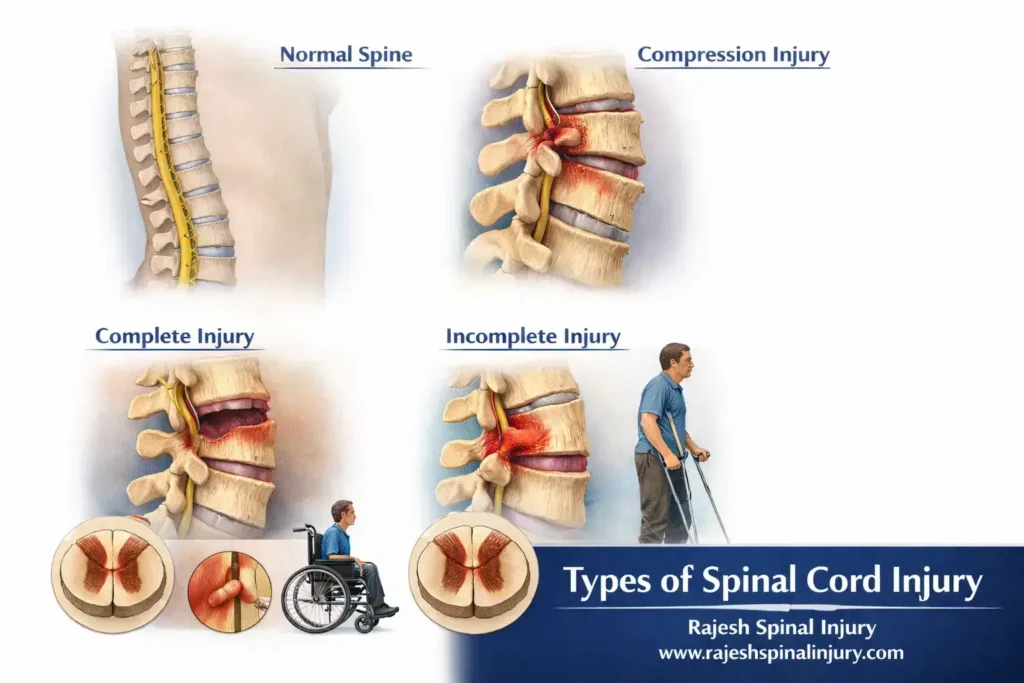
Types of spinal cord injury are mainly divided into two categories: Complete and Incomplete injury.
Complete Injury
A complete injury means that there is no movement or feeling below the affected area. An incomplete injury means that some signals can still pass through the spinal cord. Knowing these differences helps doctors plan the right treatment and recovery process.
Complete spinal cord injuries are usually more serious. In this case, communication between the brain and the body below the injury is completely cut off. This can lead to paralysis. For example, a neck injury can cause loss of movement in both arms and legs, while a lower injury may only affect the legs. These types of spinal cord injuries often require long-term medical care and support.
Incomplete Injury
Incomplete injuries are more common and can vary widely. Some people may regain partial movement or sensation over time. There are different conditions within incomplete injuries. Central cord syndrome mainly affects the arms. Anterior cord syndrome affects movement and pain sensation. Brown-Sequard syndrome affects one side of the body. These variations show how complex the types of spinal cord injuries can be.
Another important way to understand spinal cord injuries is by location. The spine is divided into cervical, thoracic, lumbar, and sacral regions. Cervical injuries are the most serious and can affect the entire body. Thoracic injuries typically affect the chest and legs. Lumbar and sacral injuries affect functions such as the lower body and bladder control. These location-based types of spinal cord injury help doctors identify the level of damage.
Rehabilitation is a key part of recovery. Physical therapy helps improve strength and mobility, while occupational therapy helps patients perform daily activities. Assistive devices such as wheelchairs and assistive devices can increase independence. Early treatment can make a big difference, especially in incomplete injuries. Proper care is essential for managing all types of spinal cord injuries.
Mental health and emotional support are equally important. A spinal cord injury can be life-changing, but a positive mindset and a strong support system can improve quality of life. Family support, counseling, and community awareness all play a big role in recovery.
Prevention is also very important. Many spinal cord injuries are caused by road accidents, falls, or unsafe activities. Using a helmet, wearing a seat belt, and following safety rules can reduce the risk. Learning about the types of spinal cord injuries also helps people understand the seriousness of these injuries and take precautions.
Consequently, understanding the types of spinal cord injuries is essential for proper treatment, recovery, and prevention. Every injury is different, and the right knowledge can make a big difference. Rajesh Spinal Injury is dedicated to spreading awareness, sharing real experiences, and helping people live better lives after injury. With the right support and information, recovery and independence are possible.
At Rajesh Spinal Injury
Rajesh Kumar shares his personal experience as a spinal cord injury survivor. He is suffering a C6-C7 injury in a scooter accident on March 25, 2007. Through his website, he spreads awareness and provides real-life guidance. His mission is to educate people about recovery, prevention, and the different types of spinal cord injury so that others can feel informed and supported.
Frequently Asked Questions (FAQs)
What are the types of spinal cord injuries?
The main types of spinal cord injuries are complete and incomplete injuries. A complete injury results in a total loss of movement and sensation below the site of the injury, whereas an incomplete injury allows for the retention of some movement or sensation.
What is a complete spinal cord injury?
A complete spinal cord injury means that there is no connection between the brain and the body below the level of the injury. Depending on the location of the injury, this often leads to paralysis, such as paraplegia or quadriplegia.
What is an incomplete spinal cord injury?
An incomplete spinal cord injury occurs when the spinal cord is partially damaged. Some signals can still pass through, allowing for partial movement or sensation. Compared to complete injuries, the chances of recovery are generally better.
What are the common spinal cord injury syndromes?
Common syndromes include Central Cord Syndrome, Anterior Cord Syndrome, and Brown-Séquard Syndrome. These conditions affect movement and sensation differently, depending on which part of the spinal cord has been damaged.
How does the location of the injury affect the body?
The level of the injury determines which parts of the body will be affected. Neck injuries can affect the entire body; thoracic (chest) injuries typically affect the chest and legs; while lumbar and sacral injuries primarily affect the lower body and mobility. Can spinal cord injuries be treated?
There is no complete cure for them; however, treatment and rehabilitation can improve the quality of life. Physical therapy, occupational therapy, and assistive devices help patients regain independence and perform daily activities.
How can spinal cord injuries be prevented?
Spinal cord injuries can largely be prevented by following safety measures such as wearing helmets, using seatbelts, avoiding risky behaviors, and maintaining workplace safety. Awareness plays a key role in prevention.