

Physiotherapy in Spinal Cord Injury
Physiotherapy in Spinal cord injury rehabilitation is a comprehensive plan aimed at the recovery of independence, mobility, and health. Among the various rehabilitation techniques, physiotherapy is a pivotal component as it aids the injured individuals to recover the lost features, keep at bay the secondary health conditions, and be able to lead a quality life. It is rare that the injury to the spinal cord can be undone; however, through the highly, focused rehabilitation, the injured persons can still have a great recovery and be healthy for a long time. At present, the rehabilitation programs integrate physiotherapy for the spine and physiotherapy for the nervous system so that they can efficiently deal with the problems of both the musculoskeletal and neurological systems.
Goals of Physiotherapy in Spinal Cord Injury
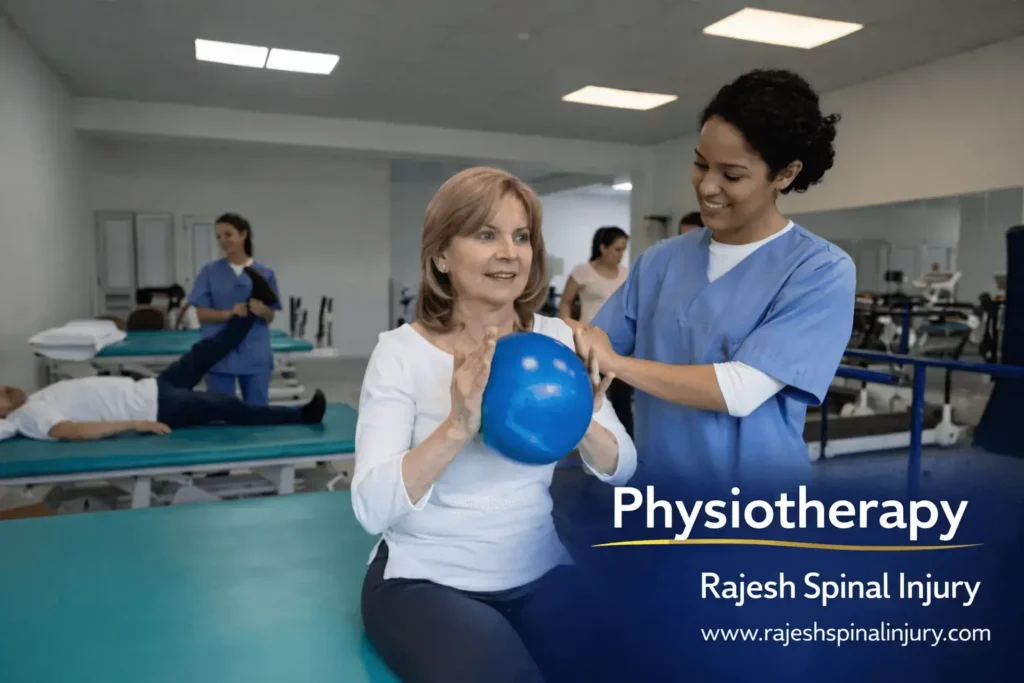 Physiotherapy aims primarily at preserving and further developing the physical capacities of the person after suffering an injury. Muscle atrophy, paralysis, and a drastic reduction of stamina are some of the problems that the victims may encounter. Step by step, the patients can not only gain muscles strength but also make use of the existing functions through the help of the therapy sessions. Through spine physiotherapy, which contributes a lot to the improvement of the functions of back muscles and bone structures, the person’s ability to carry out activities that require sitting balance and wheelchair mobility will be increased. This is because from the therapy a person gets to learn a correct posture, gain a strong and stable trunk, and have a properly aligned spine.
Moreover, neurological physiotherapy works towards the activation of nerve routes and the facilitation of neuroplasticity, thus, helping the brain and spinal cord become capable of forming new connections for improved motor function. Furthermore, the therapy indirectly provides the patient with enhanced traction to the prevention of complications, including pressure ulcers, contractures, respiratory infections, and circulation problems.
Physiotherapy (PT) and Occupational Therapy (OT) are core pillars of spinal cord injury (SCI) rehabilitation. They do not “cure” the injury, but they dramatically improve function, independence, health, and long-term quality of life.
The main goal is the following:
- Maintain and possibly increase the strength of muscles above the injury site.
- Prevent muscle atrophy and stiffening of joints.
- Enhance the ability of the patient to maintain balance while sitting and improve postural control.
- Practice different types of manual transfers for example, bed to wheelchair, wheelchair to car, etc.
- Improve the lung capacity of the injured person.
- Increase physical fitness level.
- If there is some preserved sensation below the injury, helping to improve walking ability.
- Prevent the development of problems caused by
The Common Physiotherapy Techniques:
1. Range of Motion and Strengthening Exercises
The range of motion exercises serve as a vital part of a physiotherapy treatment to abolish joint stiffness and develop deformities. Such exercises help in maintaining the flexibility of the joints as well as the health of the tissues. Patients incapable of independent movements, can have the benefit of assisted exercises, which can be performed by a therapist or a family member.
2. Mat Activities
Practising mat exercises elevates the level of the individual’s balance, control of the trunk, and results in independence. The exercises range from turning over, sitting with no support, and moving in a controlled way.
Such physiotherapy exercises are mainly functional, as they raise the readiness for functional mobility:
Examples;
- Rolling
- Trunk control
- Sitting balance
- Bridging
 3. Sitting Balance
According to spine physiotherapy, the main point of holding a trunk properly is that it is not risky to sit and use a wheelchair. Using a wheelchair without having control over one’s trunk means that one will be very much dependent on others. Neurological physiotherapy uses balance and coordination exercises to improve the ability of the nervous system in muscle activity regulation.
3. Gait Training
If injury is incomplete (AIS B/C/D): Through rehabilitation, some people with an incomplete spinal cord injury are able to walk again.
Physical therapy consists of practicing walking with the help of parallel bars, walkers, and other assistive devices. A step further can be body, weight-supported treadmill training and the use of robotic devices.
Spine physiotherapy focuses on the proper spinal position when being on the move, thus decreasing the risk of injury and making the activity more safe. Besides that, neurological physiotherapy is the brain and spinal cord training that helps the nerves to regenerate and also improves the walking pattern.
Examples;
- Parallel bars
- Walkers
- Robotic exoskeletons
- Body-weight–supported treadmill training (BWSTT)
4. Functional Electrical Stimulation and Advanced Techniques
Functional electrical stimulation, often abbreviated as FES, is a technique that is commonly employed in physiotherapy to activate weakened or paralyzed muscles via electrical impulses that are carefully controlled. This has the dual effect of increasing blood flow and avoiding the deterioration of muscles.
Electrical stimulation has a number of positive effects such as promoting muscle health and being a support for posture. Neurological physiotherapy, on the other hand, utilizes stimulation to increase nerve activation, which results in an improved potential for movement and greater functional independence.
Examples;
- Improves circulation
- Prevents atrophy
- Helps cycling, standing, and stepping
5. Respiratory Physiotherapy
Especially important for C1–T6 injuries: Physiotherapy must include respiratory care, particularly for more severe spinal injuries. Breathing exercises lower the risk of infection and increase lung capacity.
6. Hydrotherapy
Hydrotherapy is yet another potent modality. The heat from the water in conjunction with decreased spasticity can result in a considerable ease in movement and subsequently exercise becomes more feasible.
7. Wheelchair Training
Developing wheelchair skills is a key component of spine physical therapy, which teaches people how to move, turn, and safely climb hills. Secondary injuries are avoided when wheelchairs are used properly.
Examples;
- Ramps
- Propulsion
- Turning
- Wheelies (for high-level independence)