

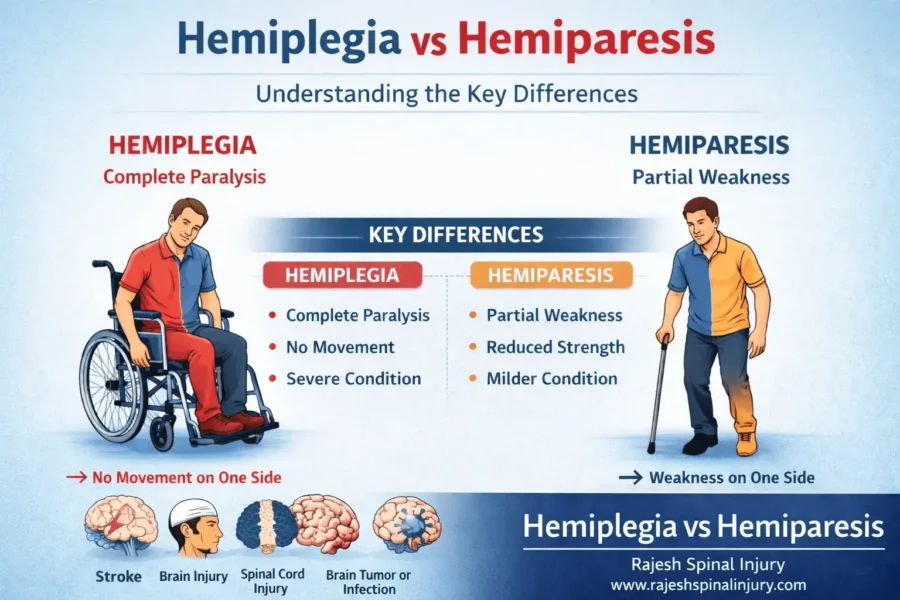
Understanding the Key Differences of Hemiplegia and Hemiparesis
When it comes to neurological disorders affecting one side of the body, many people frequently confuse hemiplegia and hemiparesis. Although these terms are closely related, they describe different degrees of muscle weakness and paralysis. At Rajesh Spinal Injury, we aim to provide clear, easy-to-understand information to help patients, caregivers, and families better comprehend these conditions.
What is Hemiplegia?
Hemiplegia refers to complete paralysis on one side of the body. This condition is typically caused by damage to the brain—often resulting from a stroke, a traumatic brain injury, or a spinal cord injury. Individuals with hemiplegia lose voluntary movement on one side, making it challenging to perform daily activities without assistance.
In discussions regarding hemiplegia and hemiparesis, hemiplegia is considered the more severe condition, as it involves a complete loss of muscle function. Individuals may also experience slurred speech, balance issues, and a lack of coordination.
What is Hemiparesis?
On the other hand, hemiparesis refers to partial weakness on one side of the body. Unlike hemiplegia, those affected retain some degree of movement and control. However, muscle strength is diminished, and activities such as walking, lifting objects, or grasping become difficult. It is important to understand the distinction between hemiplegia and hemiparesis, as hemiparesis can often be managed more easily through proper rehabilitation and treatment. With consistent therapy, many individuals are able to regain significant strength over time.
Causes of Hemiplegia and Hemiparesis
Both of these conditions share similar underlying causes, resulting from damage to the brain or spinal cord. Common causes include:
- Stroke (the most common cause)
- Traumatic brain injury
- Spinal cord injury
- Brain tumors
- Infections affecting the brain
When comparing hemiplegia and hemiparesis, the severity of the brain damage typically determines whether the resulting impairment manifests as complete paralysis or partial weakness.
Symptoms and Differences
The primary difference between hemiplegia and hemiparesis lies in the degree of muscle control:
Hemiplegia: Complete absence of movement on one side of the body.
Hemiparesis: Reduced strength, but with some residual movement capability.
Other symptoms may include:
- Muscle stiffness or spasticity
- Difficulty walking or maintaining balance
- Problems with coordination
- Difficulties with speech and swallowing
Early recognition of these symptoms facilitates accurate diagnosis and appropriate treatment.
Diagnosis and Treatment
To diagnose these conditions, physicians utilize physical examinations, imaging tests—such as MRI or CT scans—and neurological assessments. A clear understanding of hemiplegia and hemiparesis enables healthcare professionals to formulate an appropriate treatment plan. Treatment methods include:
- Physical therapy to improve strength and mobility
- Occupational therapy for daily living activities
- Speech therapy if communication is impaired
- Medications to manage muscle spasticity
Recovery and Rehabilitation
Recovery varies from person to person. Individuals suffering from hemiparesis often demonstrate better progress compared to those affected by hemiplegia. However, with dedication and proper care, progress can be observed even in cases of severe impairment.
When discussing hemiplegia and hemiparesis, rehabilitation emerges as a critical factor. Regular exercises, assistive devices, and support systems can significantly enhance one’s quality of life.
Why Awareness Matters
Understanding the distinction between hemiplegia and hemiparesis is essential for both patients and caregivers. This knowledge helps in setting realistic expectations, selecting appropriate treatments, and providing proper care.
At Rajesh Spinal Injury, our mission is to raise awareness regarding neurological disorders and to support individuals on their journey toward recovery. Knowledge empowers people to take control of their health and improve their lives.
Conclusion
In summary, the distinction between hemiplegia and hemiparesis highlights the difference between total paralysis and partial weakness on one side of the body. While both conditions can be challenging, early diagnosis, appropriate treatment, and consistent rehabilitation can make a significant difference. Rajesh Spinal Injury is committed to guiding and supporting individuals, providing them with accurate information and motivation.