

What Are Brain & Spine Chip Implants?
These are electronic devices that have been surgically inserted into the spinal cord or brain. Human Brain & Spine Chip Implants are a new type of neurotechnology that can help people with a spinal cord injury (SCI), stroke, ALS, or other neurological conditions to regain movement, sensation, or communication. Here is a simple and well-organized description of these implants, their working mechanism, the companies that are developing them, and what we can expect from them today and in the future.
Their goal is to bypass damaged neural pathways. Two main types:
1. Brain Chips (BCI – Brain Computer Interfaces):
Implanted in the motor cortex or other areas of the brain. They monitor neural activity and transmit it to external devices or the spinal cord.
2. Spinal Chips (Spinal Stimulators):
Implanted on or inside the spinal cord. They switch on the target circuits to regain movement, feeling, or autonomic function.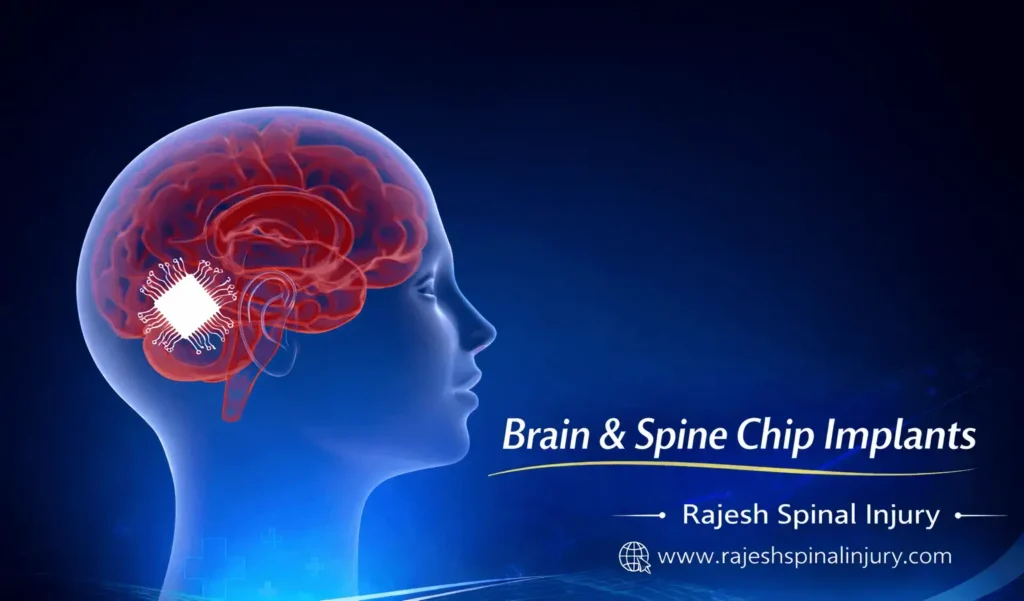
How Brain & Spine Implants Work Together (Neural Bypass)
Human Brain Chip Implants:
Brain spine interface is the most innovative invention for spinal cord injury patients.
This interface:
- Deciphers in the brain the signals about movement
- Transmits them wirelessly to an implant in the spinal cord
- Activates the very nerves that are responsible for legs or hands
This digital bridge can restore voluntary control even when the spinal cord is severely damaged. Humans have already been able to walk, stand, and grasp with the help of this technology.
Types of Implants
A) Brain Implants (BCIs)
Placed in the motor cortex.
Capabilities demonstrated:
- Move a robotic arm
- Type by thinking
- Control a computer cursor
- Control assistive devices
- Control spinal stimulators (movement restoration)
Major groups working on BCIs:
- Blackrock Neurotech
- Neuralink
- Synchron (stent-based implant)
- UCLA / Stanford BCI labs
- Wyss Center (Switzerland)
B) Spinal Cord Implants (Epidural Stimulators)
Used for:
- Restoring walking
- Restoring hand function
- Reducing spasticity
- Improving autonomic functions (bladder, blood pressure)
Most common systems:
- Epidural Spinal Cord Stimulation (SCS)
- Intraspinal Microstimulation (ISMS)
Research leaders:
- EPFL / NeuroRestore (Switzerland)
- University of Louisville
- Mayo Clinic
- DARPA-funded U.S. labs
What Has Already Been Achieved in Humans?
Restored walking (via brain-spine wireless link)
- Patients with chronic paralysis have taken natural steps using a BCI connected to spinal stimulators.
Restored hand movement
- Brain, controlled electrical stimulation of arm nerves has restored grasping movements in SCI.
Typing & communication using thought alone
- Paralyzed individuals have typed 6090 characters per minute using brain activity.
Control of devices
- Wheelchair, phone, robotic limbs, and smart home devices can be controlled with BCIs.
Improved autonomic functions
Spinal implants have improved:
- Blood pressure regulation
- Bladder control
- Trunk stability
These changes radically change daily life.
Near Future – Brain – Spinal Cord Chip (Next 5–10 Years)
Expect:
- Fully wireless human brain implants
- Implantable “neural routers” linking brain and spine
- Improved hand function restoration for quadriplegia
- Better sensory restoration (touch feedback)
- Less-invasive BCI implants
- Commercial availability in specialized hospitals
- AI-assisted decoding for faster, natural movement